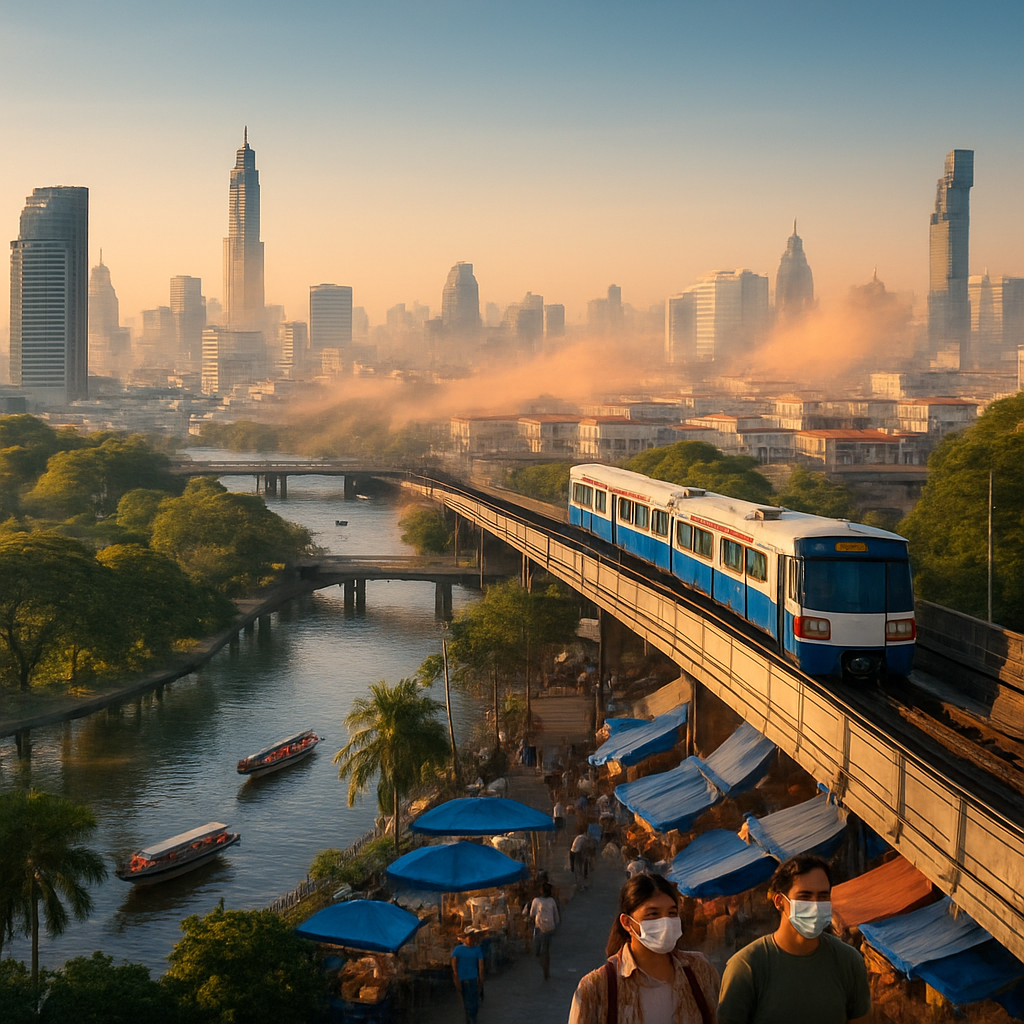
Good news with a cautious shrug: Bangkok’s air has finally started to lighten up. The Bangkok Air Quality Information Centre reported on Saturday morning that average PM2.5 concentrations across the capital are easing, though a few neighbourhoods still demand extra attention.
What the numbers say
Citywide, the average PM2.5 reading sat at 26.3 µg/m³ — comfortably below the city standard of 37.5 µg/m³. That’s a welcome drop and means most people can breathe a little easier. Still, air quality doesn’t behave uniformly across Bangkok’s mosaic of districts. Two areas nudged into the orange band — the level that flags initial health impacts — and a dozen districts stood out for the day’s highest readings.
Top 12 districts with the highest PM2.5 readings
- Pathum Wan: 41.5 µg/m³
- Chatuchak: 39.3 µg/m³
- Sathorn: 35.7 µg/m³
- Bang Rak: 32.8 µg/m³
- Khlong Sam Wa: 32.5 µg/m³
- Lat Krabang: 31.7 µg/m³
- Bang Sue: 31.7 µg/m³
- Nong Chok: 31.7 µg/m³
- Phasi Charoen: 31.3 µg/m³
- Ratchathewi: 31.1 µg/m³
- Phra Khanong: 30.3 µg/m³
- Prawet: 30.2 µg/m³
Pathum Wan and Chatuchak are the ones wearing the orange badge today — worth noting if you’re walking around Siam Square, dodging the midday crowds, or browsing stalls at Chatuchak Weekend Market.
Air quality by zone — a quick tour
Breaking the city down by zone gives a clearer picture of who feels what:
- North Bangkok: 25.6–39.3 µg/m³ — Overall: moderate
- East Bangkok: 21.4–32.5 µg/m³ — Overall: moderate
- Central Bangkok: 20.4–31.1 µg/m³ — Overall: good
- South Bangkok: 19.3–41.5 µg/m³ — Overall: moderate
- North Thonburi: 20.3–29.9 µg/m³ — Overall: good
- South Thonburi: 21.1–31.3 µg/m³ — Overall: good
In short: most of the capital is in the “moderate” to “good” range, but local hotspots still exist. Think of the city as a quilt — some patches are breezier than others.
Practical tips — how to stay safe without turning your life upside down
The centre says PM2.5 levels are trending downward, which is encouraging. But when parts of the city touch the orange zone, it’s smart to take common-sense precautions. Here are easy, practical moves you can fold into your day:
- Wear a certified PM2.5 mask when outdoors in affected areas — it’s a fast, effective shield.
- Avoid strenuous outdoor exercise when levels are elevated. Swap a run around Lumpini Park for an indoor workout or a gentle bike ride on less polluted streets.
- Keep windows closed during morning rush hours if your district is reporting higher readings; ventilate in the late afternoon when air often clears up.
- In traffic, use your car’s air recirculation mode and keep vents on low if possible.
- If you’re sensitive to pollution, consider using an air purifier at home — even a modest unit can make a noticeable difference in a bedroom or living room.
- Check live AQI apps or the Bangkok Air Quality Information Centre before planning outdoor meetups, especially weekend markets or park activities.
Who should be extra careful?
At-risk groups — including older adults, young children, pregnant people, and anyone with respiratory or cardiovascular conditions — should take extra precautions when air quality hits orange. The official advice is straightforward:
- Wear a PM2.5 mask every time you go outdoors in affected areas.
- Avoid strenuous outdoor activity and follow your healthcare provider’s guidance.
- Seek medical attention promptly if you experience symptoms such as persistent coughing, shortness of breath, chest discomfort, or severe eye irritation.
Final note — stay informed, stay practical
Bangkok’s pollution can fluctuate quickly with winds, traffic patterns, and regional conditions. Today’s breath of relief is welcome, but staying informed is the best posture: check local readings, adapt your routine when needed, and treat masks and purifiers as tools, not panic triggers.
After all, city life in Bangkok — from street food stalls to riverside sunsets — is best enjoyed when you can actually take a full, comfortable breath. Keep an eye on the updates and enjoy the clearer air while it lasts.















Numbers look better but I don’t trust one morning’s reading; sensors get gamed and sitting at 26 µg/m³ still isn’t ‘clean’ air in my book.
I’m in 6th grade and my teacher said PM2.5 is tiny dust that can make lungs sad, so even 26 sounds worrying to me.
Short-term dips are encouraging, but one must consider diurnal and traffic-driven spikes; a 24‑hour mean and source apportionment matter for policy.
Sensors are fine — just tell poeple to buy cheap masks and move on, history shows panic sells masks, not solutions.
Dr. Ananya, I appreciate the nuance — I just want long-term trends and transparency, not headline-friendly snapshots.
Wearing a PM2.5 mask all the time is impossible for me at work; this is becoming overbearing and hurts small businesses.
Masks are a small inconvenience compared to chronic lung disease; workplaces can schedule breaks and provide better ventilation instead of complaining.
As an office manager, providing N95s and adjusting HVAC timing was cheap compared to sick days — employers should act now.
Okay, fair point — if companies subsidize masks I’d be less grumpy, but the city should also fix traffic emissions.
This is blown out of proportion; lifelong smokers around me are fine and shops are losing customers because of scaremongering.
That’s not how exposure works; PM2.5 from traffic and combustion is linked to heart attacks and developmental issues, not just coughing fits.
Comparing cigarette smoke to ambient PM2.5 is misleading — both are harmful but have different chemical profiles and population-level impacts that matter.
I hear you, Samira and Dr. Ananya, but I still think practical economic costs should guide how we communicate risk.
As a mom, Pathum Wan and Chatuchak in orange makes me avoid markets today; kids breathe more per body weight so this freaks me out.
I brought my toddler a certified mask and postponed a park visit — indoor playdate instead, better safe than sorry.
Statistically kids have higher inhaled dose; even short exposures can matter for asthmatics, so your caution is justified.
Thanks, Mai and Niran — feels less paranoid hearing data and other parents’ choices.
The real scandal is policy failure: why are hotspots still persisting in central districts while the city does nothing dramatic?
Electrify public buses, retrofit traffic lights to reduce idling, regulate construction dust — there are practical engineering fixes but they cost political capital.
Exactly — we need bold measures, not press releases. If politicians can fund festivals they can fund cleaner transport.
Bold is right, but let’s also demand better enforcement of existing rules before dreaming up new schemes.
Another day, another ‘moderate’ headline — vendors will keep frying food on the street, and everyone pretends it’s fine.
Street vendors feed families; telling them to stop without alternatives is tone-deaf. Support and cleaner cookstoves would be the humane move.
Fair — I’d support subsidies for clean stoves, just hate the performative outrage without solutions.
Yay the air is better today, I can play outside at lunch, but my grandma still told me to wear a mask.
Enjoy it but watch those hotspots — Pathum Wan can spike and ruin a nice day if you’re near heavy traffic.
Okay Grandpa Joe, I’ll avoid Siam Square when it’s busy and keep a mask in my bag.
The orange band signals population-level increased risk; for at-risk groups even transient exposures matter clinically and policy should reflect that.
I’m pregnant and find that advice frustratingly vague — what exact precautions should I take this weekend at markets?
Practical answer please: how good a purifier do I need in a small apartment for my baby’s room?
Use a certified PM2.5 mask outdoors in orange zones, limit strenuous activity, and a HEPA purifier sized for your room’s volume is a sensible baseline.
I come to Bangkok sometimes and these fluctuating AQIs scare tourists away from markets; should travel advisories mention PM2.5?
Travel apps already show AQI; simple advice like carrying a mask and checking live reports is enough — no need to alarm visitors.
Locals know the hotspots and times; tourists just need basic tips, but authorities could do better signage at markets.
Good idea about signage — one clear board at market entrances with current AQI would help everyone, locals and tourists alike.
The zonal breakdown is useful but masks aren’t a substitute for reducing emissions; personal mitigation is temporary and inequitable.
True, but while systemic fixes take years, masks and purifiers are low-cost ways for people to reduce exposure now.
We need a two-track approach: protect people today and invest in long-term emission cuts; presenting only one option is lazy policy.
Agreed — short-term protection plus a clear roadmap for source reduction is the responsible message.
I work with elders; the orange zones make me nervous because many have heart problems and won’t speak up until it’s late.
Community outreach and mobile screening on high-risk days could catch exacerbations earlier and reduce hospital burden.
We should lobby local clinics to provide masks and information — prevention saves lives and money.
NGOs can partner with community centers to distribute masks and educate; small coordinated efforts scale well.
I still don’t trust ‘moderate’ — my kid’s cough worsens on bad days, so I’d rather skip outdoor weekend markets until readings are stable low.
I canceled a market day too; we ordered local goods online and it felt safer and kinder for the kids.
Online helps, but I miss the community vibe; hoping cleaner air brings markets back full-throttle soon.
Public messaging should balance reassurance and action; telling everyone ‘it’s fine’ when hotspots exist is irresponsible.
Exactly — we need consistent warnings where needed and visible mitigation in hotspots like Pathum Wan.
Right — transparency builds trust and motivates both individual precautions and political will.
Transparency is great until people exploit it for profit selling useless gadgets; trust but verify the suggested solutions.
Technically, reducing idling at intersections and controlling construction dust would cut a measurable share of urban PM2.5, but enforcement is the bottleneck.
Then focus enforcement there — it’s actionable and visible, unlike grand schemes that never materialize.
Yes, targeted, measurable interventions with public dashboards would show progress and justify investment.
Dashboards helped during floods; real-time AQI maps could pressure agencies to act similarly.
If the city wanted to fix air, they’d restrict traffic more in hotspots; instead they tweak announcements and call it progress.
Traffic restrictions are politically tough but effective; congestion pricing or odd–even schemes can reduce emissions if done fairly.
I’d support congestion pricing if revenue funds public transport and vendor support, not vanity projects.
Tourists would appreciate clearer transport too — less driving, more efficient transit improves experience and air quality.
I sell at Chatuchak and this orange tag scares customers — but turning away shoppers because of a number seems a bit extreme to me.
Maybe wear masks and keep stalls spaced? I still want to visit but safety first.
Good point — we’ll try spacing and offer masks at stalls if people want; hard to do everything but we can adapt.
Pragmatic thread: track AQI apps, keep a spare mask in your bag, and employers should allow flexible outdoor schedules on orange days.
Employers giving flexibility would help workers and reduce peak congestion; it’s a cheap public-health win.
Exactly, and it could be piloted in districts with regular spikes like Pathum Wan to show efficacy.
If employers lead, parents like me can breathe easier — literally — about outdoor activities for kids.
As someone who cycles, I avoid roads near construction and choose canalside routes on bad days; small route changes help a lot.
Good tip — micro-routing is underrated and can cut personal exposure drastically if you know where to ride.
Share maps and we’ll crowdsource low-exposure routes for commuters, might be a neat community project.
Seeing Phra Khanong in the top 12 surprises me; localized traffic and wet markets clearly still drive pockets of pollution.
Local interventions like covering food stalls and better waste burning rules would reduce small-scale emissions that add up.
I’ll bring this up at the community meeting — small neighborhood fixes might actually move the needle here.
Community meetings are good but need follow-through — don’t let it end as another promise on paper.
I’m allergic and noticed my eyes burned yesterday; numbers say moderate but my body says caution — healthcare needs to listen to lived experience.
Symptom reporting could feed into hyperlocal alerts; grassroots reporting helps identify micro-hotspots sensors miss.
Exactly — citizen science plus official monitoring would be powerful and inclusive.
Quick rant: shops selling sketchy ‘air purifying’ necklaces should be fined; people get scammed out of real protection.
Consumer awareness campaigns could help — tell people which certifications to trust rather than shaming buyers.
True, education plus regulation would shrink the market for snake-oil products fast.
Retailers should be required to list CADR and room size for purifiers; clarity kills misinformation.
I work in logistics; keeping windows closed and recirculation helps but drivers complain about heat — there are trade-offs.
Short trips can use recirculation, but long trips need cooled recirculated air systems — fleet upgrades are expensive but effective.
Fleet subsidies for small operators would help — otherwise health measures are just something drivers can’t afford to follow.
Lobby for targeted subsidies then; it’s a concrete ask politicians can act on if framed right.