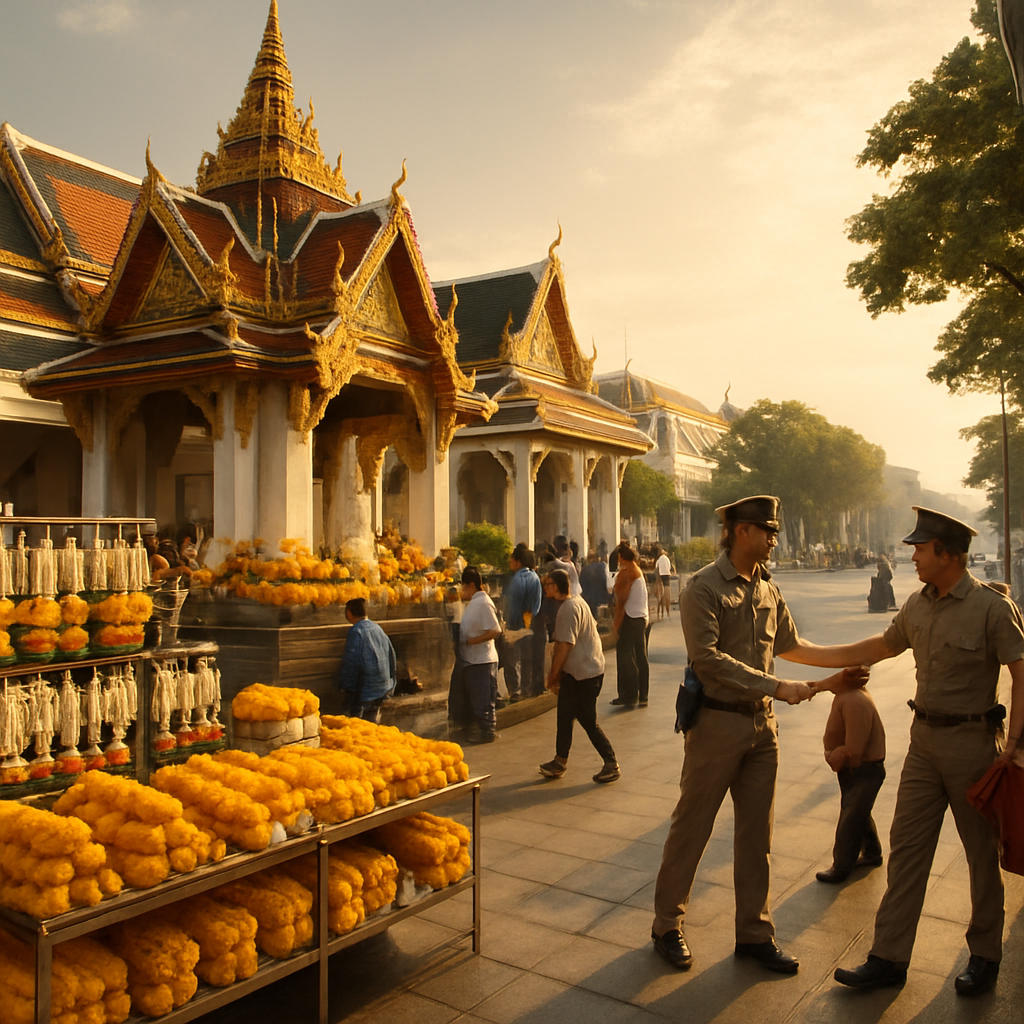
The serene ritual of offering flowers at Bangkok’s City Pillar Shrine turned into an unwelcome hustle for some visitors — until authorities stepped in. On 9 January 2026, the Internal Security Operations Command (ISOC) Bangkok launched a targeted operation to crack down on rogue street vendors who have been pressuring tourists and worshippers into buying overpriced floral offerings outside the historic shrine.
Located along Lak Mueang Road in the Phra Borom Maha Ratchawang district, the Bangkok City Pillar Shrine is a magnet for both locals seeking blessings and international visitors soaking in the capital’s cultural heritage. But recent weeks brought a darker side to the pilgrimage: unauthorised sellers allegedly forcing flowers into people’s hands and then demanding payment — a tactic that sparked an influx of public complaints and dented the area’s reputation.
Undercover checks expose an aggressive sales tactic
ISOC Bangkok, under the direction of Lt Gen Petchaek Intharathat, deployed a task force to investigate these complaints. What began as routine monitoring morphed into undercover inspections that revealed a recurring pattern: vendors approaching visitors, thrusting floral garlands or bouquets at them, and using social pressure to secure sales. For many bewildered tourists, the encounter felt less like a cultural exchange and more like a coercive transaction.
Authorities also discovered that some sellers were providing misleading information about prices, leaving buyers surprised by inflated bills. Beyond the harassment, the vendors were blamed for causing traffic congestion by occupying parking bays and obstructing pedestrian flows near the shrine — an added nuisance for an area already bustling with devotees and sightseers.
Why this matters: preservation of sacred spaces and visitor experience
When cultural landmarks become the backdrop for aggressive sales tactics, the damage is twofold. First, the spiritual and historical significance of the site is undermined. Second, the visitor experience — a key part of Bangkok’s tourism appeal — suffers. ISOC Bangkok has signalled that such predatory behaviour can’t be allowed to flourish around landmarks that represent the city’s heritage.
“This isn’t just about flowers,” a spokesperson for ISOC Bangkok said, explaining the motive behind the operation. “It’s about protecting the dignity of the shrine and ensuring everyone who comes here can worship or visit without harassment.”
What authorities are doing
The crackdown included visible patrols, enforcement of vending regulations, and the removal of unauthorised sellers from sensitive areas. ISOC Bangkok has urged visitors to ignore street touts and directed pilgrims to the authorised vending stalls inside the shrine grounds. Those authorised stalls sell offerings at regulated prices in an organised setting, preserving the shrine’s peaceful atmosphere while supporting legitimate vendors.
Officials are also coordinating with local authorities to manage traffic and parking more effectively, so the lanes near Lak Mueang Road remain accessible and safe for both vehicles and pedestrians. The wider goal is to create a welcoming environment for local devotees and international tourists alike.
Practical tips for visitors
- Ignore vendors who thrust items into your hands. If you don’t want to buy, simply refuse and move on.
- Use the authorised stalls inside the shrine grounds for offerings — prices are regulated and the environment is respectful.
- Keep small change handy and confirm prices before accepting goods when buying from legitimate sellers outside the shrine.
- Report harassment or aggressive selling to shrine staff or nearby authorities so they can respond promptly.
ISOC Bangkok’s action is part of a broader initiative to protect the safety and convenience of visitors to the capital’s historic sites. By reining in predatory vendors and restoring order around the City Pillar Shrine, officials hope to ensure the area returns to what it was intended to be: a tranquil, respectful place of worship and a memorable stop on Bangkok’s cultural map.
For anyone planning a visit, the message is simple: enjoy the heritage, respect the rituals, and support authorised vendors who help keep the shrine welcoming for everyone.
















Good to see ISOC stepping in, but I worry about heavier militarised presence around a sacred site. The shrine should be protected without turning worshippers into surveillance subjects.
I get the protection angle, but isn’t this just common-sense policing of harassment? Tourists were being bullied into buying things.
There’s a balance between security and civil liberties, but the economic context matters. Informal vendors often operate out of necessity and blanket crackdowns can exacerbate poverty unless alternatives are offered.
As someone who drives past Lak Mueang every week, the congestion was real. Vendors blocking parking is as much a public order problem as coercive sales are a consumer issue.
But many of those vendors are my neighbors. You can’t just remove livelihoods without planning. Where will they go?
Auntie May has a point, and that is why regulated stalls inside the shrine are a good compromise. Offer training or microloans to legitimize vendors rather than simple expulsions.
This feels like a small victory for tourists and devotees. Aggressive touts ruin the experience and give Bangkok a bad name.
As someone who sells flowers legally nearby, I support cleaning up rogue players. They undercut honest vendors and scare customers away.
But regulated stalls might charge more, right? That just formalizes higher prices for pilgrims and tourists.
Why does it always have to be ISOC? Could local municipal enforcement handle this without a heavy security brand?
ISOC involvement signals the state considers this a problem of public order and image. That can be productive, but it also centralises power away from community solutions.
Local police often lack resources or get sidetracked. ISOC brings manpower and a quick response, which is probably why they were used.
We should also examine tourist expectations. Many foreigners expect curated cultural experiences and assume authorities will manage every nuisance. That expectation can drive over-policing.
Interesting point. But isn’t the government paid to protect cultural heritage? Tourists and locals both deserve dignity at sacred sites.
Yes, heritage protection is a public good, but the implementation should be sensitive. Engage vendors in the preservation plan so it doesn’t look like punishment.
I was once hustled by a seller at a shrine and felt intimidated. Regulated stalls would have made me feel safer and more respectful.
As a visitor last year I nearly paid a huge price because they lied about rates. Please, tourists need clear signage with official prices in multiple languages.
Small vendors are being painted as villains, but many of us follow rules and pay fees. Punishing everyone for a few bad apples is unfair.
I run a legal stall and the rogue sellers really hurt business. Customers get scared and blame all of us, so ISOC action helps honest sellers too.
But how do you convince tourists which stalls are legit? Insider tips helped me, yet not every visitor knows local signs.
This is a turf war disguised as public safety. Someone profits from moving vendors inside the shrine, and I bet it’s not the poorest sellers.
You sound cynical, but corruption in vendor licensing is a real risk. Transparency and community oversight are necessary to prevent elite capture of the market.
The recommendation to keep small change and confirm prices is good but naive. When someone shoves a garland at you, fear and social pressure override price checks.
I don’t like it when people push things at me. It makes me want to leave. Why can’t they be nicer?
Exactly, Tim. Emotional stress ruins the visit. Authorities should prioritize giving visitors clear escape options and visible help.
I appreciate ISOC protecting tourists, but they should also produce a public report showing who was detained and what happened. Accountability matters.
Public reporting will calm speculation, but expect delays. Authorities often avoid releasing operational details to prevent revealing enforcement tactics.
Transparency would help trust. If ISOC shows they coordinated with local vendors and offered alternatives, the crackdown will be seen as fairer.
People forget these sellers are often mothers and grandmothers trying to feed kids. Remove them and you break a fragile family income.
That’s real, but aggressive hustling isn’t harmless. Maybe authorities should relocate them to designated spots and offer permits.
Exactly. Designated vending zones, microfinance, and training can transform an informal economy into a regulated one that benefits families.
The shrine’s sanctity is important, yet we also face urban poverty. Policy responses must be integrative: law enforcement, social programs, and urban design improvements together.
I think everyone should be nice. If someone pushes a flower, just say no and walk away. It’s not hard.
Easy for you to say, Tim, but not always possible when many people are watching. Social pressure can make saying no feel humiliating.
I work with pilgrims and we support regulated offerings. Clear signage about official stalls and prices would reduce scams and help the elderly.
Signage is great, but enforcement must follow. If rogue sellers return after a few days, nothing changes.
ISOC action sends a message, but long-term urban planning is the answer. Pedestrianized zones and designated market areas preserve both flow and culture.
Pedestrianizing could boost the shrine experience, but vendors must be given fair options rather than being swept away overnight.
Urban redesign requires funding and political will. It also needs participatory planning to avoid displacing marginalized vendors.