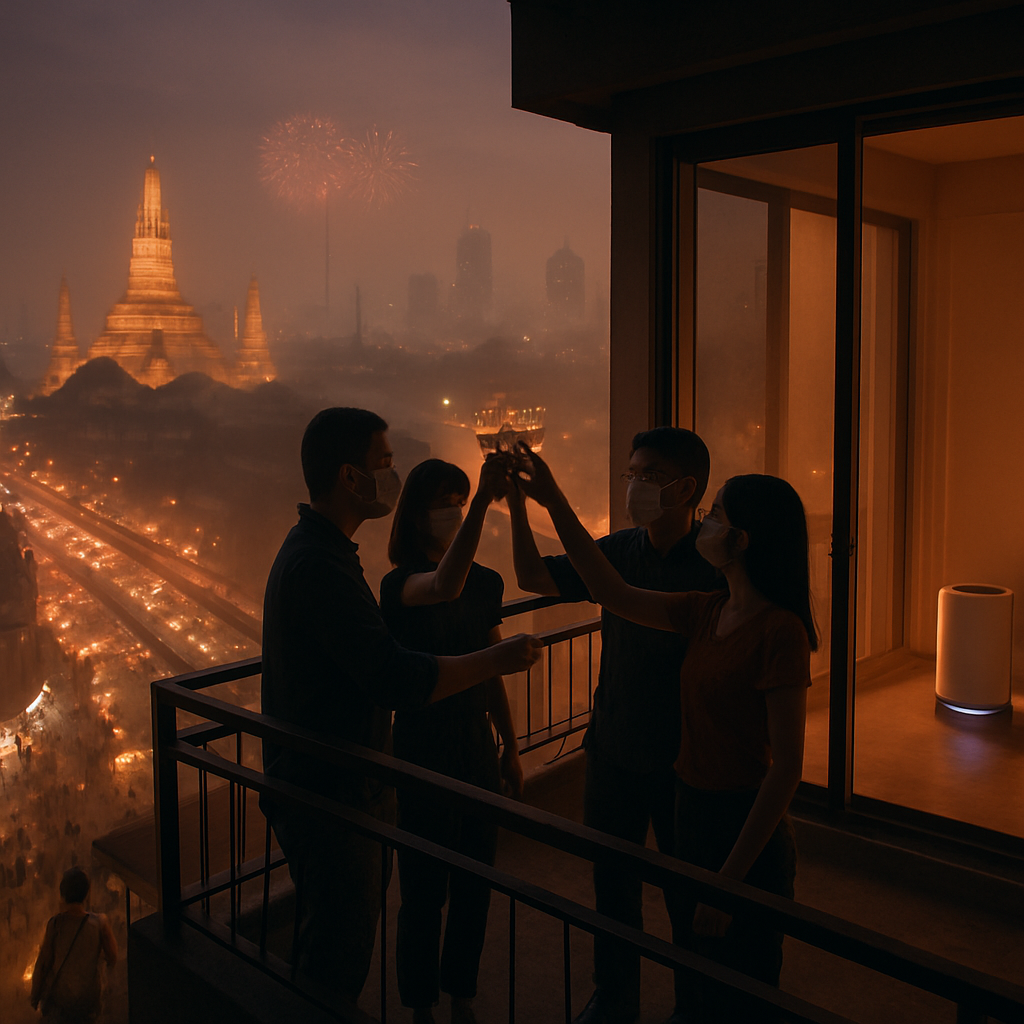
The Bangkok authorities have waved a yellow flag — figuratively speaking — as the capital heads into its busiest holiday stretch. The Bangkok Air Quality Information Centre has released an updated outlook spanning December 26, 2025 to January 3, 2026, warning that PM2.5 levels could climb as air ventilation weakens across the city during the New Year celebrations. Translation: if you’re planning rooftop toasts, midnight fireworks, or long drives home, keep one eye on the skies and the other on your lungs.
Good news first: ventilation on December 26 and 27 is expected to be “fair to good,” which will help disperse fine particulate matter and keep PM2.5 concentrations relatively manageable for most areas of Bangkok. Those two days are your best bet for outdoor activities without the extra worry of heavy haze. Enjoy the markets, the parks, and the last-minute shopping — just don’t forget basic common-sense precautions.
Things change from December 28 onward. The forecast predicts ventilation dropping to relatively low levels between December 28 and 30, increasing the chance that PM2.5 will build up, especially during the evening and early-morning hours when air circulation is weakest. Then comes the peak holiday pressure: December 31 and January 1 are expected to have poor ventilation. With heavy traffic, fireworks, and packed outdoor celebrations across inner-city zones and neighborhoods downwind of major roads, that perfect New Year’s photo could come with a side of unhealthy air.
The good news returns after the holidays. From January 2 to 3, air ventilation is forecast to strengthen, which should help pollution levels ease gradually as conditions improve. But until then, a few hours of planning and a handful of simple precautions can make a big difference.
When and where to be extra careful
- High-risk time window: 6:00 pm to 9:00 am — evenings and nights are when PM2.5 tends to concentrate.
- High-risk locations: central Bangkok and areas downwind of major roads and highways.
- High-risk scenarios: days when poor ventilation coincides with heavy traffic, fireworks, and large outdoor gatherings.
Officials point out that inner-city zones — where traffic bottlenecks are relentless and buildings can trap emissions — are most likely to see sharper increases in PM2.5. If you’re planning to attend street parties or watch fireworks along busy roads, expect pockets of poor air quality.
Practical tips to stay safer and breathe easier
You don’t need to become an air-quality hermit, but these practical steps will reduce your exposure:
- Monitor real-time readings with the AirBKK app. It’s the quickest way to know whether it’s safe to head outdoors.
- Limit strenuous outdoor exercise during poor-air periods — running or cycling increases the amount of polluted air you inhale.
- Vulnerable groups (children, older adults, and people with respiratory or heart conditions) should avoid outdoor activities when PM2.5 levels spike.
- Wear a proper mask when necessary. N95 or equivalent masks filter fine particles better than cloth masks.
- Keep windows closed during low-ventilation nights and consider using indoor air purifiers if you have access to one.
- If you must travel through congested areas, keep car windows up and use recirculation mode to limit ingress of polluted air.
- Be mindful when setting off fireworks — they’re festive, but they also dump a big short-term dose of particulates into the air.
A community effort helps everyone
City officials stress that public awareness and personal precautions are crucial. With hundreds of thousands on the move for the New Year — crowded highways, busy bus terminals, and packed neighborhood festivities — each of us can help reduce health risks by making small choices: delay nonessential travel on the worst days, avoid lighting personal fireworks in dense neighborhoods, and check the AirBKK app before planning outdoor meetups.
Think of it as a collective New Year’s resolution: less smoke, less stress, and healthier lungs as we head into 2026. Celebrate, but celebrate smart. A clearer morning and stronger ventilation after January 1 will bring relief — and plenty of fresh air to enjoy once the city’s rhythms return to normal.
Keep your plans flexible, follow local updates, and if you or a family member feel worse on high-pollution days, seek medical advice. Bangkok’s New Year can still be joyful — just make sure you’re breathing easy enough to remember it.









The city’s Air Quality Centre warns PM2.5 could rise from Dec 28 through Jan 1 due to weakened ventilation, traffic, and fireworks, with relief expected after Jan 2. Please monitor AirBKK and consider masks and indoor strategies during those high-risk hours.
So basically the city tells us to stay inside while everyone else parties on the streets? That won’t go down well with vendors and families celebrating outside.
Thanks for the heads-up. Quick question: are cloth masks useless in these spikes, or are N95s necessary for brief outdoor selfies at midnight?
N95 or equivalent masks filter PM2.5 much better than cloth, especially during short intense exposures like fireworks shows. For most casual outdoor time during fair ventilation days, a surgical mask helps, but during the poor-ventilation nights the stronger masks are recommended.
Seems like an excuse to blame people lighting fireworks instead of fixing traffic and factory emissions. Forecasts are useful but don’t let them distract from bigger pollution sources.
My street gets smoke trapped between tall buildings every year; New Year is always the worst for my asthma. Authorities should ban fireworks on main roads at least.
A temporary ban near traffic corridors and designated fireworks parks could work, plus better enforcement and public campaigns. People want to celebrate, not harm themselves.
Good luck enforcing bans. People will just move celebrations to side streets and complain about being restricted by the ‘nanny state.’
Or we incentivize safe alternatives and provide community displays, which many cities do successfully. It’s about design, not bans alone.
I’m worried about my toddler and elderly mother during those poor ventilation nights. Are indoor purifiers worth renting for a few days?
Portable HEPA air purifiers can significantly lower indoor PM2.5 if sized correctly for the room, and they’re worth short-term use during spikes. Also keep windows closed and avoid indoor sources like frying that produce particles.
We rented a small purifier last winter and it made a noticeable difference; kids slept better and we felt calmer about going outside for short errands.
How accurate are these forecasts anyway? Feels like another weather-like guess that will be wrong by midnight.
Forecasts are often used to control narratives; apps love to show red to push behavior changes. I’d trust my own eyes more than some model.
AirBKK uses a network of sensors and meteorological models, so it’s more reliable than intuition. Models can be wrong, but they help plan and reduce risks, especially for vulnerable people.
From a clinical standpoint, short-term spikes in PM2.5 can exacerbate COPD, asthma, and even increase cardiac events in susceptible individuals. Public messaging should prioritize clear thresholds for action and support services for those at risk.
Can you point to studies for that? Seems like alarmist medicine to tell everyone to avoid the party when harms are small for most people.
I have COPD and the last New Year I spent indoors because of the smoke; I felt much better staying home with the windows closed. It’s not just alarmism for some of us.
Everyone blames fireworks, but agricultural burning outside the city and old diesel trucks matter too. We need holistic policies, not moral shaming of revellers.
True, but people lighting fireworks are an easy target. Real solutions mean investing in cleaner freight and enforcing industrial emissions, which costs money and political will.
Wouldn’t a combined approach work: short-term public guidance during spikes and long-term emission controls? It feels doable if the city commits.
Long-term fixes sound nice but are always delayed. Meanwhile, people should just decide if they care about air or fireworks and act accordingly.
I respect health advice, but policies often punish individuals while big polluters go unchecked. Where’s the accountability?
Accountability requires transparency in emissions data and stronger urban planning to reduce congestion. Citizens can push for that through local advocacy and voting.
We tried petitioning our district for a traffic plan and got a canned response. Grassroots pressure is slow but might be the only way.
Urban design can mitigate trapped pollution: more green corridors, lower emissions zones, and strategic event locations reduce harm without killing traditions.
Agreed, and integrating real-time sensor data into event permits could stop large gatherings in high-risk pockets. Tech helps if city agencies use it.
There’s room for smarter tech: routing apps could steer traffic away from congested, downwind neighborhoods during spikes to lower exposures. It would take private-public cooperation but it’s feasible.
Good idea, but ensure equity — avoid pushing traffic and pollution into poorer districts. The tech needs ethical constraints from the start.
I’m just asking for clearer help for seniors: where can we get masks or a local service to check on vulnerable neighbors during bad nights? Simple support helps a lot.
We organize a WhatsApp group in our condo to check on older neighbors and share purifier access; small community acts like that could scale if promoted by the city.
We cancelled our rooftop gathering last New Year because of haze and it felt like the right call for our kids. It’s disappointing but a small sacrifice for health.
That’s a sensible approach for families with young children; planning indoor celebrations or rescheduling to Jan 2-3 when ventilation improves minimizes risk and preserves the holiday spirit.
People love to be told how to celebrate. If you want to stay in, stay in — don’t expect everyone else to follow your caution.