Thailand

Bangkok's Innovative Air Quality Alerts: Empowering Residents with Real-Time Updates

Imagine a cityscape where the air tells its own story—a narrative of the unseen particles we breathe in as we go about our daily lives. In bustling Bangkok, the Air Quality and Noise Management Division of the…
Bangkok's Innovative Air Quality Alerts: Empowering Residents with Real-Time Updates

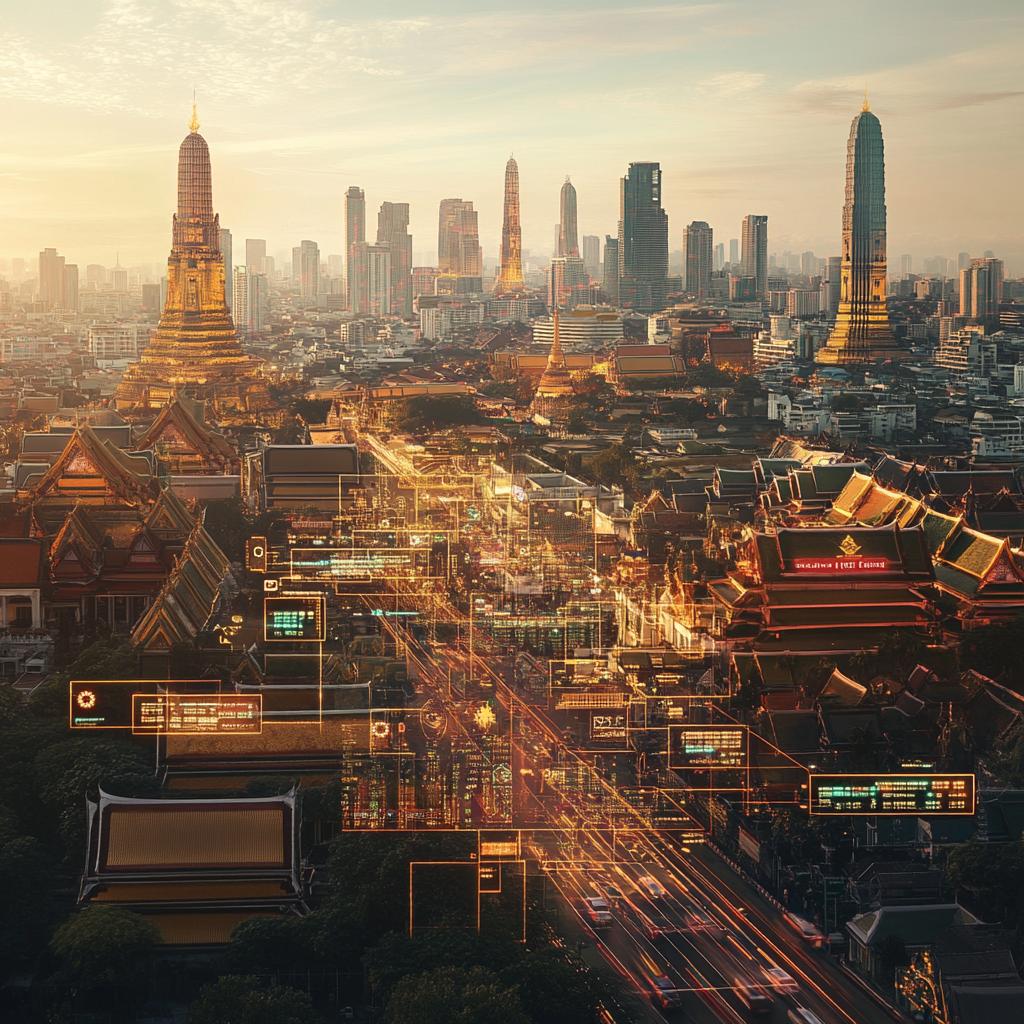
Imagine a cityscape where the air tells its own story—a narrative of the unseen particles we breathe in as we go about our daily lives. In bustling Bangkok, the Air Quality and Noise Management Division of the Environment Department has taken a pioneering step by harnessing technology to make air quality data an integral part of urban experience. Like unseen sentinels, 70 strategically placed air quality monitoring stations keep a vigilant eye over the metropolis, gathering vital statistics that capture the essence of the air we live in.

These stations diligently transmit data to the BMA's Air Quality Data Center, which then directs this invaluable information to smart traffic signs scattered across the city. Think of these signs as digital heralds, broadcasting real-time dust level data directly to the people who need it most—the residents of Bangkok. This seamless integration means that each day, citizens are empowered with the knowledge to make informed decisions about their routes and routines, safeguarding their health and the well-being of their families.

With a flicker and a glow, 44 screens stationed across 18 neighborhoods spring to life. Picture a web of districts, each plugged into this network of awareness. From vibrant Chatuchak, the artistic heart of the city, to the bustling avenues of Din Daeng, every corner gets its own sneak peek into the air quality. Dusit's historic charm and Bangkok Noi's riverside beauty, both connected by the digital threads of data, share the same air revelations.

Even as the city's pulse races through Bang Kapi and Sathon, where commerce meets culture, and across Bang Rak's banking veins or under the leafy shelters of Phaya Thai, the message remains clear: knowledge is power. Screens in Bueng Kum buzz with updates, while travelers in Pom Prap Sattru Phai navigate pathways infused with awareness. In the artistic enclaves of Pathum Wan and Watthana, where fashion walks side by side with innovation, these signs offer more than just numbers. They tell a story of commitment to health and community well-being.

Khlong Toei, with its vibrant port, and Phra Khanong's eclectic stretch, resonate with the rhythms of real-time air data. Even in the quieter districts like Phasi Charoen and Ratchathewi, where markets bustle in harmony with local life, these screens are sentinels of the unseen. In areas like Wang Thonglang and Hual Khwang, where residential and commercial zones intertwine, these messages serve as a quiet sentinel of security.

The grand narrative unfolds daily, a tale woven through pixels and data streams, painting a comprehensive picture of Bangkok’s atmosphere. And as people weave through their daily commutes, these dynamic displays become part of the city’s furniture—familiar yet essential, a constant reminder of the air we share and the collective responsibility to adapt and thrive. Because in a city that never sleeps, being informed is the first step toward healthier living.


26Comments
Sort by:
JJoe··1 pts · 3 replies
J
Joe
This seems like a great initiative, but I can't help wonder about the cost to taxpayers. Shouldn’t residents already be aware of the air quality issues we face?
1
Ssimpleman22··1 pts
S
simpleman22
That's a valid point, but the cost of not knowing is much higher in terms of health. It's a long-term investment!
1
GGrower134·1 pts
G
Grower134
Agreed, as a gardener, I rely on knowing this information daily to protect my plants. Can’t put a price on health or environment.
1
JJoe··1 pts
J
Joe
I get that, but maybe they could've done it a bit more cheaply using a smartphone app instead?
1
MLMaria L.··1 pts · 2 replies
ML
Maria L.
The article makes it sound like they're saving the world, but what about the pollution at its source? Shouldn’t we be reducing emissions rather than just broadcasting them?
1
DDrGreen··1 pts
D
DrGreen
Both strategies should go hand in hand. Awareness helps drive policy changes, but reducing emissions is crucial.
1
EEcoWarrior··1 pts
E
EcoWarrior
It's not just about awareness, it's about accountability for creators of pollution too. They should foot the bill for air quality improvement!
1
Yyoungblood7··1 pts · 2 replies
Y
youngblood7
Does anyone actually pay attention to these signs while driving? People in Bangkok are too busy trying not to crash!
1
BBalanceSeeker··1 pts
B
BalanceSeeker
In chaotic traffic, probably not. But pedestrians and public transport users might benefit more.
1
MLMaria L.··1 pts
ML
Maria L.
I think it's also meant for people planning their days, not just drivers—like if you have kids or the elderly in your family.
1
LDLarry Davis··1 pts · 2 replies
LD
Larry Davis
It's cool how technology can help manage our health. But doesn’t this tech expose us to more electromagnetic radiation?
1
Sskeptik··1 pts
S
skeptik
Not sure if that's a concern with these screens, but I guess we should be mindful about tech overload.
1
LDLarry Davis·1 pts
LD
Larry Davis
Exactly, tech is great but moderation is key. Maybe we need more studies on those effects too.
1
GGeekyGal··1 pts
G
GeekyGal
Finally, a city is applying digital transformation for good and not just commerce. Kudos to Bangkok for leading the way!
1
BBob··1 pts · 1 reply
B
Bob
How sustainable is this project, though? Using digital screens adds to energy consumption too.
1
EEcoNerd··1 pts
E
EcoNerd
Maybe they're offsetting it with renewable energy? Would love to hear more about their sustainability measures.
1
AAlex··1 pts · 2 replies
A
Alex
This is a great functional step forward for urban living—tech making air quality a part of daily decision-making.
1
Sskeptik··1 pts
S
skeptik
Sure, but how many people will actually change their routines based on air quality data? It's a cultural shift too.
1
AAlex··1 pts
A
Alex
Cultural shifts can start with just a few. If some people change, others might follow once they see the benefits.
1
LDLarry D··1 pts · 1 reply
LD
Larry D
Interceptive like this keep people scared. We’ll be constantly anxious about what's in the air—sometimes ignorance is bliss.
1
ABAnna B··1 pts
AB
Anna B
It's only scary if you don't take action. Knowing means you can reduce exposure for vulnerable people.
1
TTimmy··1 pts
T
Timmy
That’s a lot of screens for some air facts! They must really care about this topic. I guess it’s important to some people.
1
PPonomarev··1 pts
P
Ponomarev
Innovations like these are why Bangkok is a fantastic city. They're showing us the future of living with technology!
1
OOfficer644··1 pts
O
Officer644
Less talk, more action! Get those polluters and enforce laws. You don't need screens for that. Just do it!
1
SSunny··1 pts
S
Sunny
Will tourists even understand these signs? Might be a bit noisier than useful.
1
TTTommy T··1 pts
TT
Tommy T
Anyone else feel these could be used for not just air quality, but noise pollution too? Two birds, one stone.
1
