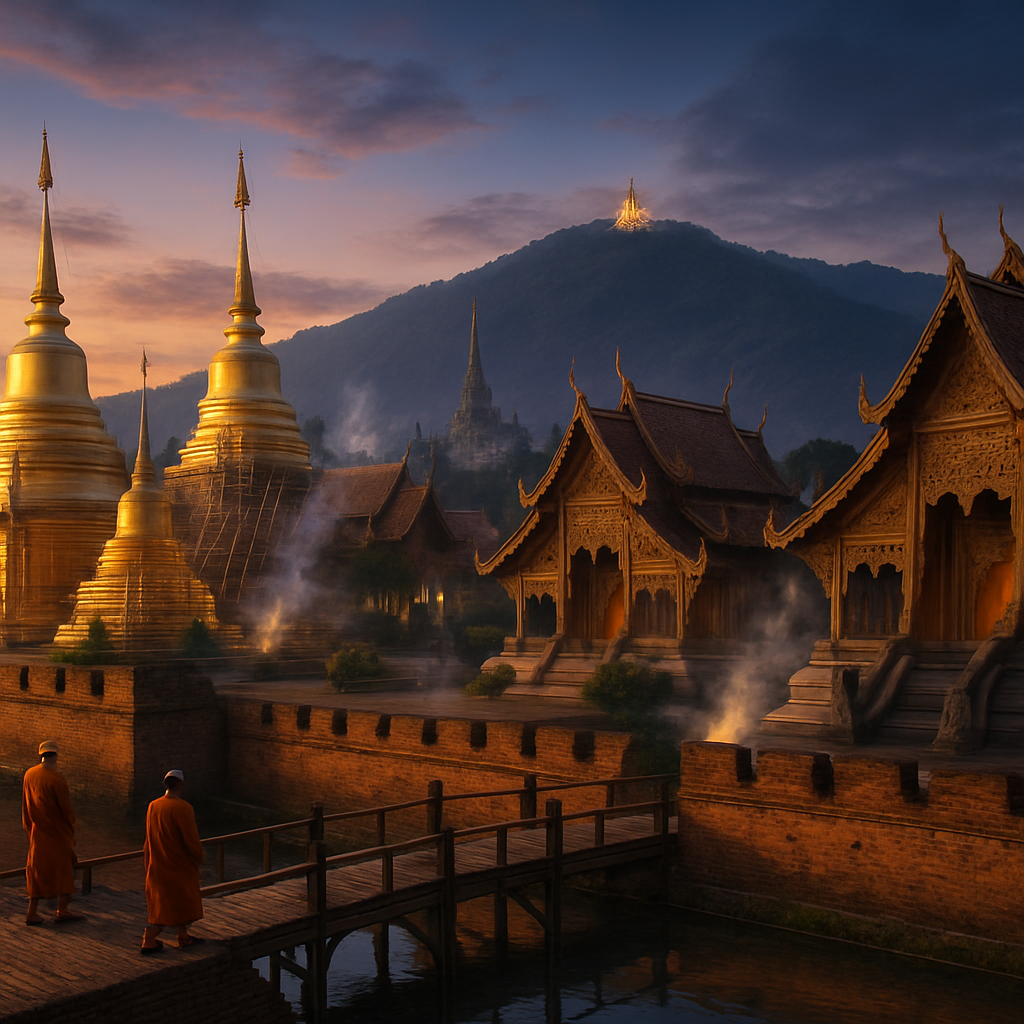
Chiang Mai is gearing up to trade its centuries-old incense smoke and teakwood whispers for a very modern badge: UNESCO World Heritage status. In a decisive move on December 16, Thailand’s national committee on world heritage — led by Deputy Prime Minister and Minister of Natural Resources and Environment Suchart Chomklin alongside Minister of Culture Sabina Thaised — approved the nomination dossier titled “Chiang Mai: Capital of Lanna” for submission to UNESCO as a cultural World Heritage Site.
Why the rush? Chiang Mai has sat on Thailand’s tentative list since 2015, biding its time like a patient monk. But a looming deadline has officials sprinting: sites already on the tentative list can still lodge a direct nomination only until January 30, 2026. After that, a new two-year preliminary assessment process comes into play. To avoid the bureaucratic detour, the government is fast-tracking the application so Chiang Mai can try to cross the UNESCO finish line within the current window.
Seven temples, one city — a package deal
The nomination doesn’t ask UNESCO to fall in love with Chiang Mai’s entire charm at once. Instead, it focuses on seven emblematic temples that together tell the story of Lanna civilisation — its architecture, ritual life, and aesthetic identity. The temples named in the dossier are:
- Wat Chiang Man — The city’s oldest temple, founded by King Mangrai, and a living link to Chiang Mai’s founding era.
- Wat Chedi Luang — Once home to the Lanna Kingdom’s largest chedi (stupa), its ruins still tower with silent dignity.
- Wat Phra Singh — A jewel trove of Lanna art through the ages and the home of the revered Phra Singh Buddha image.
- Wat Suan Dok — A spiritual crossroads illustrating ties between Lanna, Sukhothai and Bagan cultures; also a royal cemetery for northern nobility.
- Wat Umong — Famous for its meditation tunnels and a quirky forest-monk vibe; architecturally unique in Thailand.
- Wat Phra That Doi Suthep — The mountain-top symbol of Lanna piety, visible from the city like a guardian on high.
- Wat Chet Yot — Inspired by Indian Buddhist forms and inclusive of the seven great sacred sites (Sattamahasthana).
But temples are only part of the story. The nomination also highlights Chiang Mai’s original square city plan, complete with preserved moat and city walls — urban archaeology that helps explain how the Lanna capital functioned as both a fortress and a cultural heart.
Ready, revised, and waiting for Cabinet
According to Rawiwan Phuridej, Permanent Secretary of the Ministry of Natural Resources and Environment, the nomination dossier has been revised in line with comments from the World Heritage Centre and is now waiting for Cabinet approval. If Bangkok signs off in time, Chiang Mai’s dossier will be submitted under the current rules — and avoid being postponed into a lengthier new assessment process.
Officials argue that the Lanna-era structures meet UNESCO’s test of Outstanding Universal Value (OUV) — a core requirement for a cultural designation.
Bowornwet Rungreungkiat, a former director-general of the Fine Arts Department who sits on the national committee, emphasised that the ensemble of temples, walls and moats doesn’t just matter to northern Thailand — it has significance that can be appreciated by the world.
What the designation could mean for Chiang Mai
Winning UNESCO status is about more than plaque-collecting. Officials hope the inscription will protect Chiang Mai’s Lanna identity, channel public and private funds into conservation, and steer tourism toward more sustainable practices. Think of the way Sukhothai and Ayutthaya were reshaped by UNESCO recognition: heightened protection, better visitor management, and a clearer narrative for cultural tourism. Chiang Mai’s twist? Its rapidly growing reputation as a MICE (Meetings, Incentives, Conferences, Exhibitions) destination — a sector that could benefit from the prestige of World Heritage recognition while requiring careful planning to avoid overtourism.
Local historians and tourism strategists are already talking about balancing pilgrim and conference-goer, monk and meeting planner, so that souvenir stalls don’t crowd out centuries-old stucco and spirit houses.
One deadline, many stakeholders
The clock is ticking toward January 30, 2026, and the nomination’s fate now depends on a cascade of approvals: Cabinet sign-off, submission to UNESCO, and ultimately the World Heritage Committee’s review. If Chiang Mai makes it through this year’s window, the city will have preserved a strategic advantage and a symbolic victory for Lanna heritage. If it misses the deadline, the dossier will need to enter the new preliminary assessment cycle — not impossible, but certainly longer and costlier.
Whether you’re a history buff, a temple-hopping traveller, a local shopkeeper, or an event planner eyeing Chiang Mai’s convention halls, this nomination is worth watching. It’s a high-stakes effort to lock a fragile cultural identity into international protection — a bid to ensure that Chiang Mai’s teak-scented alleys and ornate stupas remain not just memories in guidebooks, but living parts of the city’s future.
In short: keep an eye on the headlines. Chiang Mai may soon wear UNESCO’s laurel — and if that happens, those seven temples and one storied city layout will have claimed a place on the global stage.










UNESCO status would be amazing for Chiang Mai and could really help preserve those temples for future generations.
Sounds nice, but UNESCO also brings crowds and gift shops on every corner; conservation doesn’t always mean better lives for locals.
True, but with good management and local voices at the table it could fund real preservation and not just souvenir stalls.
The balance you both mention is the key challenge: inscription can provide legal frameworks and funds, yet it can institutionalize tourism patterns. Thoughtful zoning and heritage-led development policies are essential.
This feels like another way for officials to sell off culture to tourists and conference promoters.
As someone who farms around the city, I worry about land prices and rents pushing locals out if this becomes a global trophy.
Exactly; history commodified while people who live there get priced out. UNESCO shouldn’t be a stamp of displacement.
I’m from Chiang Mai and I want the temples protected, but will monks and daily rituals be kept private or turned into shows for tourists?
Some tours already respect rituals, but others don’t. Proper visitor education and strict temple rules could help preserve sacred practices.
I hope rules are enforced and the community has power to decide what is shared. Too many outsiders push their schedules on us.
Monastic life adapts, but intention matters. If reverence is replaced by photo ops, the spirit is lost, not the stones.
The dossier’s focus on seven temples plus the urban plan is a strategically sound selection to demonstrate Outstanding Universal Value (OUV).
But why only seven temples? There are so many smaller shrines that tell the people’s story too.
UNESCO nominations often use representative ensembles. The seven are emblematic, but nomination management should include broader community narratives in interpretation plans.
If Chiang Mai gets UNESCO status, school curricula must teach local kids about Lanna history so they don’t just learn a touristified version of their past.
Yes, integrate living heritage into classes — language, crafts, rituals — not just architecture. Kids need identity, not postcards.
Agreed. UNESCO funds could support educational programs if properly allocated.
Deadline pressure smells like political theatre—rush now, fix later. That’s how mistakes are made.
The Jan 30, 2026 deadline is real though; the two-year assessment could mean more bureaucracy and costs.
I get the timeline, but haste often means corners are cut in community consultation and environmental studies.
Will UNESCO actually stop skyscrapers creeping near the moats? Money talks louder than heritage plaques.
Inscription can strengthen planning controls, but enforcement is political. It provides leverage to resist insensitive development if civil society is mobilized.
So it helps, but only if people fight for it. That sounds like more work, not a magic fix.
Make it UNESCO and then use the brand to attract conventions. Simple economic strategy.
Simple strategies usually ignore locals. Conventions bring revenue but also small-business displacement and noise.
If revenue gets reinvested into conservation and rent relief, it can work. The problem is accountability.
As a technologist, I want to see digital preservation tied to the bid — 3D scans, virtual tours for those who can’t visit.
Virtual access is great, but it shouldn’t replace the living experience of walking the moat or smelling incense.
I agree — digital should complement, not substitute. It can also reduce overtourism by offering alternatives.
Temples are living things, not monuments. UNESCO status can freeze them into museum pieces if misapplied.
That’s a good caution. Management plans must allow continued religious practice and community usage.
Then include monks and villagers in governance; otherwise the living practice will quietly wither.
If they really want to protect Lanna identity, why not fund artisan cooperatives and living craft zones, not just plaques?
Yes, economic measures need to follow. Heritage without livelihoods is performative.
Exactly. We need market access, fair prices, and training for youth to keep crafts alive.
I visit every year and I want the city to remain beautiful. UNESCO might save buildings but can it save the vibe?
Vibe is about people, food, street life. Policies need to protect those informal economies, not just stone walls.
Right — conservation plans that kick out street vendors will kill the vibe faster than anyone tearing down a chedi.
Cabinet approval is the real bottleneck. A lot can happen between a draft dossier and final sign-off.
Political alignment and inter-ministerial coordination will be decisive. The dossier’s quality helps, but governance matters more.
So public pressure and expert advocacy could tip Cabinet in favor if they see public support.
Tourism already ruins peak season. UNESCO would just mean more peak seasons and more ruined places.
Counterpoint: UNESCO can mandate visitor management and help fund infrastructure to spread visitation across the year and sites.
That only works if officials care about small villages instead of fancy hotels getting richer.
I’m worried about the authenticity of rituals when they’re packaged for international committees and tourists.
Authenticity is contested; practices evolve. The goal should be to empower communities to decide what authenticity means for them.
Community agency must be central, not an afterthought for grant paperwork.
Seven temples are cool, but what about conservation of waterways and the moat ecosystem?
Yes, the moat is part of the story and if it dies the whole urban plan loses meaning.
Exactly, nomination should include ecological restoration, not only stone conservation.
International recognition is a double-edged sword; it brings pride and profiteers in equal measure.
Profit can fund preservation if properly taxed and regulated. The problem is governance again.
Then let’s demand transparent funds and community benefit clauses before voting yes.
I think UNESCO will encourage better research and archaeology around the city plan, which is exciting for scholars.
Indeed, it often catalyzes multidisciplinary studies and long-term conservation funding that academia alone cannot secure.
So academics and locals should partner now to set research priorities.
As a vendor near Wat Phra Singh, I’m anxious. Will I be relocated? No consultations happened with us yet.
Local consultations should happen before any restrictive measures. Compensatory strategies are standard in good management plans.
I hope the Cabinet hears that. We need security, not eviction notices hidden behind conservation.
Comparative cases like Sukhothai show both gains and social costs; a rigorous impact assessment would be prudent before inscription.
Impact assessments can be politicized, but independent ones make a big difference for donor and policy decisions.
I recommend commissioning a third-party socio-economic and cultural impact study as part of the dossier’s mitigation measures.
What worries me is that heritage becomes a brand and the Lanna voice gets repackaged for foreigners.
Cultural tourism often filters local narratives into digestible bites. Real curation must include local storytellers.
Exactly. Grant storytelling rights to community groups, not just tourism agencies.
As a photographer I want access, but I also respect privacy and sacred moments. Rules must be strict and enforced.
Photography guidelines and clear signage help. Tours should be licensed and trained in respectful conduct.
Good point — licensing could weed out exploitative operators.
This nomination could help artisans, but only if markets are protected and not dominated by chains.
Support cooperatives and local branding, not corporate souvenirs. Locals must control the supply chain.
Agree, community-led enterprises are the future of sustainable heritage.