Chiang Mai's Air Quality Crisis: Governor and Experts Rally against PM2.5 Pollution Onslaught
On a crisp Monday morning in Chiang Mai, a gathering of some of the most brilliant minds took place, amidst an unwelcome guest - a thick, misty smog, blanketing the air with a menacing cloak of PM2.5 particles. Governor…
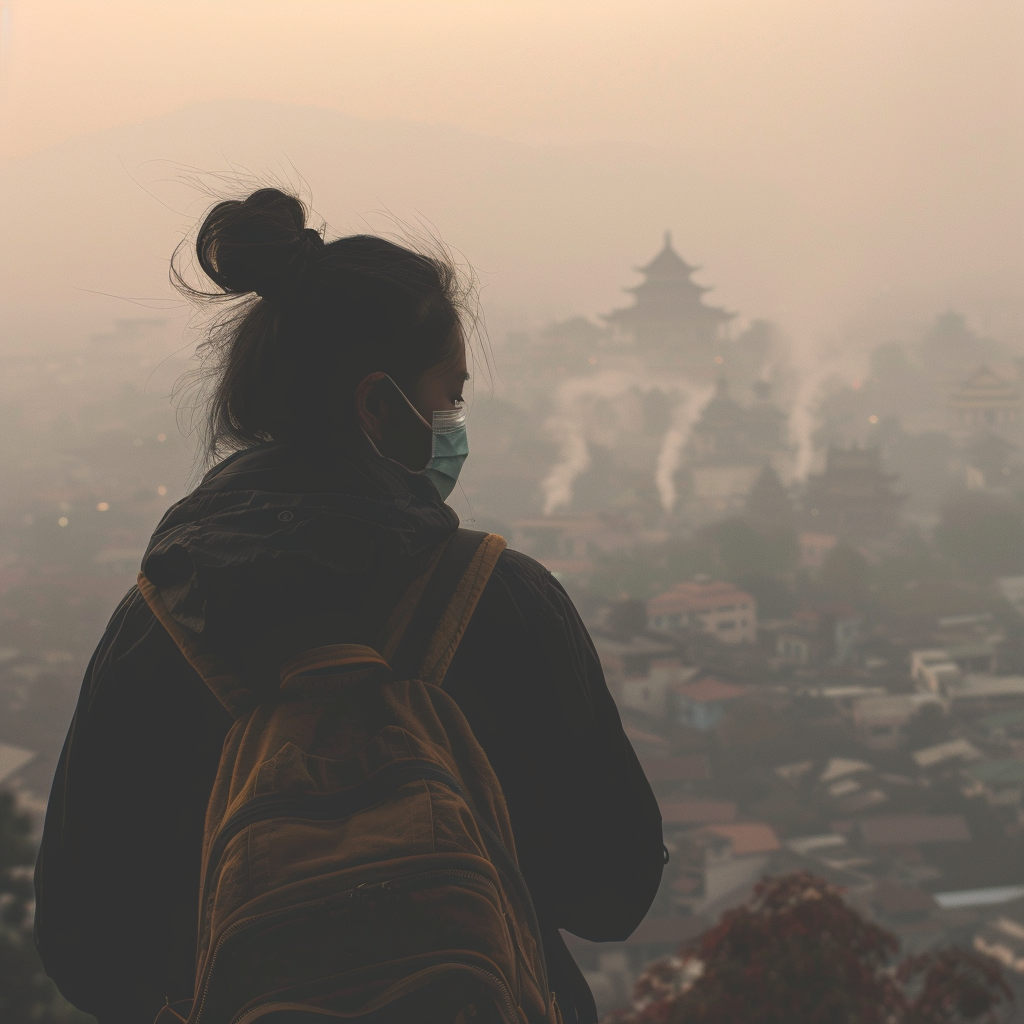
On a crisp Monday morning in Chiang Mai, a gathering of some of the most brilliant minds took place, amidst an unwelcome guest - a thick, misty smog, blanketing the air with a menacing cloak of PM2.5 particles. Governor Nirat Pongsitthaworn, standing with the stoic resolve of a seasoned champion of public health, alongside luminaries from the Faculty of Medicine at Chiang Mai University, addressed the media with an air of urgent concern. The topic on everyone's lips? The insidious invasion of PM2.5 and its terrifying grip on public health across 37 out of Thailand’s 77 provinces, predominantly suffocating the North. (Photo credits: Panumet Tanraksa)
Imagine waking up to a world where the air is so thick with pollutants that every breath feels like inhaling a murky soup of invisible, yet hazardous particles. This was the reality for residents in the enchanting regions of the North, with Chiang Rai caught in the particularly maleficent embrace of PM2.5 levels reaching a staggering 107.5 microgrammes per cubic metre of air – a figure almost triple the threshold set by the government for 'safe' air. Not far behind, Chiang Mai, Phayao, Mae Hong Son, and several other provinces were engulfed in this toxic cloud, facing "red" alerts symbolizing air quality that is not just unhealthy, but seriously harmful.
The sly and capricious nature of PM2.5 makes it a formidable foe. These particles, so fine that several thousand of them could dance on the head of a pin, have managed to weave themselves into the fabric of daily life, uninvited. People in 30 other provinces, mostly in the Northeast, woke up to "orange" alerts – a stark reminder that the air they breathe teeters on the brink of turning from unsafe to dangerous.
Yet, amidst this dire panorama, there were oases of respite. Provinces in the lower Central Plains, the East, and the South presented a tableau of moderate to good air quality, with Samut Songkhram and Narathiwat witnessing air as pristine as nature intended, with PM2.5 levels at a mere 15.0 and 15.4 microgrammes per cubic metre of air, respectively. A beacon of hope, showing that the battle is tough, but not lost.
As digital warriors took to social media, Prime Minister Srettha Thavisin dispatched a message of determination, painting a picture of a government in relentless pursuit of cleaner air. Burning - the clandestine adversary hiding in plain sight, both within the country's borders and in the lands beyond - continues to be a formidable challenge in this quest.
In an era where heroes come in various forms, Governor Pongsitthaworn offered practical armament to his people – the promise of sanctuaries with clean air and the simple, yet potent shield of face masks. The message was clear: no one is alone in this fight.
Adding a layer of profundity to the discussion, the Faculty of Medicine at Chiang Mai University cast a spotlight on the invisible wounds inflicted by PM2.5 pollution. A herald of lung cancer, a saboteur of respiratory and cardiovascular harmony, this pollutant had stealthily exacerbated cases of nose bleeding, eye irritation, asthma, and rashes within a mere fortnight.
In an uproar against this unseen villain, the community stands shoulder to shoulder, armed with knowledge, determination, and the unwavering spirit of unity. The haze may be thick, but the resolve of the people and their leaders is thicker, blazing a trail towards a future where the air is not a carrier of doom, but a breath of life.



Comment verification
Step 1 of 3
Verify your email once to publish your comment. Your email is never shown publicly.
Enter the 6-digit code sent to .
Choose the display name shown next to your comments.