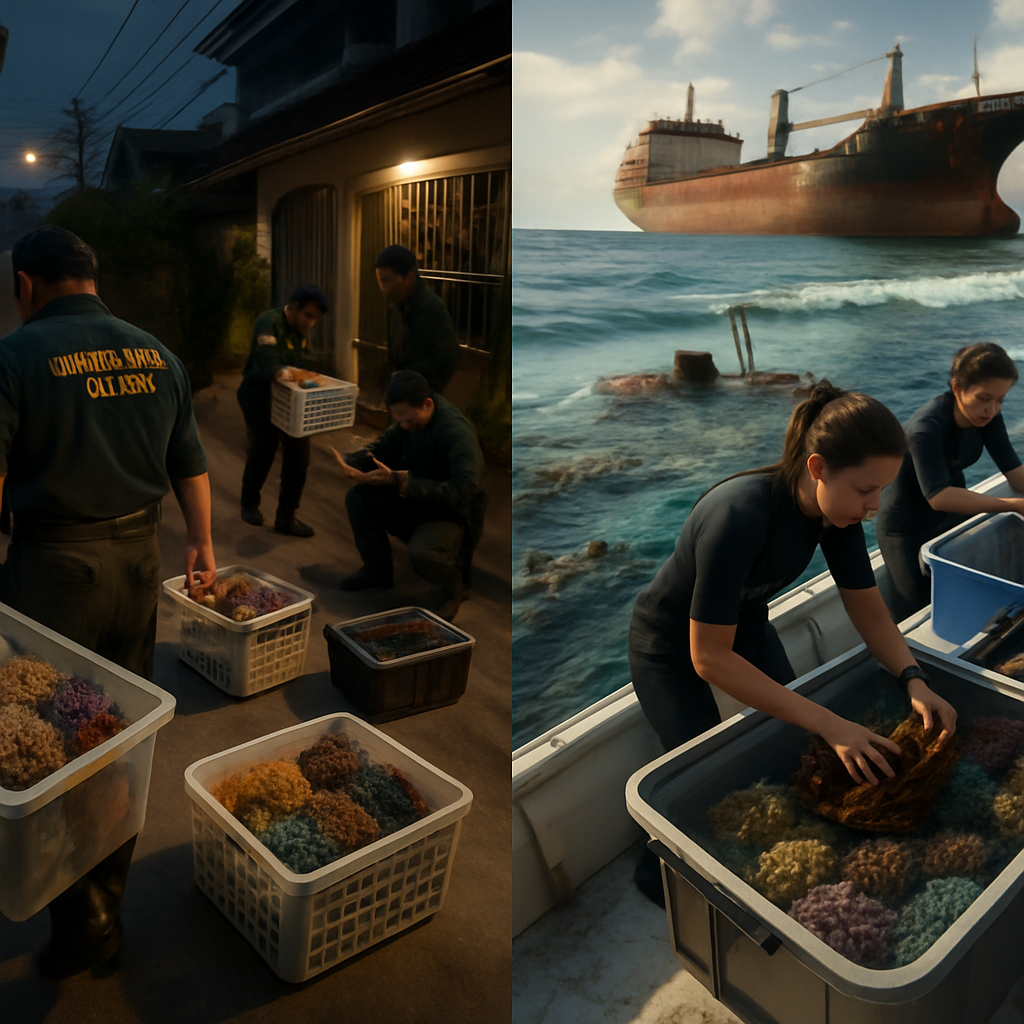
Bangkok’s quiet residential streets turned into the latest front in Thailand’s fight to protect its underwater treasures on December 24, when environmental police arrested a 33-year-old man accused of selling protected coral and sea anemones online. The suspect, identified as Chitipat, was taken into custody after officers found more than 200 marine specimens during a court-authorized search of a house on Soi Phetkasem 77 in the capital’s Nong Khaem district.
A digital trail led investigators to a physical haul
The investigation began in the most 21st-century of ways: with online adverts. Officers from the Natural Resources and Environmental Crime Suppression Division spotted posts in public social media groups offering coral for sale, which prompted surveillance and digital sleuthing. The online listings, investigators say, eventually pointed to Chitipat as the likely seller and secured a court warrant to search the property.
When police executed the warrant, they reportedly discovered a collection of live coral, sea anemones and coral fragments — 245 items in all — housed inside the residence. Authorities described the cache as significant not just in number but in ecological value, underscoring why Thai law tightly restricts the private possession and commercial trade of coral.
Why coral is protected in Thailand
Coral is more than pretty reef scenery; it’s a vital, vulnerable marine invertebrate that supports fisheries, protects coastlines and shelters a dazzling array of marine life. Recognizing its declining populations, Thai legislation lists coral as a protected marine animal. That status makes possession or trade without explicit permission illegal — a legal shield intended to stop the kind of damage that illegal collectors can cause to fragile reef ecosystems.
Following the arrest, all seized specimens were transferred to the Department of Marine and Coastal Resources (DMCR) so experts could provide appropriate care and begin the conservation steps necessary to preserve whatever can be saved. Investigators said the ecological loss from illegal possession is difficult to quantify financially, because the damage extends beyond simple market value to the long-term health of reefs and the services they provide.
Confession, custody and the road ahead
According to reports, Chitipat confessed to the offences during questioning and was handed over to investigators for further legal proceedings. With charges for trading and possessing protected wildlife without permission, the case will move through the Thai justice system — a process that could become a public example of how wildlife crime is handled in urban settings.
Environmental prosecutors and conservation officials are increasingly focused on the online marketplace as a source of illicit wildlife trade. Social media platforms and closed groups can create a false sense of security for sellers and buyers, but that digital footprint also leaves clues for determined investigators.
Not an isolated problem: reef damage in the south
The arrest in Bangkok comes as conservation teams in southern Thailand are grappling with a different kind of coral crisis. A Myanmar-flagged cargo ship recently ran aground on a coral reef inside Mu Koh Surin National Park in Phang Nga province, scraping a 42-metre stretch of reef. Environmental teams used photo quadrat surveys to assess the damage and identified staghorn coral (Acropora spp) as the most harmed, followed by Porites rus, blue coral (Heliopora sp) and boulder coral (Porites lutea).
Ship groundings are blunt, large-scale disturbances that can decimate reef structures in an instant; illegal collection chips away at reefs more quietly but no less destructively. Both types of impacts highlight how fragile reef ecosystems are and how quickly human activity — intentional or accidental — can push them toward tipping points.
What this means for conservation and enforcement
There are a few clear takeaways from the Bangkok arrest and the Mu Koh Surin incident. First, conservation enforcement is increasingly digital and collaborative: online monitoring, local surveillance and inter-agency cooperation — in this case between the Natural Resources and Environmental Crime Suppression Division and the DMCR — are crucial. Second, protecting coral requires both reactive measures (rescuing and rehabilitating seized specimens) and proactive prevention (closing illegal markets and improving maritime safety to prevent groundings).
Lastly, these episodes underscore how everyday choices — what someone posts to sell online, or navigation decisions by a vessel — ripple into the marine environment. For Thailand’s reefs, which are already stressed by climate change, pollution and overfishing, the combined pressure of illicit trade and accidental destruction makes coordinated action more urgent than ever.
As the legal process continues for the Bangkok suspect and rehabilitation efforts proceed for the damaged southern reef, authorities are reminding the public that coral is not a commodity to be traded casually online. It’s a living foundation of coastal ecosystems, and protecting it requires vigilance on land and at sea.















This is outrageous — coral isn’t a trinket to sell on Facebook. If we let people do this with impunity, reefs will vanish and coastal communities will suffer.
I get the sentiment, but jail time won’t rebuild reefs. We need education and economic alternatives for whoever is harvesting them.
Education is important, but laws matter too; without deterrents the illegal market keeps growing. Both enforcement and community programs should happen at once.
Both sides are right — you need carrot and stick. But who’s paying for the alternatives? Governments already stretched thin.
Arresting a single seller in Bangkok is symbolic, not systemic. Social media marketplaces are the symptom of a global demand problem.
Symbolic actions can be deterrents though. Public cases raise awareness and might scare others who thought it was safe to trade online.
Scare tactics only work if penalties are consistent. Thailand needs clearer prosecutions and widespread monitoring of groups selling wildlife.
Exactly, consistency. The law should be applied equally whether you’re a desperate local or an affluent collector. Otherwise enforcement feels performative.
As someone researching illegal wildlife trade, I can say digital evidence has transformed prosecutions, but root causes like poverty and luxury demand remain hard to tackle.
Why are people surprised? People want exotic home tanks and don’t care where things come from. It’s greed plain and simple.
Not always greed—some buyers are genuinely ignorant. Better labeling and education for hobbyists would reduce demand.
Ignorance is part of it, but ignorance + availability = responsibility. Platforms should block sales and buyers should ask questions.
I’ve lurked in some of those groups; sellers brag about ‘wild-caught’ corals and buyers pay big money. That’s a black market that looks shockingly normal online.
Then why aren’t platform moderators stepping in faster? They profit from ads and user engagement while letting illegal trade happen.
Moderators are reactive and overwhelmed. Unless someone reports posts, the content stays. Automated detection tools need to be better trained on wildlife sales.
We focus on arrests but neglect the rehabilitation part. Seized coral can sometimes be saved if handled by experts, yet funding is limited.
True, but even rehab has limits. Many species don’t survive relocation and rehabilitation, so prevention is always better than rescue.
I agree prevention is better, but rescue gives us a second chance and also data on what species are being trafficked. That intel can shape policy.
Data is great, but many agencies lack the capacity for robust monitoring. International NGOs often step in, but long-term funding is shaky.
Funding aside, are we sure rescue isn’t incentivizing collectors? If traffickers know someone will pick up their haul, it might lower their perceived risk.
From a conservation science perspective, rescue operations should be targeted and paired with strict legal follow-through to avoid perverse incentives.
People should post pictures of reefs instead of stealing them. It’s heartbreaking.
We’re working with DMCR to care for the seized specimens and document species. Public reporting helped lead to the arrest, so keep flagging suspicious listings.
Thanks for the work. Will reporting on private groups actually get law enforcement involved though, or does it vanish into bureaucracy?
Reports do move investigations forward when they provide leads like screenshots, usernames, or transaction evidence. Citizen tips are crucial.
Community involvement is great, but sometimes people use reporting as vigilantism. Authorities should verify before ruining livelihoods.
I feel bad for small sellers who thought coral was just decorative. But rules are rules; ignorance isn’t always a defense.
Small sellers might be middlemen taking orders from richer buyers abroad. It’s rarely as simple as a clueless homeowner selling one piece.
Fair point. The networks can be complex. That makes investigations even more important to unravel supply chains.
There’s a hypocrisy when tourist boats destroy reefs while collectors get arrested months later. Where’s the proportional focus?
Both issues are being addressed but by different agencies. Harbour safety and wildlife crime each require distinct investigations and resources.
I appreciate the clarification, but public messaging should connect the dots — tourists and traffickers both harm reefs and both should be held accountable.
From an ecological standpoint, removing Acropora and Porites locally can have cascading effects on fish populations and shoreline protection. This is not a niche issue.
Can small scale trade really shift ecosystem dynamics that much? Seems dramatic to say ‘cascading effects’ over 200 specimens.
It depends on context — in degraded systems, removing even a few colonies can reduce recruitment and habitat complexity, accelerating decline.
Legal question: what penalties does Thailand impose for trading protected marine animals? Will this case set a precedent?
Penalties vary, but Thailand has strict wildlife protections. If prosecutors push for max penalties, it could raise the bar for future cases.
Thanks — if courts take a hard line, maybe it will deter others. But enforcement consistency is the real test over time.
I sympathize with both conservationists and locals who need income. Still, commodifying living reefs for aquariums is ethically wrong.
Ethics are subjective though. If someone makes money to feed their family by collecting coral, it’s complicated. Criminalization alone won’t solve poverty.
True, we need economic substitutes for those communities while enforcing rules. Conservation and social justice must go together.