Commerce Minister Pichai Naripthaphan Sparks Debate on Crop Diversification in Thailand's Agriculture
In recent discussions around agricultural strategies in Thailand, Commerce Minister Pichai Naripthaphan found himself at the center of an intriguing suggestion that seemed to stir quite the conversation. Speaking before…
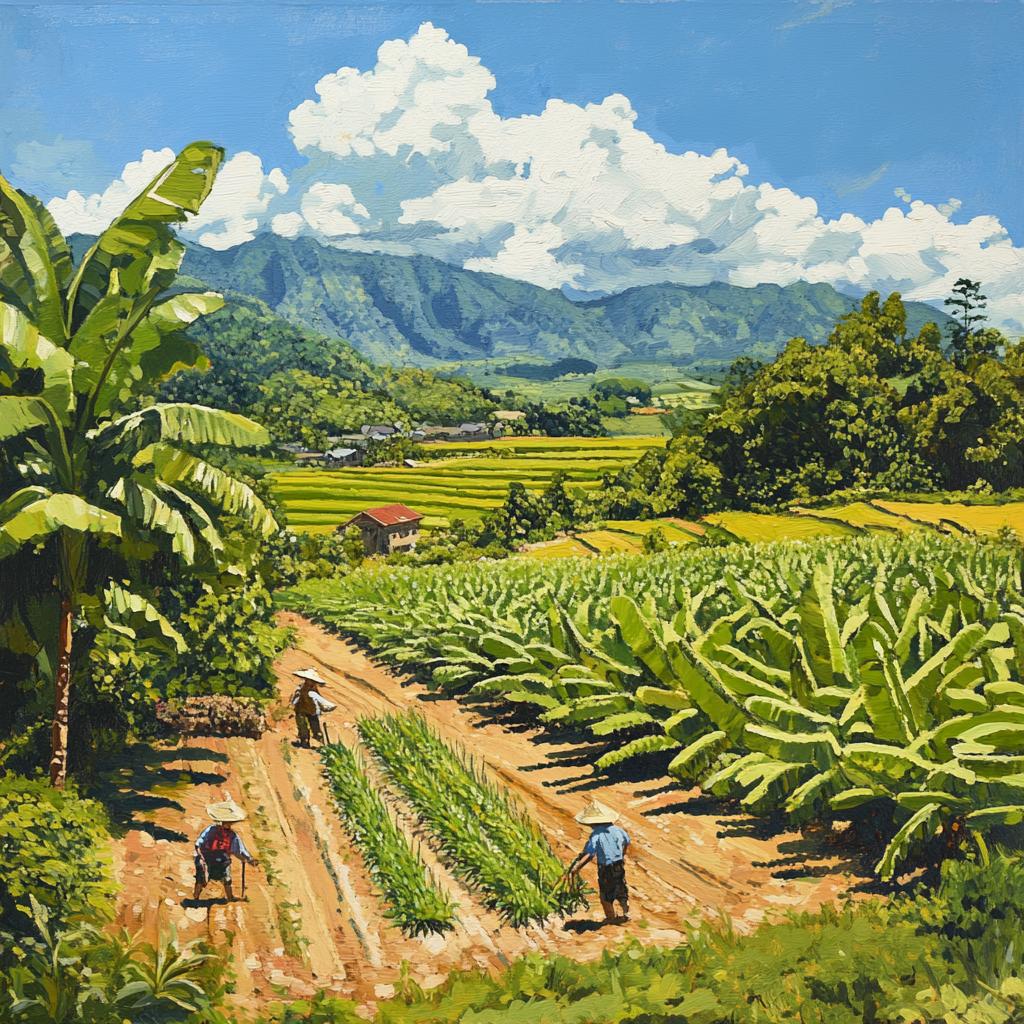
In recent discussions around agricultural strategies in Thailand, Commerce Minister Pichai Naripthaphan found himself at the center of an intriguing suggestion that seemed to stir quite the conversation. Speaking before a curious crowd, he addressed the notion of diversifying crops, specifically using the example of bananas. However, lest anyone misconstrue his intentions, Mr. Pichai was quick to clarify that his remarks were not to incentivize farmers to trade their rice paddies for banana plantations, but rather to demonstrate an exciting avenue for enhancing financial stability through high-value crops.
Rice, without a doubt, stands as the cornerstone of Thailand's agricultural sector, deeply ingrained in the cultural and economic fabric of the nation. The government remains steadfast in its dedication to maintaining the prosperity of rice farmers. Minister Pichai emphasized that the ministry's demonstration farms are rolling out to unearth lucrative markets scattered across the globe.
Behind the scenes, market dynamics have become particularly intriguing. Rice prices experienced a dip following a resurgence in exports by India, a juggernaut among the world's rice producers. Yet, Mr. Pichai's vision for farmers to venture into banana cultivation carries no compulsion. It serves merely as a hopeful whisper, encouraging supplementary income streams for those who are willing.
In an unexpected twist, as rice prices fluctuated, the National Rice Policy Committee sprang into action with a swift and strategic maneuver. They proposed an additional payment of 1,000 baht per tonne for off-season harvests, limited at 10 rai per farmer, offering a cushion to support farmers during these tumultuous times.
The ministry isn't just focused on the present; it has its eyes set firmly on future proofs against economic storms. Mr. Pichai elaborated on plans to elevate farmers' income through refining productivity and unlocking new export markets. Vietnam's current rice yields stand at an impressive 1.3–1.5 tonnes per rai, a stark contrast to Thailand's 600–800 kilograms. Clearly, there's room to level the playing field.
Thursday's suggestion sparked a ripple of debate, sparking questions about whether bananas could indeed supersede rice fields. Dr. Warong Detkitvikrom, chairman of the Thai Pakdee Party, didn't shy away from skepticism. He challenged Mr. Pichai's suggestion, reminding him that despite global volatility, domestic rice prices had never faltered to deserving concern.
With an air of assertiveness, Dr. Warong took to Facebook to express his views. He pointed out the disparity between the prices farmers receive and the costs consumers face, illuminating the shadowed corners where traders profit handsomely, inadvertently tilting the scales away from fairness. He passionately rallied for government intervention in stabilizing paddy rice prices, proposing that farmers could fetch 10,000 baht per tonne without resorting to government-backed price safety nets.
On another front, Chatchawan Paetyathai, an MP representing the opposition Thai Sang Thai Party, backed Dr. Warong's sentiment. He emphasized that rice is an economic lynchpin and posited that the notion of switching to banana farming is unsustainable. Delving deeper, Mr. Paetyathai unpacked the drawbacks of banana farming—its high input costs, susceptibility to diseases, and cut-throat competition from countries armed with a competitive advantage owing to lower production costs.
In the end, while the debate rages on, Mr. Pichai's suggestion serves as a thought-provoking catalyst. It adds a sprinkle of opportunity to the dialogue on how Thailand can navigate the ever-shifting sands of agriculture to propel its hardworking farmers toward prosperity, all while cherishing the timeless legacy of rice.



Comment verification
Step 1 of 3
Verify your email once to publish your comment. Your email is never shown publicly.
Enter the 6-digit code sent to .
Choose the display name shown next to your comments.