Fuel Smuggling Surge: Thai-Malaysia Border Crackdown Amid Policy Shifts
In a bold move to curb fuel smuggling, police officers in Hat Yai district of Songkhla recently intercepted a clandestine operation. With swift action, they seized contraband fuel being transferred from a truck to a…
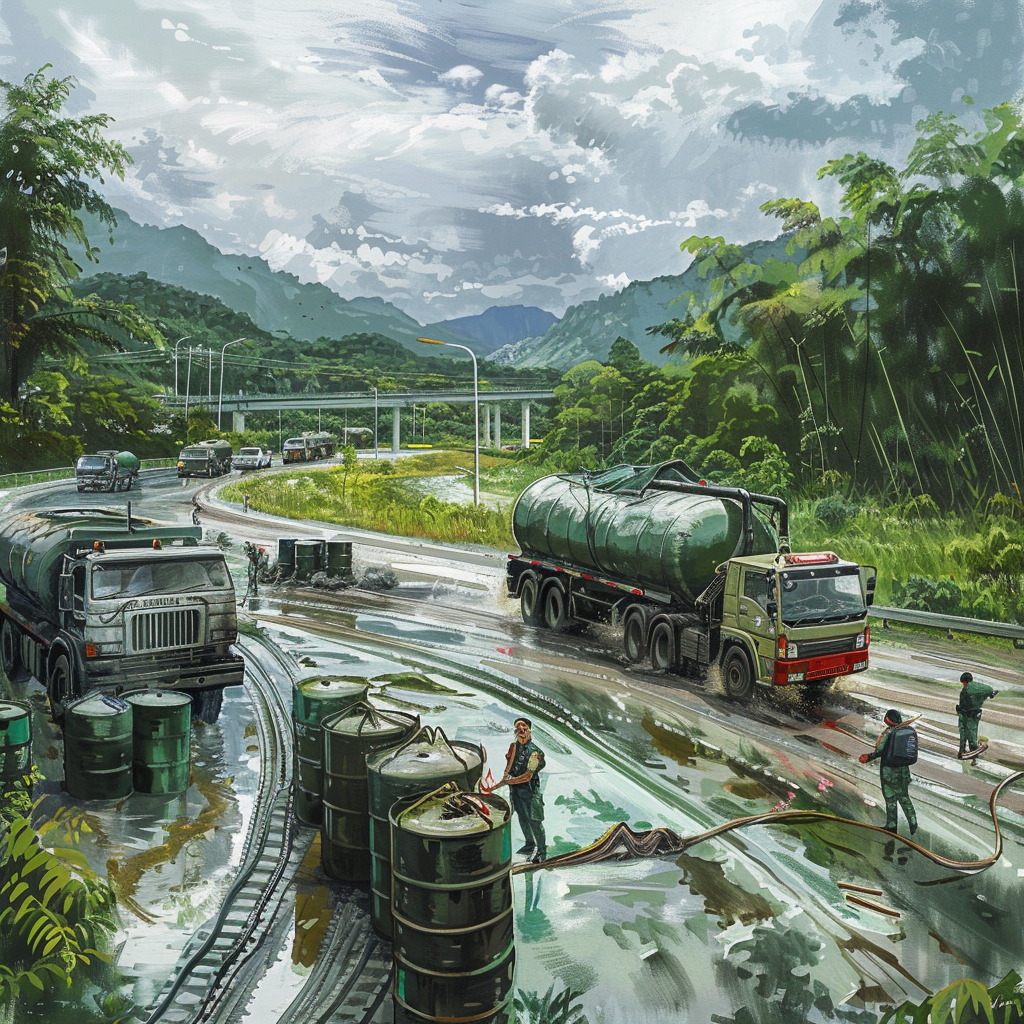
In a bold move to curb fuel smuggling, police officers in Hat Yai district of Songkhla recently intercepted a clandestine operation. With swift action, they seized contraband fuel being transferred from a truck to a pickup, showing that law enforcement is taking a determined stance against this illicit trade. The crackdown, part of a broader effort to tackle fuel smuggling along the southern border, occurred on April 20, 2023, and the Royal Thai Police managed to catch the offenders red-handed. (Photo: Royal Thai Police)
The recent fuel subsidy changes by Kuala Lumpur have sent ripples through the smuggling operations along the Malaysian-Thai border. According to Perlis police chief Muhammad Abdul Halim, this policy shift is likely to spur smugglers into a frenzy of activity. The cessation of diesel subsidies in Malaysia means lower profit margins domestically, prompting these illegal networks to buy even more fuel to sell at higher prices across the Thai border, thereby maximizing their earnings. This development was covered extensively by the New Straits Times on Tuesday.
Until recently, Malaysia's diesel subsidies kept fuel prices low, but the Malaysian government decided to halt these subsidies due to their unsustainable fiscal impact. As of Monday, diesel prices surged from 2.15 ringgit per liter to 3.35 ringgit (approximately 26 baht), far less than the 32.94 baht per liter in Thailand. This price differential has created lucrative opportunities for smugglers, who are now expected to increase the volume of fuel they smuggle to maintain their high-profit margins and cater to the demand across the border.
Strategically located, Perlis serves as the main gateway between Malaysia and Thailand, bordering both Satun and Songkhla provinces of Thailand. This geographic link is critical for smuggling operations, making Perlis a focal point in the ongoing battle against fuel smuggling.
But it's not just the Thai border that's seeing a surge in smuggling. Malaysian states adjacent to Singapore and Indonesia are grappling with similar issues. Fuel prices in these neighboring countries are significantly steeper. In Indonesia, diesel costs about 4.37 ringgit per liter, while in Singapore, the price soars to 8.87 ringgit per liter. Comparing these figures to Malaysia's newly adjusted prices, it's clear why smuggling is a booming trade. Even RON95 petrol, priced at 2.05 ringgit (15.97 baht) in Malaysia, is a steal compared to the 37.35 baht for Gasohol 95 in Thailand.
The end of diesel subsidies in Malaysia marks a pivotal turn in the region's fuel market dynamics. It's a fiscal policy designed to shore up the country's finances but inadvertently ignites a surge in smuggling activities. Increased law enforcement efforts and international cooperation will be crucial to combat these illegal syndicates and safeguard economic stability in both Malaysia and Thailand. As authorities refine their strategies, it's clear that tackling fuel smuggling will require vigilance, technology, and international collaboration to stem this tide and ensure security and fairness in the fuel markets of Southeast Asia.



Comment verification
Step 1 of 3
Verify your email once to publish your comment. Your email is never shown publicly.
Enter the 6-digit code sent to .
Choose the display name shown next to your comments.