Northern Thai retirees seek 2% loan-rate cap
Retired civil servants from 16 northern provinces are preparing a Parliament bid for a 5% living-cost top-up and a 2% cap on pensioner loan rates.
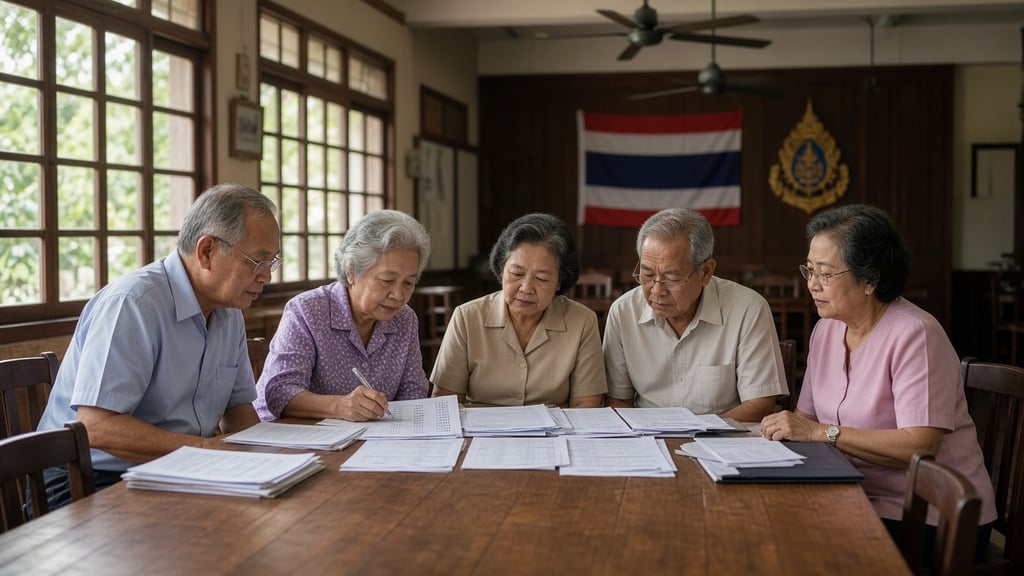
Retired civil servants from 16 northern provinces are preparing a formal approach to the government that would pair a 5 percent increase in the monthly cost-of-living top-up paid with civil-service pensions with a hard 2 percent ceiling on interest charged on retiree loans. The Federation of Retired Civil Servants of Northern Thailand has told members to stand ready for a mass presence at Parliament House in Bangkok, with the exact day still to be confirmed.
The invitation is being circulated from Phrae by Pairote Sukthayarak, a federation coordinator asking pensioner clubs and provincial groups across the North to arrive together. Organisers treat a recent intervention by Pheu Thai member of parliament Traiphop Khamphat, who has been arguing that pension payments should move with the economy, as the opening to attach a debt-relief demand that goes well beyond a cost-of-living tweak.
A Parliament bid from 16 provinces
The federation's map runs from Chiang Mai, Mae Hong Son, Lampang and Lamphun through Chiang Rai, Phayao, Nan and Phrae, then south to Phitsanulok, Uttaradit, Sukhothai, Tak, Nakhon Sawan, Phichit, Kamphaeng Phet and Phetchabun. Statistical maps of the four-region North often add Uthai Thani and count 17 provinces. The pensioner network has long operated as a 16-province bloc, and this campaign is being framed as a single northern voice rather than a Chiang Mai city petition.
Two demands sit on the table: a further 5 percent rise in the Comptroller General's cost-of-living allowance for pension and stipend recipients (Chor Kor Bor), and a ceiling of no more than 2 percent on loan interest paid by retired officials. That ceiling would undercut both teacher-cooperative averages and the discounted Government Savings Bank programme already on offer to working teachers.
Why a 2 percent cap lands in a 9 percent market
The northern ask arrives after a year in which teacher and pensioner debt moved from a provincial grievance to a Cabinet-level file. Figures published by the Department of Cooperative Promotion and used by the government in September 2026 put the teacher-cooperative book at 1,141.545 billion baht across 116 cooperatives and 862,539 members. The average lending rate was 5.60 percent. The top end reached 9 percent. Fifteen cooperatives, about 13 percent of the total, were charging more than 7 percent.
Those rates survive retirement because the loans were built on payroll deduction. A working teacher's salary, then a pensioner's monthly credit from the Comptroller General, can be swept before the household ever sees it. Government spokespeople have already acknowledged the remainder: some teachers keep less than 30 percent of pay for ordinary living after deductions. On Thai forums, relatives of retired teacher couples describe leftover cash of about 4,500 baht a month after cooperative collections.
On 19 November 2026 the Education Ministry and Government Savings Bank said a 3.50 percent special rate already covers at least 157,000 education-personnel accounts, with new registrations open until 31 March 2027. Provincial offices are to take urgent guarantor cases so a colleague who signed for a friend is not the first person sued. A refinance product priced around 5.75 percent is meant to close high-cost debts while holding a 30 percent living-income floor. A memorandum of understanding is scheduled for 3 December 2026 at the bank's Ratchadamnoen office.
That package is real, and it is not what the northern pensioners are asking for. A 3.50 percent working-teacher rate still sits well above a 2 percent retiree ceiling. A 5 percent Chor Kor Bor increase is a Finance Ministry and Comptroller General decision, not a bank product. The federation is trying to join those files into one political demand before the December memorandum locks the conversation around working teachers only.
On 20 October 2026 the Federation of Retired Civil Servants of the Northeast handed the Senate education committee its own list: halt Government Savings Bank lawsuits against Chor Por Kor and Chor Por Sor welfare-loan borrowers, relieve guarantors, cut interest to 3.50 percent, and create a pensioner rehabilitation fund so seized houses can be bought back. The northern 2 percent ceiling is stricter than the Isaan 3.50 percent ask, and it is aimed at the full government rather than a single Senate panel.
Officials who joined after 27 March 1997 must belong to the Government Pension Fund, taking a lump-sum account on top of the monthly pension. The Chor Kor Bor add-on is a separate royal-decree supplement. Gluing a 5 percent top-up to a 2 percent interest cap is an attempt to make the monthly cheque large enough, and the deduction small enough, that a northern pensioner can still buy food after the cooperative and the bank have taken their share.
What This Means for Expats and Travelers in Thailand
Foreign residents in Chiang Mai, Chiang Rai, Lampang and the lower-north towns should not read "retired Thai civil servant" as a synonym for comfortable. The same households staff provincial hospitals, schools and district offices, and they are often the landlords and condominium-committee neighbours that long-stay visitors deal with every week. When pension deductions leave a family with a few thousand baht, the effects show up as delayed clinic visits, extra adult children in one house, and a wider hunt for informal credit.
Expat retirees on a Non-Immigrant O visa already know the cost-of-living argument in their own paperwork. Thai state pensioners are making a parallel claim: that a pension which is not indexed in practice, stacked with loan deductions at 5 to 9 percent, cannot support old age at 2026 prices. If you employ Thai staff or rent from a teacher family, guarantor trouble is a local legal fact. A colleague who signed as guarantor can be pursued when the original borrower misses payments. The ministry is trying to unwind "teacher guaranteeing teacher" before the December memorandum, but that fix is not yet in force and is aimed at working teachers more than at pensioners.
A 2 percent cap would be a political decision, not a bank-pricing decision. Watch whether Cabinet, the Finance Ministry and Government Savings Bank treat the northern gathering as a regional protest or as the next stage of a national teacher-and-pensioner debt overhaul that already has a 3 December date on the calendar.


Comment verification
Step 1 of 3
Verify your email once to publish your comment. Your email is never shown publicly.
Enter the 6-digit code sent to .
Choose the display name shown next to your comments.