Ranong Kraburi River Arsenic Tests Exceed Limits
Chiang Mai University lab tests confirm elevated arsenic in Ranong's Kraburi River, intensifying scrutiny of cross-border mining and water security.

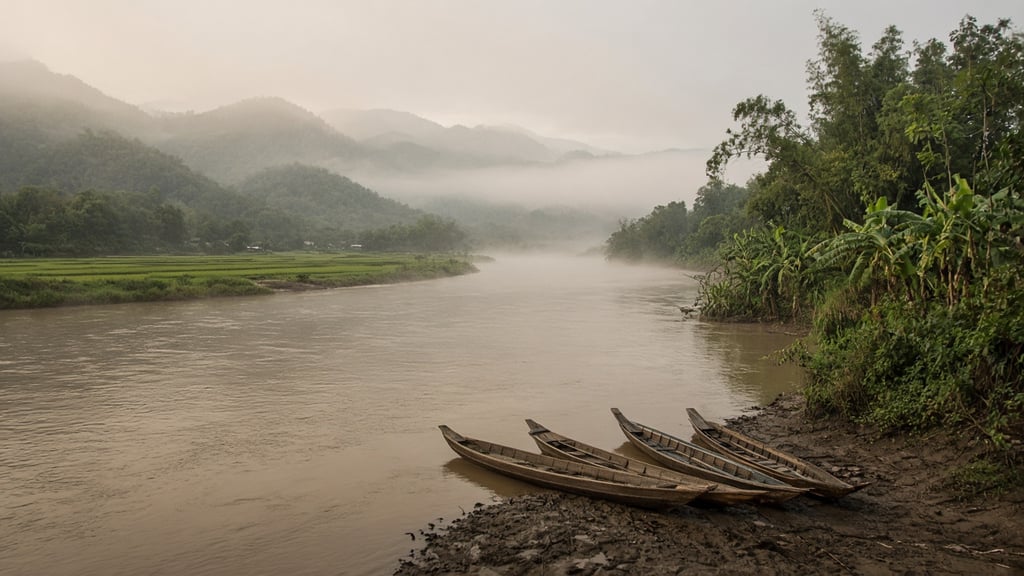
For nearly seven years, villagers along the Kraburi River in Ranong province have watched a waterway that once sustained drinking supplies and artisanal fisheries turn persistently ochre. That long-simmering local grievance escalated into a national environmental and political test in late November 2026 after Chiang Mai University scientists confirmed that water drawn from Kra Buri district contained arsenic exceeding Thailand's surface-water safety standard. Paired with citizen-led field screening at Ban Hat Tun in Pak Chan subdistrict, the laboratory findings have punctured official assurances that the river's decline was merely a harmless silt nuisance.
The stakes reach well beyond a single rural basin on the Isthmus of Kra. Thailand is already confronting a severe transboundary pollution crisis in its northern provinces, where unregulated gold and rare-earth mining in Myanmar has pushed heavy metals down the Kok, Sai, and Ruak rivers since early 2025. Confirmed arsenic in the Kraburi River, which forms the frontier between Ranong and Myanmar's Tanintharyi region before entering the Andaman Sea, shows that cross-border extractive runoff now presses on both ends of Thailand's western border.
Laboratory Confirmation Breaks a Seven-Year Impasse
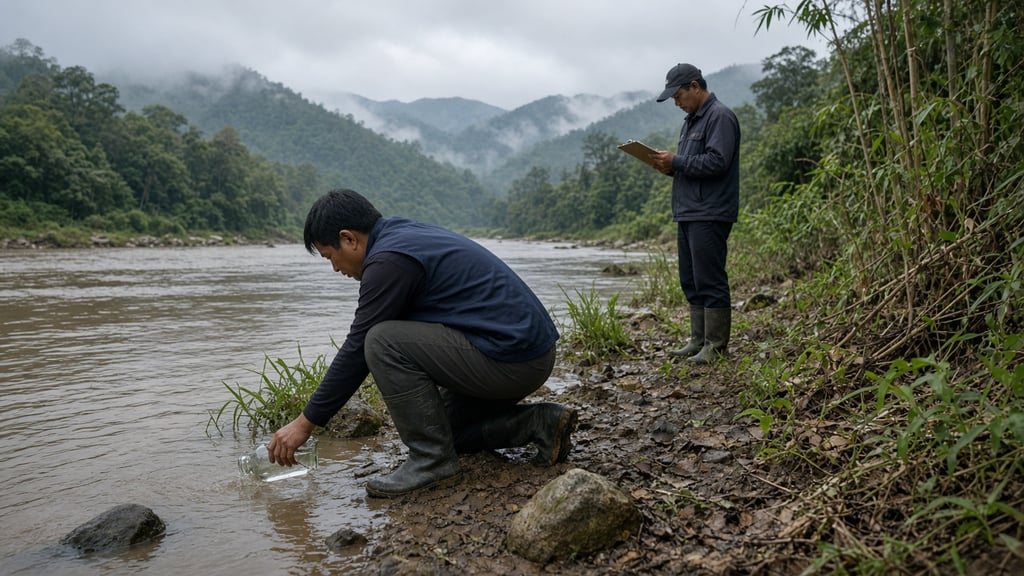
The breakthrough emerged from an alliance between local residents and academic chemists. After villagers from the Kraburi basin brought river water to a citizen-science fair organized by the Community Health Impact Assessment Institute and Thai PBS, preliminary field test kits flagged heavy-metal anomalies. Scientists at the Environmental Science Research Center within Chiang Mai University's Faculty of Science then analyzed the samples using inductively coupled plasma optical emission spectrometry (ICP-OES), according to Thai PBS News and The Standard.
The university's laboratory report recorded arsenic at 0.013 milligrams per liter, roughly 1.3 times Thailand's surface-water limit of 0.010 milligrams per liter. Lead stood at 0.043 milligrams per liter, still under the 0.050 milligrams per liter surface-water cap but already at 86 percent of that threshold and well above drinking-water norms. Total chromium reached 0.065 milligrams per liter against a 0.050 milligrams per liter reference value, though scientists noted that chemical speciation is required to separate benign forms from toxic hexavalent Cr(VI).
Assistant Professor Wan Wiriya, deputy head of the Chiang Mai University center, emphasized both the warning and its methodological boundaries. Because the lab dataset reflected a single sampling point, researchers cannot yet map contamination gradients across the full river or prove exact upstream mining provenance without multi-site seasonal testing. Even so, the center urged the Pollution Control Department (PCD) to expand sampling stations and test more frequently rather than downplay community alarms.
On November 28, around 150 residents from Pak Chan, Mamu, and Lam Liang subdistricts gathered at Ban Hat Tun alongside local officials to demonstrate field screening using kits supplied by Chiang Mai University, as reported by Thai Post and Prachatai. Unjit Chanarang, a Pak Chan subdistrict councillor trained in screening, said three rounds of community tests repeatedly exceeded the 0.010 milligrams per liter benchmark, with preliminary field estimates reaching 0.25 milligrams per liter in water and 0.50 milligrams per liter in bank sediment. She pressed state agencies to conduct joint sampling transparently alongside villagers, warning that dry-season drops in river volume could concentrate toxins further.
Fisheries, Village Tap Water, and Local Livelihoods Under Strain
Along the Thai riverbank, technical debates over laboratory thresholds translate directly into lost income. Prasert Chuen-arom, a Ban Hat Tun fisherman who has worked the Kraburi for three decades, reported that natural fish stocks have fallen by roughly 80 percent over the past three to four years of chronic turbidity. Daily hauls that once ran from 50 to 100 kilograms have shrunk to three or four kilograms, and anxious buyers increasingly refuse local river fish. With few other trades available, fishing families are left consuming the catch that markets now reject.
Peera Prasongwet, coordinator of the Save Kraburi River Network, added that river prawns have turned unusually pale while upstream freshwater shrimp appear darkened as if coated in fine mineral silt. The network wants regulators to sample upper, middle, and lower river reaches, test sediment, fish tissue, and aquatic plants, and initiate health checks for heavy-metal accumulation among residents.
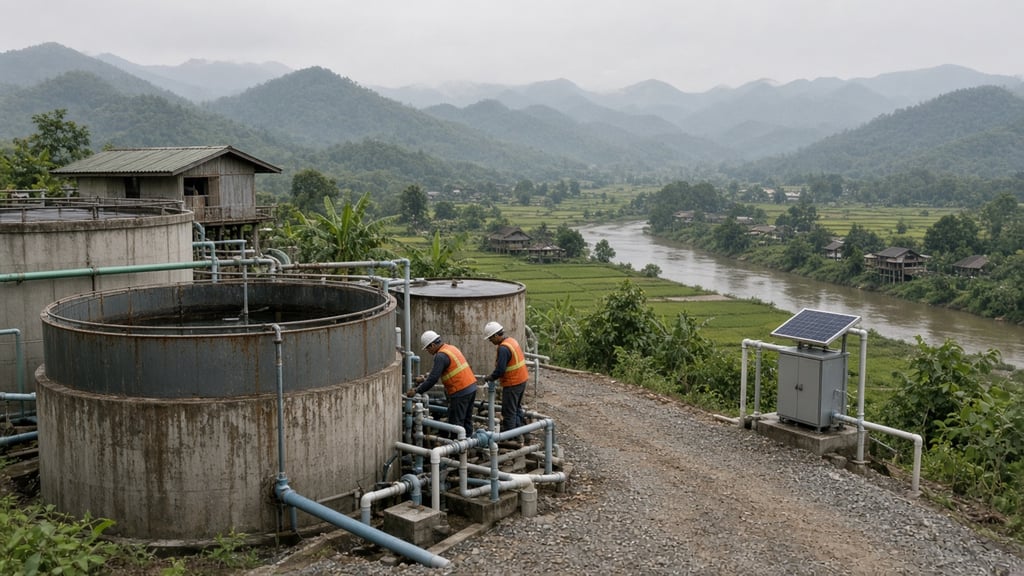
Household water security is equally exposed. Communities across Pak Chan subdistrict draw directly from the Kraburi River for village tap systems. Following a July 21 inspection as chair of the House Subcommittee on Transboundary Water Pollution, People's Party Chiang Mai MP Pattharapong Leelaphat cited the stark contrast at Myanmar's Khlong Yung tributary, where the PCD measured turbidity at 212 nephelometric turbidity units (NTU), according to Matichon and Thairath. Although Pak Chan's subdistrict treatment plant has so far brought finished tap water within safety limits, Pattharapong warned that a small local administration cannot shoulder escalating cross-border metal loads indefinitely without centrally funded reserve water sources.
Frontier Tensions and Bangkok's Diplomatic Dilemma
The environmental dispute acquired a sharp political edge on November 28 when Democrat Party deputy leaders Satit Wongnongtoey and Chaichana Dechdecho visited Kra Buri alongside party spokesman Pongsakorn Kwanmuang. Residents noted that river clarity often improves briefly whenever senior Bangkok delegations arrive before deteriorating again once they leave, suggesting upstream discharge can be curtailed when convenient.
During the inspection, Myanmar soldiers across the waterway appeared to cock their rifles toward Satit's group, triggering a heated domestic exchange. As The Nation Thailand reported, Prime Minister and Interior Minister Anutin Charnvirakul noted that the troops stayed on Myanmar soil and argued that unannounced opposition visits could raise cross-border suspicions instead of using diplomatic channels. Satit retorted that the prime minister seemed more concerned with Myanmar's sensitivities than with Thai citizens' safety and water security, pledging to bring the Kraburi crisis to the House floor on December 3 and demand real-time monitoring stations plus formal inclusion of Ranong in bilateral talks, as covered by The Active.
Bangkok's restraint reflects a stubborn diplomatic bottleneck. On November 12, Foreign Minister Sihasak Phuangketkeow visited Naypyidaw to press Myanmar's military leadership on transboundary river contamination. Yet three months after both countries signed a six-page bilateral framework on river pollution in August, an investigation by Eco-Business and Mongabay found that the promised joint working group had still not convened meaningfully, with many upstream mines operating in contested frontier zones beyond conventional enforcement.
Provincial and Ministerial Response Ahead of December Deadlines
Rising parliamentary pressure has accelerated official action. On November 28, Natural Resources and Environment Minister Suchart Chomklin instructed the PCD to treat transboundary water surveillance as a nationwide priority across all vulnerable border basins, according to Khaosod. PCD Director-General Dr. Surin Worakitthamrong confirmed that Regional Environment and Pollution Control Office 15 (REO 15) sampled the Kraburi River on November 17, with lab results due on December 1 or December 2, alongside expanded audits of more than 62 village tap-water systems across Ranong province.
Meanwhile, Ranong Governor Rachan Meenoi convened the second meeting of the provincial working group on Kraburi River turbidity for December 1 at the Pak Chan Subdistrict Administrative Organization, as reported by The Active. The panel unites environmental regulators, the Internal Security Operations Command, army units, fisheries, public health, industry, customs, local councils, and the Save Kraburi River Network to coordinate testing, health surveillance, and alternative water supplies.
What This Means for Residents and Expats in Southern Thailand
For residents, long-stay expats, and overland travelers along Ranong's Andaman corridor or the Ranong-Kawthaung crossing, prudent risk management comes first while agencies reconcile competing readings. Households in Kra Buri relying on river-fed tap networks should use certified bottled water or maintained reverse-osmosis filtration for drinking and cooking until the PCD publishes its December 1 to 2 results and finishes its 62-system tap audit.
Consumers should also avoid wild-caught fish, prawns, and mollusks harvested directly from the Kraburi River until health and fisheries agencies release verified tissue tests; unlike bacteria, arsenic and lead cannot be removed by boiling or cooking. More broadly, the Kraburi readings show that border-river governance can no longer rely on spot checks. Without real-time monitoring, open data, and supply-chain accountability for minerals transiting Thai ports, frontier communities north and south will keep absorbing the environmental cost of unregulated extraction.
Comment verification
Step 1 of 3
Verify your email once to publish your comment. Your email is never shown publicly.
Enter the 6-digit code sent to .
Choose the display name shown next to your comments.