NIDA Poll: North Backs Arsenic River Traps
Chiang Mai and Chiang Rai voters back smart sediment traps against river arsenic, but most doubt talks with upstream mines will succeed.
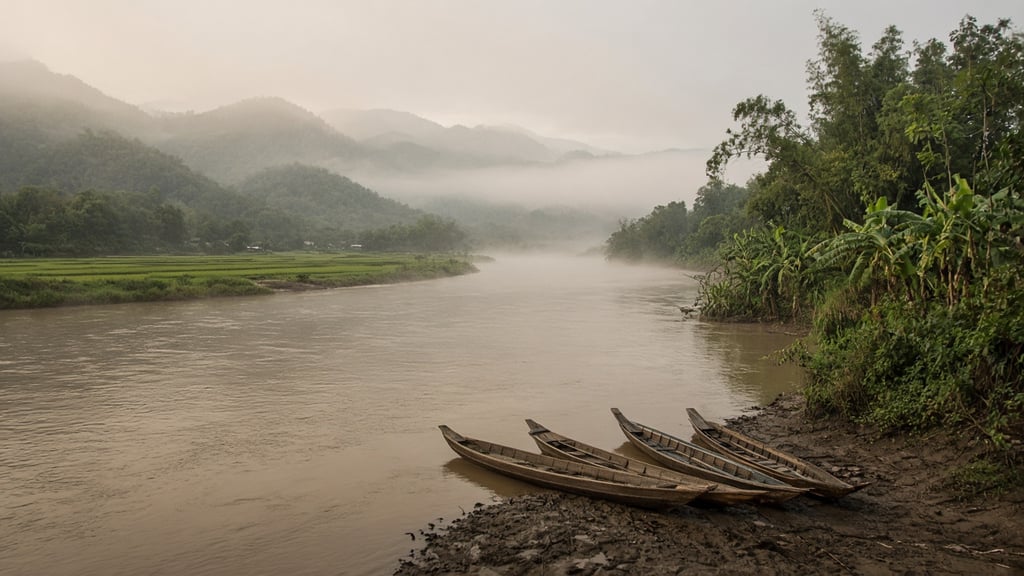
Voters in Chiang Mai and Chiang Rai want Bangkok to install smart sediment traps against arsenic-laced silt, and they do not believe talks with the countries that host the upstream mines will work. NIDA Poll released that finding on Sunday, 29 November 2026, the same day Prime Minister Anutin Charnvirakul sat down with Myanmar's president in Hanoi.
NIDA Poll interviewed 1,310 eligible voters aged 18 and over in Chiang Mai and Chiang Rai by telephone from 24 to 26 November 2026. The sample came from the pollster's master list, using multi-stage probability sampling, with a maximum error of 0.05 at 97 percent confidence. It is a two-province snapshot, not a nationwide reading. Household registration split 59.39 percent Chiang Mai and 40.61 percent Chiang Rai.
Support for traps, with a long list of doubts
Asked about using smart sediment traps to stop arsenic-bearing silt from neighbouring mines at irrigation intakes, respondents could register more than one view. 37.86 percent said they agreed with using smart sediment traps to intercept arsenic-bearing silt from neighbouring mines. Another 20.53 percent somewhat agreed. A further 16.79 percent said traps were still better than watching the rivers become unusable for farming.
Doubt sat beside that plurality. 24.27 percent said they were not very confident the basins would help much. 15.42 percent were not confident at all. 14.73 percent called the idea a downstream patch that leaves the mines untouched. 10.61 percent rejected the approach outright. Only 5.65 percent said they were sure the traps would work, and 4.20 percent asked what would happen to the arsenic sludge once it was lifted from the water.
Little faith in the talks
68.32 percent of respondents said cross-border talks with the countries hosting those mines would either fail outright or achieve little. That combined figure is 36.34 percent who expected a weak result and 31.98 percent who expected total failure. 21.76 percent thought talks might succeed to some degree. Only 7.86 percent said they would definitely succeed. The political split is clear: build something on the Thai bank, and do not bet the harvest on a communique from Naypyidaw.
What Bangkok is actually proposing
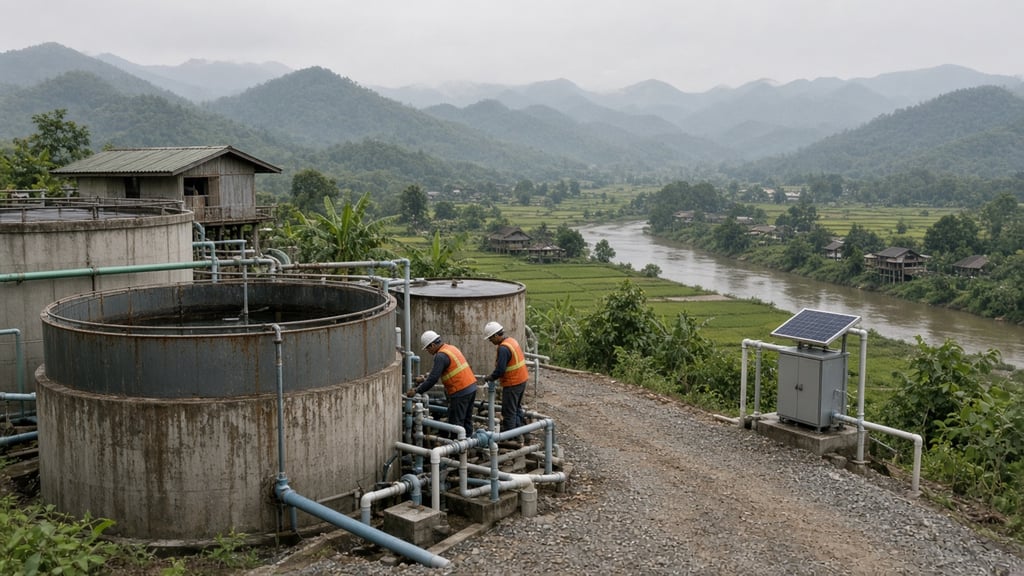
On 22 November a deputy government spokesperson said the Ministry of Higher Education, Science, Research and Innovation had put forward an 18-month sandbox at Mae Sai district, Chiang Rai, for a smart sediment weir designed with Naresuan University, Thailand's science funding office, and the Danish hydraulic institute DHI. A 523-day digital twin of the Sai River modelled a 94.6 percent cut in arsenic if three units were installed around kilometres 95 to 99, covering about 27,000 rai of farmland and 3,356 water users. Officials stressed that those numbers remain a simulation until a wet-season 2027 field test. Earlier weir-and-curtain designs on the Kok in Mae Ai ran into local resistance over flood risk and dust from drying toxic silt. The new basins are meant to pull turbid water aside rather than raise a wall across the channel.
Hanoi, and a clean-test claim
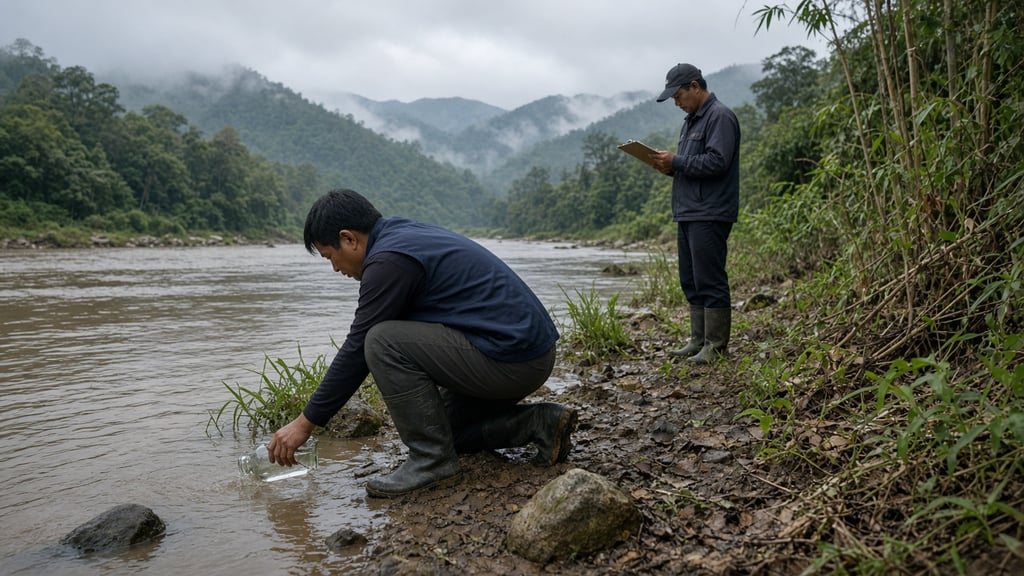
On Sunday at the Melia Hanoi Hotel, on the sidelines of the 11th ACMECS summit, Anutin pressed Myanmar's president on pollution in the Sai and Kok rivers. Government spokesperson Ekkapop Pianpises said Thailand wanted a faster joint working group, shared monitoring, and action at the source. Myanmar's president told Anutin that tests on three rivers, assessed against Thai and international standards, had found no readings above the relevant limits. Naypyidaw also said the central government does not support illegal border mining. That assurance sits against months of Thai Pollution Control Department sampling that has found arsenic above the 0.010 milligrams per litre surface-water standard at multiple Kok and Sai stations.
Three days earlier in Bangkok, Thai and Myanmar officials had already sketched a three-year plan: 12 joint sampling sites (eight on the Kok, four on the Sai), first fieldwork as early as December 2026 or January 2027, and twice-yearly data swaps. Thailand has also asked for a six-month pause at suspect gold and rare-earth sites in Shan State. No public commitment to that pause emerged from Hanoi.
Plates have not gone empty
More than half of respondents said they still eat vegetables, rice, fruit, and fish grown or caught with water from the Kok, Sai, and Ruak rivers. The shares were 58.24 percent for vegetables, 57.10 percent for rice, 56.03 percent for fruit, and 55.19 percent for fish. 36.87 percent said they had stopped consuming all of those foods. Mae Sai's waterworks has already had to halt production at times. The government is sending rapid arsenic test kits into the worst-hit tambons and has promised an agricultural colour map on 15 December 2026 so green-zone produce is not painted with the same brush as contaminated plots.
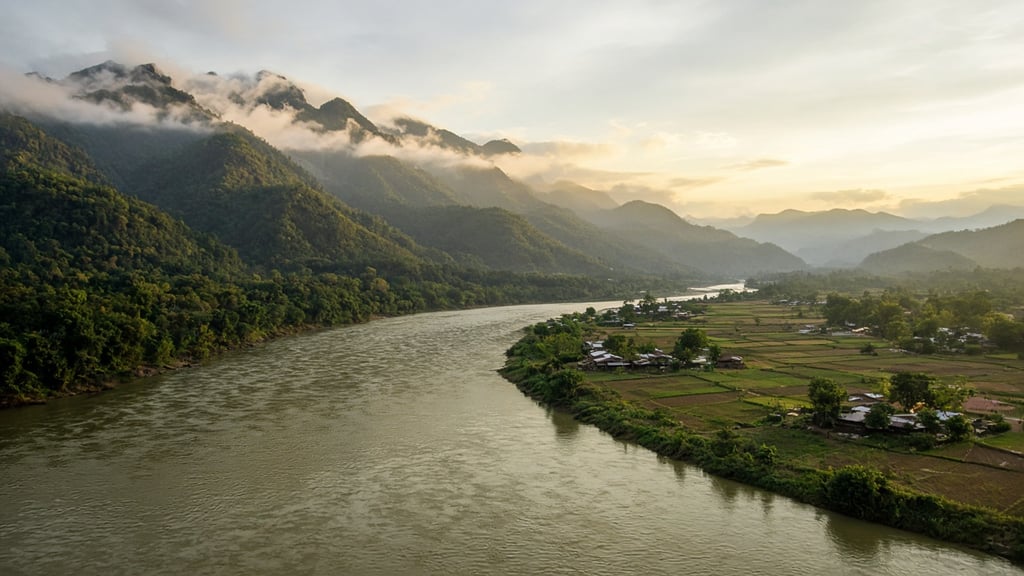
The Kok River rises in Myanmar's Daen Lao range in Shan State, crosses into Thailand at Tha Ton in Mae Ai district, Chiang Mai, then cuts through Chiang Rai city and joins the Mekong at Sop Kok in Chiang Saen. Arsenic and turbidity first made national news in March 2025, when stretches of the river turned cloudy and swimmers reported rashes. The metal settles in silt, paddy soil, and fish, which is why a trap that captures sediment is, at best, a Thai-side filter on a Shan State leak.
What This Means for Expats and Travelers in Thailand
Visitors heading to Chiang Rai, the Golden Triangle, or Mae Sai should treat river water, riverside wells, and untested local ice as off-limits until provincial notices say otherwise. Municipal tap water that has been through the Provincial Waterworks Authority is a different product from raw Kok or Sai water, but Mae Sai production has already stopped on some days, so hotels may be running tanks or bottled supply. Ask. Do not assume.
Long-stay residents who grow vegetables, buy wet-market fish, or swim in the Kok should follow the 15 December Agri-Map and provincial health notices. If you are in a yellow or red zone, do not eat untested greens from riverside plots. Packaged drinking water in Mae Sai recently screened clean in a 30-sample government check, which is useful and not the same thing as a clean river. A modelled 94.6 percent cut is not a clean bill of health, and a Hanoi handshake is not a mine closure.
Comment verification
Step 1 of 3
Verify your email once to publish your comment. Your email is never shown publicly.
Enter the 6-digit code sent to .
Choose the display name shown next to your comments.