Four Thai stocks face 2027 hit from 18% US tariff
DAOL maps 2027 earnings risk at AAI, ITC, TU and NER under a proposed 18% US tariff, with American sales still the swing factor.
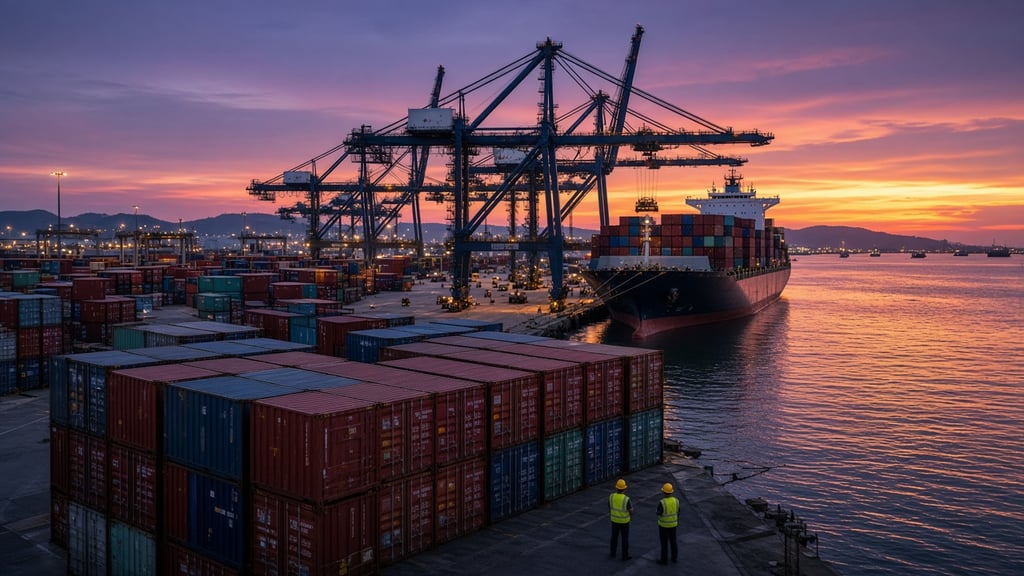
Bangkok's export desk is already pricing a tariff that Washington has only proposed. DAOL Securities, in a 26 November 2026 note, ran 2027 (B.E. 2570) earnings through a simple stress: if American sales slip, how hard do four SET-listed exporters bend. The names are Asian Alliance International (AAI), i-Tail Corporation (ITC), Thai Union Group (TU) and North East Rubber (NER). An 18 percent US levy, if it lands, is enough to move next year's profit by a few points, concentrated in pet food, canned tuna, and the rubber behind US-bound tires.
The Office of the United States Trade Representative put that 18 percent figure on paper on 25 November 2026, after finding Thai industrial policy tied to structural excess capacity in manufacturing. The action is proposed, not collected. Written comments close on 5 January 2027. A public hearing is listed for 25 January. Until a later notice tells US Customs to charge a new rate, Thai goods still move under the existing 12.5 percent Section 301 duty. Finance Minister Ekniti Nitithanprapas has been clear that 18 percent is not the last word, and that Commerce is still preparing a negotiating file for early 2027.
Four stocks, four ways into the US ticket
AAI is a pet-food packer with about half of its sales tied to the United States. DAOL's model says a 10 percent drop in that US export line would cut 2027 core profit by about 4 to 5 percent. The brokerage still has a Buy rating and a 5.00 baht target. Since the first US tariff wave in 2025, pet-food plants and their American buyers have already rewritten price lists and recipes. DAOL treats another step-up as something the trade can still manage, not a collapse of the US aisle.
ITC, the SET-listed pet-food arm in the Thai Union orbit, is more exposed. About 60 percent of sales go to the United States, the highest US share of the three names with a direct export line. The same 10 percent US-sales haircut maps to a 4 to 5 percent hit on 2027 core profit. Two offsets sit on the other side. ITC closed a 5.3 billion baht purchase of Phelps Pet Products in the United States in late October 2026, a plant that can pack some volume inside the tariff wall. DAOL still rates the stock Buy, with a 21.00 baht target, and keeps an overweight on the pet-food group.
TU is the parent canned-tuna and seafood group, listed in Samut Sakhon since 1994, with brands such as Chicken of the Sea on US grocery shelves. About 40 percent of sales are US-bound. DAOL's 10 percent US-sales stress cuts 2027 core profit by about 4 percent. The house's offset is mix, not geography: raise prices and push higher-margin products. The rating stays Buy, target 16.00 baht. Processed seafood and pet food remain inside the proposed 18 percent net, unlike hard-disk drives, many computer parts, integrated circuits, and natural rubber.
NER is the odd name in the quartet. It does not ship a large direct US ticket. DAOL's risk is second-hand: Thai tire makers that buy NER's rubber and then export to the United States. If NER's total sales fall 5 percent, 2027 profit falls about 6 percent. The rating is Hold, target 5.00 baht. Natural rubber itself is on the proposed exemption list, which is why DBS Vickers treats STA and NER as less directly in the blast radius than canned tuna or pet food. The residual risk is the customer, not the customs code.
An 18 percent ceiling is not a market-wide earnings event
Bualuang Securities' coverage universe puts US-export revenue at less than 1 percent of listed-company sales. The concentration is the point. Beside DAOL's four names, Bualuang flags ITC at about 60 percent US revenue, TU at 40 percent, Delta Electronics (DELTA) at 25 percent, KCE Electronics at 23 percent, and Sri Trang Gloves (STGT) at 20 percent. Pet food, processed seafood, rubber gloves, and some data-center power gear sit outside the broad exemption. Cars, many electronics, HDDs, and natural rubber sit inside it. Asia Plus puts the extra cash burden, if 18 percent replaces 12.5 percent, at about 5.5 percentage points, not a fresh 18 points stacked on the duty already paid.
Relative to the neighbourhood, Thailand is not the punchline. Vietnam's proposed Section 301 ceiling runs as high as 35 percent, or 20 percent if a reciprocal deal holds. Malaysia, Indonesia, and Cambodia sit at 18 percent, the same print as Thailand. Japan, Korea, and Taiwan are proposed at 15 percent, which is the comparison that stings for some electronics. Kiatnakin Phatra still sees a China-plus-one bid for KCE. Delta's US sales mix is about 34 percent, with short-term margin noise from how it books tariff costs. That is a different story from the pet-food names DAOL is modelling for 2027 profit.
What is still negotiable before 2027 earnings print
The 18 percent figure is a ceiling under consultation. USTR's Thailand notice leaves room for 25 percent if talks look thin. Bangkok's Commerce team is using the comment window and the January hearing to argue both the rate and the excess-capacity finding, and to push pet food, processed seafood, and rubber gloves onto a longer exemption list. Krungsri Securities argues that pet food was never the excess-capacity problem Washington described, which is why it still likes ITC. DAOL's short-term kicker is old-fashioned: US buyers may pull orders forward before any new duty is collected, juicing late-2026 shipments even as 2027 full-year profit carries the sensitivity the house just published.
What This Means for Expats and Travelers in Thailand
This file does not change a tourist stamp, a TDAC, or the fare to Suvarnabhumi. It changes invoices. If you hold SET names through a local broker or a Thai mutual fund, the 18 percent headline is not a SET-wide earnings collapse. Direct US export sales are a rounding error for the listed market as a whole. The 2027 risk sits in a short list: pet food (AAI, ITC), tuna and seafood (TU), gloves (STGT), some electronics, and the tire-rubber chain behind NER. Treat DAOL's 4 to 6 percent profit haircuts as a sales-volume stress, not as a customs bill the Thai factory automatically eats.
If you ship Thai pet food, canned tuna, or rubber gloves to family in the United States, those lines are still on the proposed duty list. Tropical fruit, many computer parts, and natural rubber are not. Do not let a US buyer rewrite a purchase order at 18 percent this week. The 12.5 percent duty is what is in force. The comment deadline is 5 January 2027. The hearing is 25 January. Freight desks at Laem Chabang should watch for a burst of front-loaded boxes, then a quieter second half of 2027 if the 18 percent ceiling is confirmed and exemptions stay narrow.

No comments yet. Be the first to join the conversation.