Thailand takes Sai River mine pollution file to China talks after Chiang Rai inspection
Deputy Interior Minister Jeset Thaiset inspected expanding Shan State mines from Mae Fa Luang on 14 November. He is on the 16-18 November China delegation with Sai River arsenic still far above Thai limits.
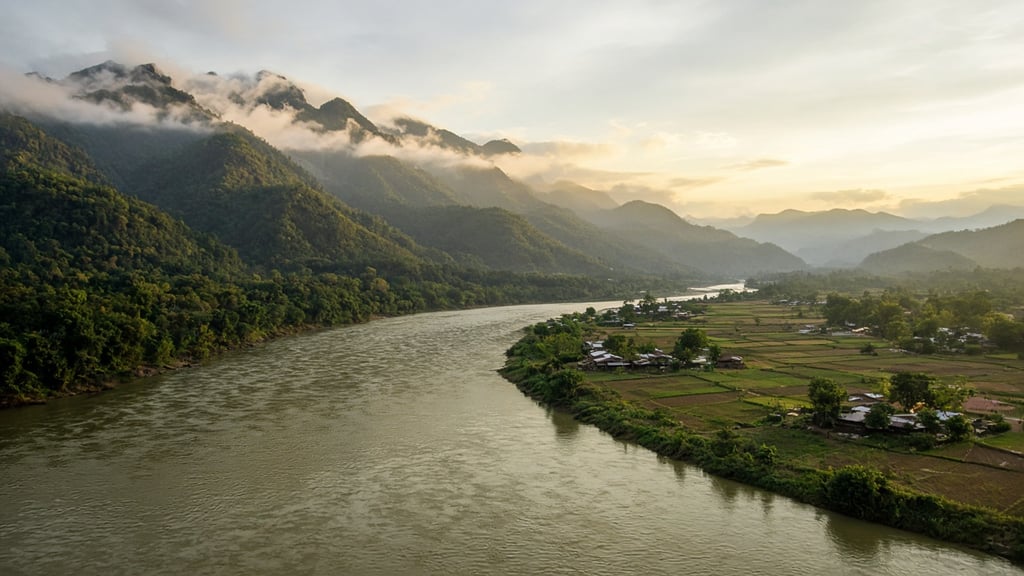
Thailand is taking a border water file to China this week after Deputy Interior Minister Jeset Thaiset watched mining expand on hillsides that drain toward the Sai River. He joined Prime Minister Anutin Charnvirakul's 16 to 18 November 2026 delegation with notes from Ban Phaya Phrai in Mae Fa Luang, taken on 14 November.
The ridge looks into Shan State at Doi Ko Wan and the Mong Kan hills. Binoculars picked out at least ten more cleared pockets along the same ridges, and two excavators were working a hilltop cut. Civil society briefers listed about 20 Myanmar-licensed operations in the belt: a dozen gold sites, six manganese pits, two lead workings, plus tin and tungsten traffic through Chiang Saen and Mae Sai. Those pads sit in headwaters that feed the Sai, which joins the Ruak and meets the Mekong at the Golden Triangle. Officials judged a further year of clearing could roughly double the disturbed ground, close to hamlets and to creeks that run toward Mae Sai town.
What the water tests already show
The Pollution Control Department has sampled the Kok, Sai, Ruak, and Mekong system since March 2025, after the Kok ran unusually turbid at Tha Ton. Thailand's surface-water standard for arsenic is 0.010 milligrams per litre. Lead is capped at 0.05 mg/L. The Kok spends its first 170 kilometres in Shan State before crossing into Chiang Mai.
The 22nd survey, 3 to 7 August 2026, found the Sai the worst of the four channels. At Ban Hua Fai in Mae Sai, arsenic reached 0.284 mg/L and lead 0.266 mg/L. The Second Sai River Friendship Bridge sat at 0.208 and 0.193. Ban Pa Sang Ngam sat at 0.184 and 0.176. That is arsenic at up to 28 times the legal surface-water line. A September round still found all three Sai stations over the cap. Then rain in the headwaters punched the system again. On 5 November at 17:30, Mae Sai waterworks halted production for 24 hours after turbidity passed 10,000 NTU and arsenic around the intake tested near 0.25 to 0.30 mg/L. Fourteen villages in tambon Wiang Phang Kham and tambon Mae Sai went without piped water until the evening of 6 November.
Why the file is going to Beijing
Anutin, who also holds the interior portfolio, had already raised transboundary water damage with Chinese Premier Li Qiang. Jeset's brief is more granular: how many mines and processing sheds sit on those slopes, which firms move ore and reagents, what chemicals go into the cuts, and whether Thai people or Thai companies sit in the trade. Cabinet has discussed tighter mineral-import controls.
Rare-earth and gold output from the belt does not appear as Thai inbound cargo in volumes that match the scars. Officials infer the high-value fraction moves toward China. Beijing's embassy in Bangkok has previously denied that Chinese miners are at work in Myanmar. The Stimson Center in 2025 mapped dozens of in situ leach rare-earth sites in Myanmar's Mekong basin and gold cuts on Sai headwaters, where acid or fertilizer slurry is injected into deforested slopes and spent water returns to streams. Ownership remains a diplomatic question. Hydrology is not. Toxins do not stop at the Friendship Bridge. The same week, Deputy Prime Minister Yodchanan Wongsawat used an NSTDA field kit, M-Sense, that returns an arsenic reading in minutes. Fast tests help warn households. Talks still need laboratory sheets a counterpart will accept.
Keeping taps on while the hills keep moving
Interior's immediate job is household water. Mae Sai has already drawn emergency raw water from tambon Ko Chang inside the district, a local subdistrict, not the island in Trat, when the Sai failed. A Chiang Saen scheme would pull Mekong water toward the town. Mekong arsenic has tested above the cap at isolated Chiang Rai stations, yet typically far below Sai peaks. Provincial Waterworks has a 100-cubic-metre groundwater buffer and a Mekong pipeline aimed at 2028. None of that closes a mine.
What This Means for Expats and Travelers in Thailand
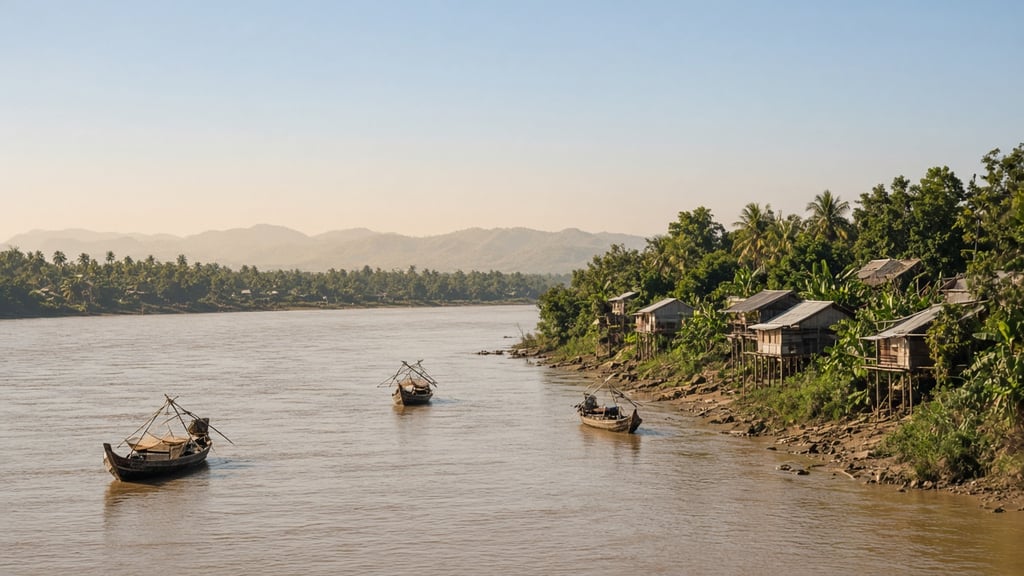
Mae Sai market, the Golden Triangle viewpoint at Sop Ruak, and Chiang Rai city remain open. The practical change is water, not a travel ban. Treat the Sai, Kok, and Ruak as industrial drainage until a current lab sheet says otherwise: no swimming, no rafting souvenirs from river water, no filling a camper tank from a riverside tap. Municipal tap in Mae Sai is treated, but the 5 November shutdown showed the plant can be overwhelmed when the river turns red-brown. Keep bottled water for drinking after heavy rain upstream, and ask a guesthouse whether it is on Provincial Waterworks or a private well.
Thaton in Mae Ai, where the Kok enters Thailand, has already seen rashes after river contact and a collapse in boat tourism. If you rent in Mae Sai, Chiang Saen, or Chiang Khong, ask the landlord about backup tanks. Report oily films, sudden red water, or fish kills to PCD hotline 1650. Do not walk onto mine-view ridgelines that sit on the actual border.
Comment verification
Step 1 of 3
Verify your email once to publish your comment. Your email is never shown publicly.
Enter the 6-digit code sent to .
Choose the display name shown next to your comments.