TAT Scrambles to Replace 159,000 Lost Norse Seats
Norse Atlantic Airways halted operations and entered insolvency, wiping out seven direct European routes and 159,536 winter seats to Bangkok and Phuket.
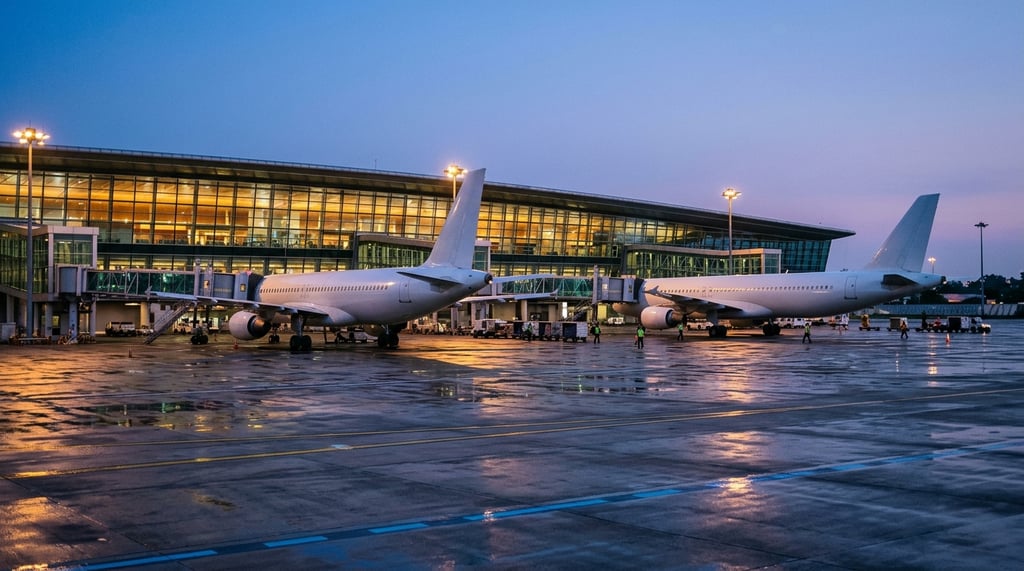
Thailand entered the heart of its peak winter tourism season on November 29 facing an abrupt hole in its long-haul European air bridge. The sudden grounding and insolvency filing of Norse Atlantic Airways AS, the Norwegian low-cost long-haul carrier, has wiped out seven direct routes linking the United Kingdom and Scandinavia to Bangkok and Phuket. Between November 27 and the close of the Winter 2026/27 aviation schedule in March, Thailand stands to lose 159,536 scheduled seats, forcing the Tourism Authority of Thailand (TAT) into an urgent campaign to defend both immediate arrivals and high-spending European market share.
The disruption underscores a structural vulnerability in Thailand's post-pandemic tourism recovery. While short-haul regional traffic from Asia can be rebalanced quickly through frequent narrow-body services, long-haul European connectivity depends on a thin roster of wide-body operators willing to absorb volatile jet fuel prices and steep aircraft leasing costs. Norse Atlantic, together with its British subsidiary Norse Atlantic UK, operated a combined fleet of 12 Boeing 787-9 Dreamliners. When the Norwegian parent failed to secure emergency funding and halted all flights from 14:00 CET on November 27, the shockwave hit Thailand's southern resort economy within hours.
Anatomy of a 159,536-Seat Capacity Shock
Preliminary schedule audits compiled by TAT's London and Stockholm offices show that the seat loss is split across two of Thailand's most lucrative winter source markets. Nordic routes account for 87,204 lost seats across four direct corridors, representing 54.7 percent of the total capacity reduction. The United Kingdom accounts for the remaining 72,332 seats across three routes, or 45.3 percent of the shortfall, including a planned London Gatwick to Phuket service that had been scheduled to launch on December 4.
Joint figures from TAT and the Civil Aviation Authority of Thailand (CAAT) illustrate the immediate human fallout. During November alone, Norse Atlantic Airways and Norse Atlantic UK operated 28 inbound flights to Thailand carrying 9,464 scheduled seats and an estimated 8,640 arriving passengers. Regulators estimate that roughly half of that cohort, or around 4,300 to 4,320 European visitors, remain in Thailand with cancelled return tickets. In Phuket, the Phuket Tourist Association reported that immediate weekend cancellations to Oslo and Stockholm affected up to 676 seats, leaving hundreds of Swedish and Norwegian holidaymakers scrambling to extend hotel stays by one to three nights while searching for alternative flights home.
TAT's Four-Pillar Emergency Playbook
Chiravadee Khunsub, TAT Deputy Governor for International Marketing for Europe, Africa, the Middle East, and the Americas, moved quickly to frame the lost 159,536 figure as scheduled seat capacity rather than an irreversible collapse in visitor arrivals. In briefings with Thai aviation regulators and trade partners, TAT emphasized that European travellers holding winter holiday plans are actively rebooking onto competing carriers, though some have postponed departures while fares spike.
To prevent demand from leaking to competing winter sun destinations in the Caribbean, the Indian Ocean, or the Middle East, TAT activated a four-pillar operational response built around retention, capacity reshaping, market recovery, and guest care. Under the retention pillar, TAT's London and Stockholm offices are auditing affected tour operator packages and travel agency bookings to gauge cancellation rates. Simultaneously, the agency froze two joint marketing campaigns previously earmarked for Norse Atlantic, redirecting promotional bandwidth toward active carriers.
The capacity reshaping effort is the most technically demanding. Using global schedule intelligence from OAG and Cirium, TAT analysts are mapping remaining seat availability between Europe and Thailand from November 2026 through March 2027. Armed with those gap analyses, TAT is negotiating with legacy and full-service partners, including Thai Airways, British Airways, EVA Air, Finnair, and Virgin Atlantic, to add frequencies, deploy larger wide-body aircraft, or open connecting inventory via European and Middle Eastern hubs.
Hospitality Relief and Potential EU Repatriation
On the ground, Thailand's hospitality sector is attempting to turn a logistical crisis into a demonstration of service reliability. TAT has coordinated with hotel operators in Bangkok and the southern provinces of Phuket, Phang Nga, and Krabi. Vichupan Phukaoluan Srisanya, president of the Southern Chapter of the Thai Hotels Association, and Thienprasit Chaiyapatranun, president of the national Thai Hotels Association (THA), have appealed to member properties across the country to offer voluntary relief rates and flexible extensions for stranded European guests.
At the diplomatic and regulatory level, CAAT Deputy Director-General Sarun Benjanirat disclosed that relevant authorities within the European Union are evaluating the deployment of special charter flights to repatriate stranded nationals. For travellers who booked independently, however, financial recovery will be slow. Norse Atlantic confirmed on its website that all flights from November 27 at 14:00 CET are cancelled, including return legs, and warned that phone, email, chat, and social media support channels are no longer operating. CAAT has formally advised affected ticket holders not to wait for direct airline payouts, urging them instead to pursue remedies through package tour operators, credit card chargebacks with issuing banks, or travel insurance policies that cover airline insolvency.
Structural Risks for Long-Haul Low-Cost Aviation
Beyond the immediate winter scramble, Norse Atlantic's collapse has revived uncomfortable questions across Thailand's aviation boardrooms about the durability of long-haul low-cost carriers. Operating wide-body Dreamliners on 11-to-13-hour sectors between northern Europe and Southeast Asia leaves thin margins when jet fuel prices climb and Russian airspace closures lengthen flight times. Unlike legacy flag carriers backed by business-class contracts, cargo bellies, and alliance feeders, point-to-point budget operators rely heavily on seasonal leisure volume. Thai tourism operators warn that other financially stretched European airlines could face similar pressures through 2027, underscoring that headline arrival targets require resilient, diversified airlift.
What This Means for Expats and Travellers in Thailand
For European expatriates, winter snowbirds, and holidaymakers in Thailand or planning trips before March 2027, the immediate effect is tighter seat inventory and sharper last-minute fares on Bangkok and Phuket routes from London, Manchester, Oslo, and Stockholm. Travellers holding Norse Atlantic bookings should not go to the airport and should save all cancellation notices immediately to support bank chargeback disputes or insurer claims.
Those rebooking to Europe in December or January will likely find the best remaining availability on one-stop itineraries via Gulf hubs, Singapore, or Taipei rather than nonstop flights, which are already near full load factors for the holiday peak. If TAT's talks with Thai Airways, Finnair, British Airways, and Virgin Atlantic yield extra frequencies or larger aircraft, relief capacity should appear in booking systems over the coming weeks, though at full-service fares well above Norse Atlantic's budget pricing.


Comment verification
Step 1 of 3
Verify your email once to publish your comment. Your email is never shown publicly.
Enter the 6-digit code sent to .
Choose the display name shown next to your comments.