China Watches Thai EV and Online Import Tax Hikes
Beijing monitors Thailand's 35% EV excise and 30% online import duties for 2027, urging investor safeguards alongside deeper Thai SME supply chains.
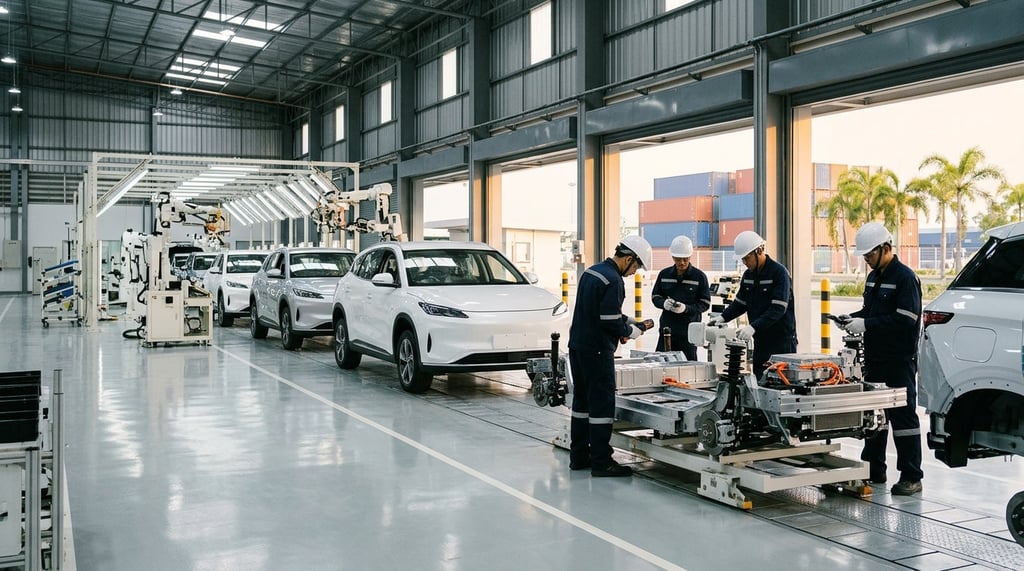
Beijing has signaled close diplomatic scrutiny of two sweeping Thai border-tax measures scheduled to take force on January 1, 2027: a 35 percent excise duty on fully imported electric vehicles and customs tariffs of up to 30 percent on cross-border e-commerce parcels. Addressing reporters on November 29, Chinese Ambassador to Thailand Zhang Jianwei acknowledged Bangkok's sovereign aim of strengthening domestic industry and social stability, while making clear that Beijing expects fair legal protection for Chinese enterprises that have committed capital to the kingdom.
The intervention lands at a delicate inflection point in Sino-Thai commercial relations. Over the past three years, Chinese automakers and online marketplaces have reshaped Thai consumer markets, capturing commanding shares of battery-electric passenger car registrations and low-ticket retail deliveries. Yet the surge has also squeezed Japanese assembly incumbents, traditional Thai parts vendors, and provincial brick-and-mortar shops. Bangkok's Cabinet decisions in November 2026 represent a calibrated effort to separate long-term industrial investors from pure-play cross-border exporters.
Two January 2027 Tariff Walls Reshaping Bilateral Trade
Thailand's fiscal tightening operates along two distinct fronts approved in consecutive Cabinet sessions during November 2026. On November 3, meeting in Udon Thani, ministers backed Finance Ministry proposals drafted under National EV Policy Committee resolutions to lift excise levies on completely built-up battery electric vehicles from 10 percent to 35 percent and on range-extended electric vehicles from 15 percent to 35 percent. Finance Minister Ekniti Nitithanprapas and Excise Department Director-General Pornchai Thiraveja stressed that the surcharge targets models imported without domestic factory investment or local component sourcing.
One week later, on November 10, the Cabinet approved a parallel overhaul of cross-border parcel taxation. Customs Department Director-General Phantong Loykulnanta confirmed that authorities will withdraw blanket duty reductions and exemptions granted under Section 12 of the 1987 Customs Tariff Decree for express courier and international postal deliveries. Instead, incoming online purchases will face standard Harmonized System tariff bands capped at 30 percent, layered atop the standard 7 percent value-added tax. Officials maintained that the schedule remains compliant with ASEAN-China Free Trade Area obligations because it restores standard customs classification rather than imposing country-specific surcharges.
EV 3.5 Localisation Mandates and the Factory Advantage
Far from closing Thailand's automotive market to Chinese brands, the 35 percent CBU excise tier widens the fiscal moat favoring manufacturers that already poured capital into Eastern Economic Corridor plants. Under the Board of Investment's EV 3.5 incentive package running from 2024 through 2027, qualifying passenger EVs priced at or below 2 million baht retain a 2 percent excise tax alongside cash subsidies ranging from 25,000 to 100,000 baht depending on battery capacity. In exchange, participating firms must offset earlier imports with domestic production at a ratio of two local units per imported car in 2026, rising to three local units in 2027.
Industry analysts tracked by Prachachat Business estimate that the 35 percent excise rate will add between 100,000 and 400,000 baht to retail prices for unlocalized CBU imports. That spread sharply penalizes late-arriving exporters attempting to test Thai demand via direct shipments without factory commitments, while cushioning established Japanese automakers and localized Chinese assembly operations alike. With Federation of Thai Industries figures showing passenger EV registrations surging 98.6 percent year-on-year to 19,425 units in September 2026, Bangkok is leveraging market access to lock in battery assembly, drivetrain machining, and engineering transfer.
From One-Baht Parcels to the 30 Percent Duty Ceiling
The e-commerce tariff shift completes a two-stage closure of Thailand's low-value import loophole. On January 1, 2026, customs authorities scrapped the long-standing 1,500-baht de minimis threshold, applying VAT and duties from the very first baht on overseas parcels. Even so, Thai business federations argued that residual Section 12 tariff concessions left direct-to-consumer platforms with a steep cost edge over local small and medium-sized enterprises burdened by commercial leases, Thai payroll taxes, corporate income filings, and Thai Industrial Standards Institute safety certification.
By restoring tariff ceilings up to 30 percent on apparel, household plastics, accessories, and fitness gear shipped via express couriers, the Finance Ministry aims to narrow that structural gap while forcing foreign platforms to tighten compliance checks at checkout. Trade associations have welcomed the move as necessary breathing space for provincial wholesalers and garment workshops, though domestic retailers continue to press for stricter enforcement against misdeclared parcel values and informal grey-market warehouses.
Beijing's Industrial Case and Thai SME Supply Chains
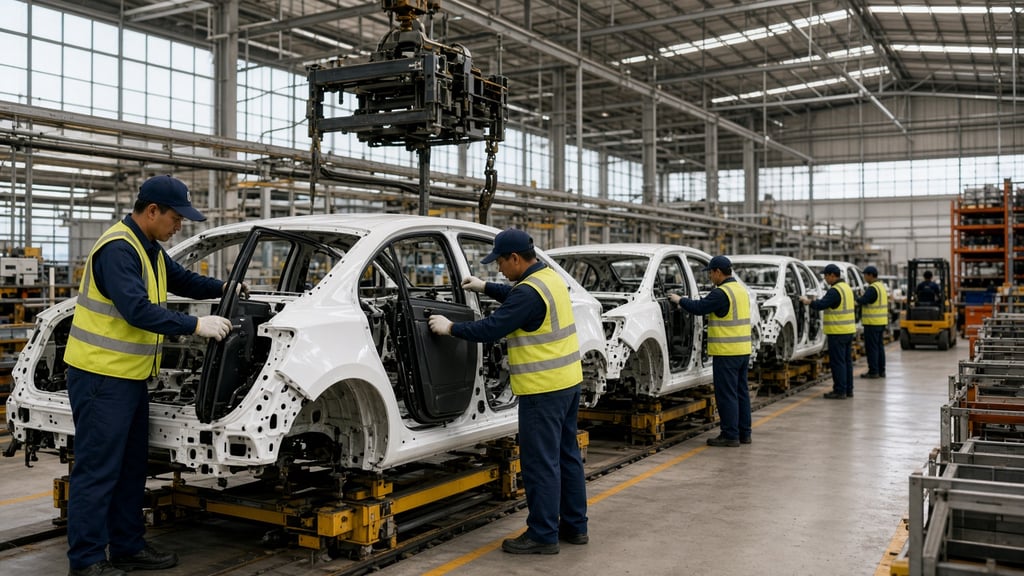
Ambassador Zhang's remarks underscored Beijing's preferred narrative: Chinese capital in Thailand is no longer transactional trade but anchored industrial integration. Pointing to Thailand's prime ministerial visit to BYD during the APEC summit in Shenzhen, the envoy highlighted that BYD's Thai assembly operations now employ more than 6,000 workers, 95 percent of whom are Thai citizens, with plans to expand headcount to 10,000 in 2027. Crucially, the plant has already surpassed 50 percent domestic parts content, opening procurement channels for Thai stamping, wiring, and polymer suppliers.
That emphasis reflects a pragmatic bargain. Beijing recognizes that political friction over factory closures among Thai SMEs could sour public sentiment toward Chinese investment across Southeast Asia. By pairing calls for predictable, lawful investor protections with measurable local-hiring and parts-sourcing benchmarks, Chinese officials are encouraging Bangkok to keep regulatory enforcement transparent and non-discriminatory for compliant firms.
What This Means for Expats in Thailand
Expatriate residents, foreign founders, and retirees across Thailand face immediate price and purchasing adjustments heading into 2027. Prospective EV buyers should verify whether a showroom model is assembled locally under EV 3.5 or imported as a CBU unit: fully imported niche models and range-extended hybrids lacking Thai assembly lines face price jumps of 100,000 to 400,000 baht once January 1, 2027 arrives, whereas locally built models from localized plants remain shielded at lower excise tiers.
Everyday online shopping will also grow noticeably costlier for foreign households accustomed to ordering electronics accessories, apparel, or home goods directly from China via cross-border apps. With standard customs tariffs up to 30 percent stacking alongside 7 percent VAT from the first baht, landed checkout totals will converge toward domestic retail prices. For foreign-owned SMEs operating e-commerce brands or specialty retail inside Thailand, however, the new tariff floor reduces unfair price undercutting by offshore sellers who previously bypassed local tax and product-safety regimes.
Comment verification
Step 1 of 3
Verify your email once to publish your comment. Your email is never shown publicly.
Enter the 6-digit code sent to .
Choose the display name shown next to your comments.