Cabinet Approves 18 Billion Baht Operating Loan for State Railway of Thailand
Cabinet on 3 November approved an 18 billion baht fiscal 2027 operating loan for SRT after an 18 billion baht cash shortfall in fiscal 2026. Fares are not being raised.
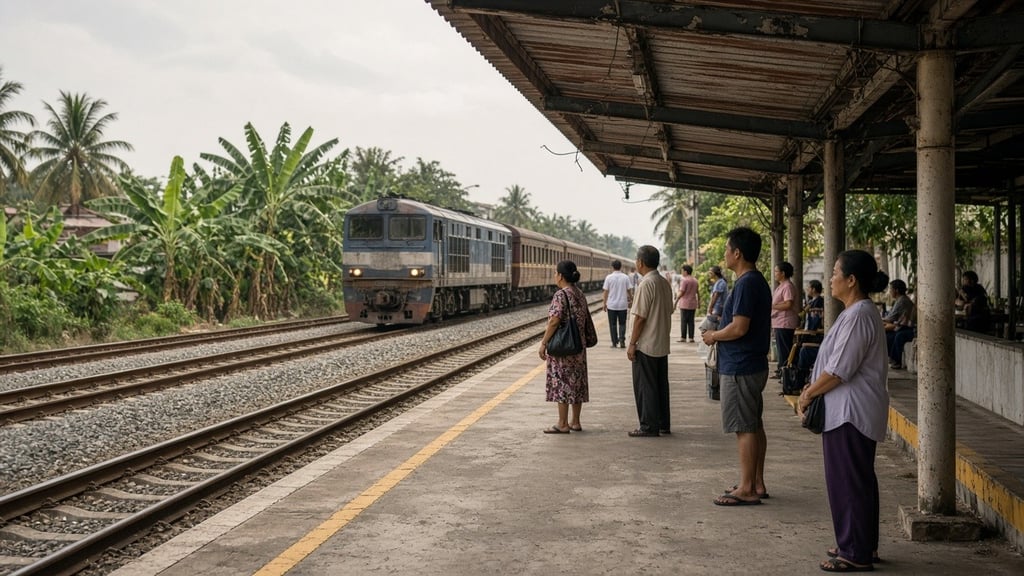
Thailand's Cabinet on 3 November 2026 approved an 18 billion baht operating loan for the State Railway of Thailand, a cash injection meant to keep trains, tracks, and pensions funded through fiscal 2027 after the railway spent 18 billion baht more than it took in last year. The vote came at an off-site Cabinet meeting in Udon Thani, chaired by Prime Minister Anutin Charnvirakul, as item nine on the economic and social agenda.
The Transport Ministry tabled the request after Deputy Prime Minister Phiphat Ratchakitprakarn cleared it. Deputy government spokesperson Ploythalay Laksamisaengchan said the borrowing sits under section 39(4) of the State Railway of Thailand Act B.E. 2494 (1951). The Finance Ministry will guarantee the loan and set the source, terms, and conditions. SRT remains on the hook for principal, interest, and fees. Drawdown waits until the amount is locked into the fiscal 2027 public debt management plan, a step the government says has already been completed. The official Cabinet briefing sets out those terms in full.
A matching hole, a matching loan
The 18 billion baht figure is not a coincidence. In fiscal 2026, SRT's cash payments exceeded cash receipts by the same 18 billion baht. Revenue is being consumed by interest on existing loans, track and bridge maintenance, station buildings, ageing locomotives and carriages, train operations, and staff pensions. The new loan is working capital, not a budget for new high-speed lines. It is meant to stop a liquidity freeze that would otherwise hit fuel, spare parts, and wages. The State Railway of Thailand still operates the national metre-gauge network.
The Public Debt Management Office, with the Finance Minister's consent, the Budget Bureau, and the National Economic and Social Development Council all raised no objection. Their caveats matter more than the green light. The Budget Bureau told SRT to draw the money only when needed so the extra debt does not sit idle as an unnecessary burden, and to keep the 2023-2027 enterprise recovery plan on target. NESDC pressed the Transport Ministry to speed up asset commercialisation, invite private operators onto the rails under Open Access, and rank future investment by whether SRT can actually pay for it.
Fares stay frozen. Service is the bet.
Nothing in Tuesday's decision raises ticket prices. SRT's own customer and marketing strategy for 2023-2027 lists government fare control as a core constraint: the railway cannot lift passenger fares while fuel, wages, and maintenance keep climbing. That policy is why third-class seats remain among the cheapest long-distance tickets in the country, and why the operator keeps returning to Cabinet for operating credit.
On 4 November, SRT and the Transport Ministry said they would follow the Cabinet order: raise income, squeeze costs, and work the recovery plan through 2027. Extra cash is supposed to come from SRT Asset Co. (SRTA) developing station land, and from private firms paying to run trains on public tracks. The railway pledged to keep passenger and freight services running. It did not promise more frequent trains, newer sleepers, or on-time performance. A loan that pays yesterday's bills does not, by itself, buy tomorrow's rolling stock.
The same public debt plan that now includes this borrowing already treats SRT as a regular on-lending client. PDMO's fiscal 2027 package, presented to Cabinet on 29 September 2026, counts government on-lending to SRT and the Mass Rapid Transit Authority inside 1.18 trillion baht of new central-government debt. State-enterprise borrowing for dual-track, metro, and port work sits in a separate 82 billion baht envelope. Public debt is still projected to stay under the 70 percent of GDP legal ceiling.
What This Means for Expats and Travelers in Thailand
If you book the overnight train from Bangkok to Chiang Mai, Hua Hin, or the south, this decision is about whether the train still exists, not about a surprise fare hike this week. Cabinet did not authorise a tariff increase. SRT's published strategy still treats fare control as government policy. Buy tickets as usual through D-Ticket or station counters. Keep a buffer for delays. Liquidity stress shows up as cancelled carriages and late departures long before it shows up as a new price list.
Watch three things, not the loan headline. First, maintenance: if spare parts and track work slip, the cheap sleeper you like becomes less reliable. Second, Open Access: private tourist trains on SRT tracks are the government's preferred revenue path. Third, station land: SRTA commercial projects around major stations can change how you enter Hua Lamphong or a provincial halt, with more shops and fewer empty platforms. None of that is a visa issue. It is a service-quality issue for anyone who treats the railway as the affordable way to move around 47 provinces without flying.

Comment verification
Step 1 of 3
Verify your email once to publish your comment. Your email is never shown publicly.
Enter the 6-digit code sent to .
Choose the display name shown next to your comments.