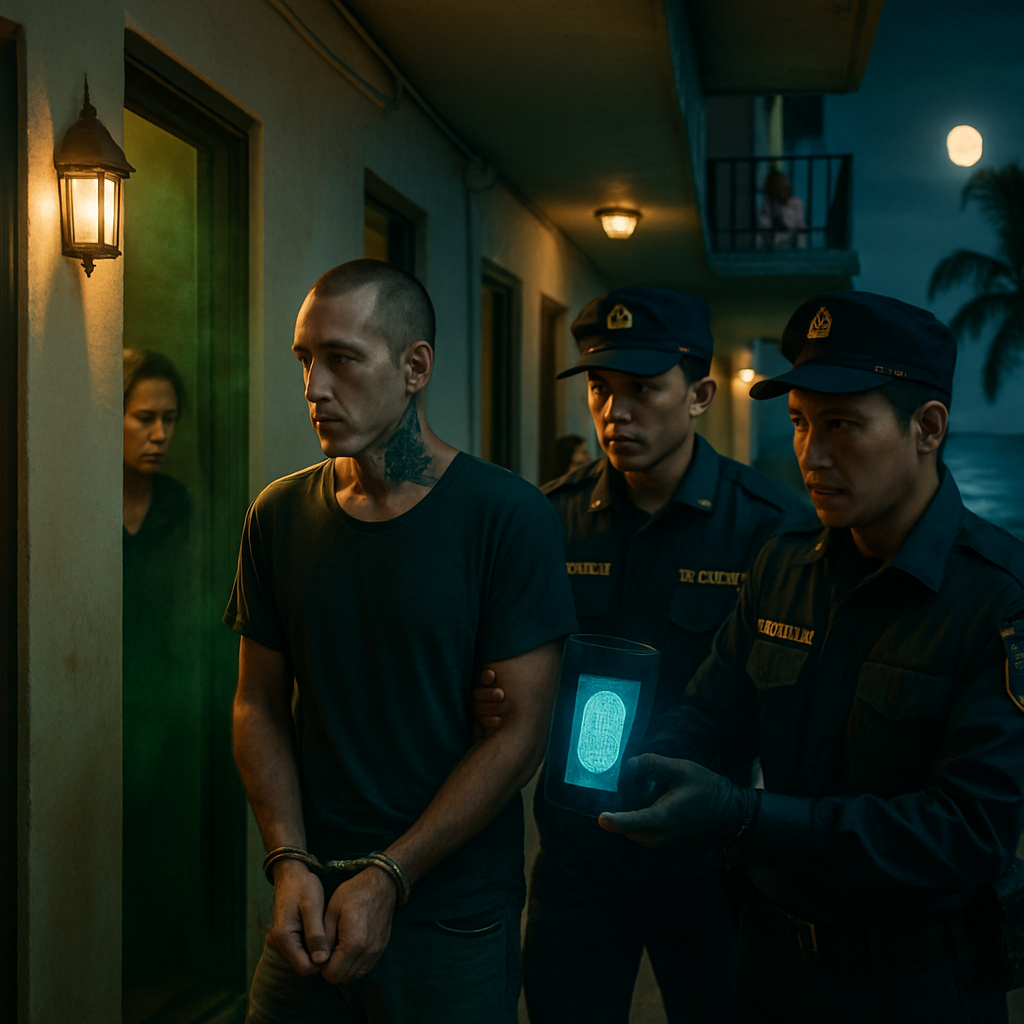
Hua Hin’s sleepy seaside calm was briefly punctured on January 18 when immigration officers quietly moved in to arrest a Swedish national who had reportedly been keeping to his room and raising eyebrows among neighbours. The man, identified only as Noah, was taken into custody after Region 3 Immigration Police followed up on tip-offs that the foreign resident was hiding out in Prachuap Khiri Khan — and, as it turned out, also hiding from justice back home.
Neighbours, curiosity and the smell that started it all
Local residents had lodged complaints about a foreign man who rarely left his unit and generated an unpleasant odor that drifted down the corridor: cannabis. The constant scent, combined with the man’s reclusive behaviour, made neighbours uneasy enough to contact authorities. Those civilian reports prompted immigration investigators to look closer — and they soon uncovered a far more serious reason to act.
Wanted in Sweden, found in Hua Hin
Officers say Noah fled his home country roughly a year ago to evade prosecution and arrived in Thailand seeking refuge. While staying in Hua Hin, investigators say he exhibited behaviour that alarmed local law enforcement: driving under the influence of drugs and possession of an unlicensed weapon were among the incidents flagged. Authorities assessed that such conduct posed an immediate threat to public safety and national security.
When confronted, Noah reportedly attempted to deny the charges tied to his identity. He told officers that he was thinner and had shorter hair than the man pictured in the arrest warrant issued by Swedish authorities. But modern policing left little room for doubt: biometric checks — and a distinctive large tattoo on his neck that matched records from abroad — confirmed he was the individual named in the active warrant.
Immigration law meets international warrants
With identity established, immigration officials wasted no time. Under provisions allowing the revocation of stay for individuals deemed a danger to public order or safety, Noah’s permission to remain in Thailand was cancelled. He is now in custody pending legal proceedings and eventual deportation to face the charges awaiting him in Sweden.
Investigators from Investigation Division 3 were keen to emphasize that the arrest aligns with a wider national directive: Thailand will not become a comfortable hideout for foreigners escaping justice. According to reports in Matichon, immigration authorities reiterated their commitment to pursuing those who use the country as a safe haven from international warrants.
This is not an isolated case
The Hua Hin arrest is part of a growing pattern of cross-border enforcement. In a similar recent operation, police in Phuket detained a Kazakh national who had been the subject of an Interpol Red Notice after fleeing a fraud case in his home country. Those cases together underline an intensified focus by Thai authorities on closing loopholes that allowed some wanted individuals to blend into tourist locales or expatriate communities.
What happens next?
With deportation on the horizon, Noah will likely face a legal process involving immigration hearings and coordination with Swedish officials to arrange repatriation. The precise timeline depends on procedural requirements, evidence verification, and any appeals or legal protections he may seek. For the neighbours in Hua Hin, however, the immediate relief is tangible: a disruptive presence has been removed and the smell that unnerved the building may finally fade.
Why it matters
At first blush, this story reads like a neighbourhood nuisance complaint. But it highlights how local vigilance and interagency cooperation can ripen into international law enforcement action. It also serves as a reminder that tourist-friendly towns and expatriate communities are not insulated from the reach of global warrants or from the consequences of irresponsibly risky behaviour within their borders.
Whether you’re a beachside neighbour bothered by odd hours and lingering smoke, or a visitor enjoying Hua Hin’s markets and shoreline, the takeaway is straightforward: public safety is a shared responsibility, and the world of international policing is smaller than ever. For now, the case of Noah is a closed chapter for the town — but another page in the broader effort to ensure that fleeing prosecution doesn’t guarantee impunity.
Authorities say they will continue to monitor foreign residents and act on credible intelligence. As they do, communities across Thailand can expect a firmer line against anyone seeking refuge on Thai soil while wanted elsewhere.


















Good to see authorities follow up on neighbours’ tips, but is immediate deportation always the right outcome? If he truly fled prosecution there should be due process to verify the charges. Still, living next to a smelly, potentially dangerous roommate is no fun.
Thailand can’t be a sanctuary for criminals, but I’m worried about blanket visa cancellations without proper hearings. There are stories where mistakes happen and people are shipped out unfairly.
There’s a balance between public safety and rights; immigration hearings exist for a reason and can provide oversight. The tattoo and biometric matches sound pretty conclusive though.
Either way, a stinky corridor and an unlicensed gun are enough to make me call the cops, rights or not.
Community vigilance led to an international arrest, which is impressive and a little scary. I just hope Thailand follows extradition law and the man gets a fair hearing. Biometrics make it harder to hide but also raise privacy questions.
If he smells like weed and drives drunk, he shouldn’t be here.
I agree that criminal behaviour shouldn’t be tolerated, I’m just cautious about summary expulsions without clear process.
The tattoo match is wild; that’s some detective work and it makes arguing mistaken identity tough.
International cooperation is important but we must ask whether the Swedish warrant is politically motivated or legally sound. Extradition frameworks include safeguards that should be invoked. Revoking someone’s stay for ‘public order’ is lawful but can be prone to misuse if not transparent.
From experience, police typically won’t act without solid verification; Interpol and national warrants have checks. Public safety concerns like DUI and weapon possession justify swift action.
Agreed, verification is key and transparent appeals must be available to the detainee.
Feels like foreigners get watched more closely here, and that worries me about profiling. What if locals with similar behavior aren’t treated the same? Equal enforcement should be the goal.
As someone from Sweden, I know our system isn’t perfect but warrants usually have reasons; running away rarely helps your case. That said, xenophobia must be avoided.
I didn’t mean to defend him, I just want systems that treat everyone equally regardless of nationality.
Interesting how a smell complaint escalated into an international arrest, it shows small tips can matter. But it’s also easy for neighbours to misinterpret things. I hope the process is fair and transparent.
A smell alone shouldn’t trigger deportation, but it can start an investigation that uncovers more solid evidence like tattoos and biometric matches. Those checks are decisive.
Thanks, that explains it; I just worry about petty disputes being weaponized.
Haha neck tattoos doing the extradition work now, who knew? Jokes aside, glad dangerous people can’t just live in holiday towns forever.
Calling him ‘Noah’ in reports reads oddly neutral to me and could sway public perception; I hope courts examine the facts thoroughly before sending him back to Sweden.
Fair point about neutrality, but when there’s DUI and weapons involved, public safety becomes the priority.
If he ran, he’s guilty in my book.
Inter-agency coordination produced results here; following leads works. Detainees still deserve humane treatment during the extradition process.
Exactly, humane custody and legal protections are obligations under international human rights standards.
We do have standards, though implementation can vary by case and jurisdiction.
I want to know the specific charges in Sweden and whether his trial will be fair. Extradition shouldn’t be a rubber-stamp. Transparency from authorities would help public trust.
Press will likely dig up the specifics soon; for now we can only ask for openness and proper legal process.
I’ll keep an eye on court filings then, accountability matters.
If he was smoking weed and waving a weapon, deport him and be done with it. Local communities shouldn’t have to tolerate that.
This might deter fugitives from hiding in tourist towns, but it could also scare legitimate expats. Authorities need to balance enforcement with preserving community trust. Clear communication would help.
Totally, overzealous policing can push people underground and undermine safety long-term.
Enforcement plus transparent outreach is the right mix, otherwise everyone loses.