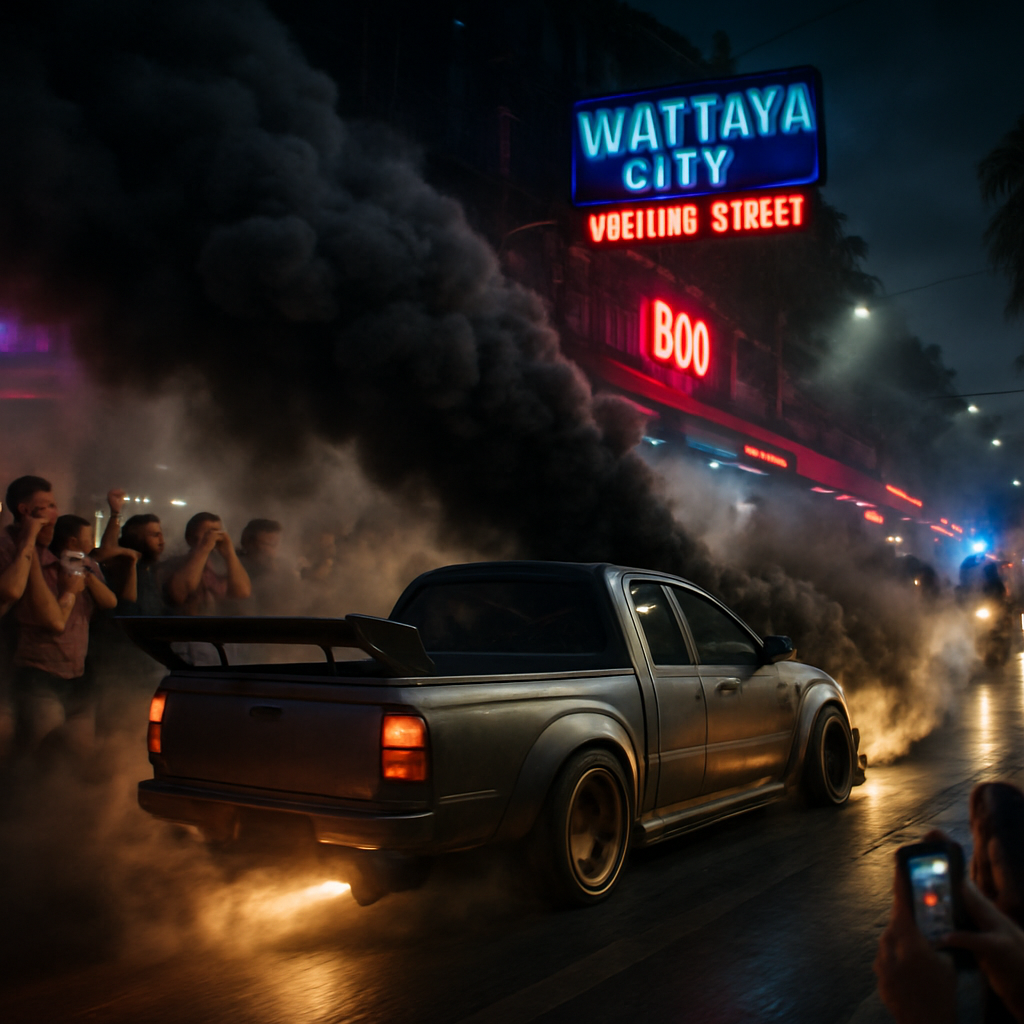
It was a scene more suited to an action movie than a seaside stroll: a customised, racing-style pickup truck tore down Pattaya’s beachfront road at about 3:30 a.m., then deliberately belched a choking cloud of black smoke across Walking Street — right in front of more than 100 unsuspecting tourists. The dramatic footage, captured on a witness’s phone and shared online, has since ignited a storm of criticism about public safety, air pollution and the image of Pattaya as a top tourist destination.
The anonymous witness told The Pattaya News they were driving along the beachfront when the pickup roared up from behind. “It came past at high speed and then let out this massive plume of smoke,” they said. “You couldn’t see the road ahead. It was scary for everyone there.” The grainy but compelling clip quickly circulated on social platforms, with many viewers calling the stunt dangerous and irresponsible.
Why such outrage? Because this isn’t just an annoying exhaust note — it’s a visible sign of environmental and public-safety problems. Emitting dense black smoke signals heavily incomplete combustion, often caused by engine tampering or aftermarket modifications designed to boost performance at the cost of emissions. In a packed tourist hotspot like Walking Street, the effects are immediate: impaired visibility, irritated lungs, and the very real risk of causing a crash if drivers or pedestrians can’t see clearly.
Social media users were blunt. Comments ranged from calls for the driver to be tracked down and prosecuted to lamentations about Pattaya’s reputation. “This kind of behaviour does not belong in a city that attracts families and international visitors,” wrote one user. Others posted images and short clips, tagging local authorities and urging swift action.
At the time of reporting, local authorities had not issued an official statement. That silence has only intensified the online outcry: if no consequences follow, critics say, it sends the wrong message — that risky, polluting antics are tolerated on the city’s busiest streets.
Beyond the smoke: a worrying pattern of vehicle-related crimes
The modified-pickup incident arrived amid a flurry of other car-related headlines out of Pattaya and the surrounding provinces. In one case, a couple were arrested after allegedly running an elaborate car-theft scam: renting vehicles, disabling GPS trackers and selling them on the black market. Victims reported losses across Chon Buri, Pattaya, Nonthaburi and Kanchanaburi — a multi-province operation that highlights how organised, technology-savvy theft rings can undermine trust in the rental market.
Another story that has rattled locals involved a luxury rental car owned by an Indian businessman that vanished without a trace. The owner labelled the disappearance the work of professional scammers, and the case underscores how lucrative — and brazen — such schemes can be. When tourists and business visitors begin to worry about the safety of their rented vehicles, the tourism sector takes a reputational hit.
So what can be done? Pattaya’s authorities face a balancing act: keep the streets safe and welcoming for tourists while cracking down on dangerous driving and organised theft. Possible steps could include more visible patrols, stricter inspections of modified vehicles, and clearer penalties for emissions violations and reckless stunts. Public awareness campaigns might also help — reminding drivers that “cool” modifications aren’t worth endangering others or tarnishing a city’s image.
For locals and visitors alike, the incidents are a blunt reminder that urban tourism depends on more than sun and sand. It relies on predictable streets, clean air and a sense that rules are enforced. Walking Street is one of Pattaya’s most famous thoroughfares; when high-profile episodes like this occur, the ripple effects are immediate: social-media furore, headlines and — potentially — fewer return visitors.
As the clamor grows online, many are calling on police to identify the pickup’s driver and take action to prevent copycat behaviour. Whether that comes in the form of fines, criminal charges or vehicle impoundment remains to be seen. But one thing is clear: Pattaya’s reputation as a world-class beach destination deserves better than a midnight stunt that leaves behind nothing but black smoke and bad publicity.
Until authorities respond, visitors and residents will watch and wait. And in the meantime, the footage — and the questions it raises about safety, pollution and accountability — will keep circulating, a smoky wake that the city would do well to clear quickly.

















This is outrageous — deliberately clouding Walking Street with black smoke is reckless and could have caused a stampede or crash. Pattaya needs to prosecute these stunts so tourists stop fearing for their safety. If the police stay silent, it looks like lawlessness is winning.
Totally agree, Sam; it’s not just about a noisy truck, it’s about public health and the city’s reputation. Families come here expecting safety, not danger. What kind of fine would actually deter these guys?
A big fine plus vehicle impoundment for a long period would help, and publicizing charges so copycats know there are consequences. Also compulsory emissions checks for modified vehicles might cut this down. Local authorities should make an example of one case quickly.
You’d think they’d just ban those mods, but there’s a whole underground scene; fines are a joke if the money is worth the publicity. Some of these drivers do it for clout, not cash. Maybe community reporting apps could help catch them.
Community reporting is great if the police actually act on tips. Right now people tag videos and nobody follows up. Transparency about arrests would rebuild trust fast.
I filmed something similar years ago and nothing happened because the footage ‘wasn’t clear enough.’ The system needs digitized chains of evidence and dedicated traffic enforcement units, not sympathetic officers who wink at locals.
I was going to book Pattaya for next month but seeing this makes me nervous about walking around at night. If rental cars disappear and people drive like maniacs, why risk it? Someone needs to advertise safety reforms before tourists flee.
As a local I get the worry, but Pattaya is big and mostly safe during daytime; the nightlife spots are where you have to be careful like any city. That said, this stunt was out of line and we want tourists to feel welcome. Support local businesses by visiting earlier in the evening and avoid secluded alleys.
Thanks for the local perspective, but perception matters globally; viral videos already damage bookings. Could hotels offer shuttle services to reduce street exposure for guests?
Shuttle programs are useful but don’t replace strong policing and vehicle inspections. We need regular checkpoint operations and collaboration with rental companies to track suspicious vehicles. If police departments had better resources, these theft rings and public stunts would drop sharply.
Totally — and locals are tired of the thieves who exploit tourist naivete. If the authorities partner with rental agencies and increase patrols, it would help both image and safety.
From an environmental health perspective, dense black smoke indicates severe incomplete combustion and particulate emissions that can aggravate asthma and other respiratory conditions. One plume in a crowded area is an immediate hazard and a sign of lax regulatory enforcement. Pattaya should implement emissions testing and ban certain aftermarket modifications that are clearly dangerous.
Agreed, Dr. Owens — diesel smoke contains black carbon and ultrafine particles that penetrate deep into lungs. Local governments could subsidize scrappage or retrofit programs to reduce modified, polluting vehicles. Education campaigns for mechanics and drivers could change norms faster than fines alone.
Exactly, Alex — technical fixes plus policy incentives work best. A combined approach of inspections, penalties, and incentives for legal performance upgrades would reduce both pollution and the incentive for dangerous stunts.
This is above my pay grade, but as someone with asthma I found the video terrifying; I would avoid areas where people do this. Maybe hotels can post warnings for guests with breathing problems.
Health warnings are fine, but the onus shouldn’t be on tourists to avoid pollution created by locals. The city must step up. Also, what about temporary bans on high-risk vehicles in tourist zones?
Mechanically speaking, that black smoke is almost certainly from purpose-built smoke devices or aggressive fueling maps on tuned ECUs, not just a noisy muffler. You can detect and confiscate such hardware with roadside inspections and basic OBD scans. It’s a solvable enforcement problem if the will exists.
OBD scans are a good start but many trucks have throwaway ECUs or mechanical smoke kits that bypass sensors. Training officers to spot common aftermarket changes quickly would help, as would sting operations at car meets.
Right — combine roadside testing with targeted enforcement at events and late-night hotspots where these crews gather. Remove the incentive by seizing profits from organized displays.
Seizing profits sounds ideal, but who budgets for forensic vehicle investigations in tourist towns? Someone needs to allocate funds from tourism taxes to enforcement.
This is why I stopped going to big tourist spots — too many people trying to get attention with dangerous stunts. Keep the family places family-friendly and ban these shows. Simple as that.
People keep calling it a ‘stunt’ but there’s a criminal aspect if the driver intended to cause fear or distract people. That’s potentially assault or reckless endangerment, not just an emissions violation. Arrest and charge accordingly.
Exactly. If prosecutors treat it as mere nuisance, repeats will follow. Charging for reckless endangerment would send a clearer signal than a small fine.
But proving intent is hard — was the driver trying to scare people or just showing off? Video, witness statements, and history of similar stunts could build a case. Civil suits from injured parties could also deter behavior.
As a teacher I worry about normalization; kids see viral clips and think it’s cool to endanger others for likes. We need school and community programs teaching road safety and civic responsibility. Social media platforms should also label or remove dangerous challenge videos.
Blaming social media partly helps, but offline accountability matters more. If the city cracks down on visible offenders, the online trend will die. Education plus enforcement equals real change.
Agreed — both are necessary. I also think hotels and tour operators could run short orientations for guests about safe areas and local laws.
This kind of publicity is killing small businesses who depend on families and higher-spending tourists. One viral clip and a thousand people cancel trips. The council should act before summer bookings nosedive.
As a former traffic officer I can say enforcement is the fastest fix, but it requires resources and political will. Random checkpoints, coordinated weekend patrols and working with rental agencies to flag suspicious modifications are practical steps. If the city funds enforcement from tourism levies, it’s sustainable.
I watched the clip and was shocked by how quickly visibility dropped; you could easily stumble into traffic. Tourists shouldn’t have to navigate that. Maybe close parts of Walking Street to modified vehicles at night?
Closing streets selectively could work, but businesses might complain about lost foot-traffic. Better to enforce rules and let businesses advertise safer, curated nightlife zones. It’s a balance, not a blunt instrument.
There’s a broader governance issue: when informal groups feel empowered to flout laws, it points to weak local institutions. Strengthening licensing, impounding repeat-offender vehicles, and publicizing enforcement builds social norms. Short-term PR fixes won’t solve systemic gaps.
I come from a place where car culture is celebrated, but this crosses a line into weaponizing pollution. The driver could be prosecuted for creating a public hazard. Countries that impose strict penalties see quick behavior change.
As someone who works in hospitality here, we already get nervous calls from guests about viral incidents. Hotels want clear communication from police so we can reassure visitors. An official statement would calm things down much faster than silence.
Silence from authorities fuels speculation. Local press needs access to police briefings and clear updates on investigations. Transparency not only helps tourists, it pressures officials to act.
Organized theft rings are the bigger scandal — car rentals getting scammed undermines trust and could collapse a market. Maybe require stronger ID checks, GPS tamper-proof designs and secure contracts. That would reduce both theft and shady mod culture.
I’ve seen groups who hunt down stolen cars and expose scammers online; crowdsourcing might be part of the solution. But vigilantism can go wrong, so coordinate with police. Give citizens an easy, safe way to report and upload proof.
When I was young we didn’t have these modified vehicles; people respected basic rules. Times change, but respect for others should be taught. Maybe community elders can mediate with youth car clubs to set safe boundaries.
It’s easy to vilify locals, but some tourists also egg on reckless drivers for photos and clout. Responsibility is shared. If tourists and locals refuse to reward the behavior with likes and payments, it will stop faster.
If police don’t act the private sector will — insurers might raise rates or refuse coverage in hotspots, which hurts everyone. Market pressures can force change, but that costs locals and businesses too. Prevention is cheaper than reaction.
Restaurants on Walking Street suffer when people avoid the area after stunts like this; livelihoods are at stake. Business associations should demand action and offer to fund targeted patrols. Stakeholders must pressure the council.
Some people argue it’s ‘harmless fun,’ but when it endangers others it’s a crime. Context matters — if you’re in a controlled motorsport area it’s different, but downtown streets are not a racetrack. Treat it accordingly.
There are solutions that respect car culture but keep people safe: sanctioned car meets, closed-course drag nights, and permits for shows that meet safety standards. Channel the energy into controlled events instead of chaos on public roads.
I worry that heavy-handed crackdowns could push these scenes underground and make them harder to police. Combine measured enforcement with community engagement and alternatives like Zoe suggested. Punishment without options rarely works.