Thailand

Phuket Commemorates 20th Anniversary of the 2004 Tsunami with Global Memorial Events

Imagine a pristine beach, untouched by human footprints, stretching into the horizon under a clear blue sky. But on the fateful day of December 26, 2004, Patong Beach in Phuket became the resting place of a car,…
Phuket Commemorates 20th Anniversary of the 2004 Tsunami with Global Memorial Events

Imagine a pristine beach, untouched by human footprints, stretching into the horizon under a clear blue sky. But on the fateful day of December 26, 2004, Patong Beach in Phuket became the resting place of a car, stranded in the wake of one of nature's fiercest displays of power—the massive tsunami that forever altered the lives of over 227,000 individuals across various countries. Among the regions hit, Thailand counted a chilling toll of more than 5,000 souls lost and 8,000 wounded in the chaos.

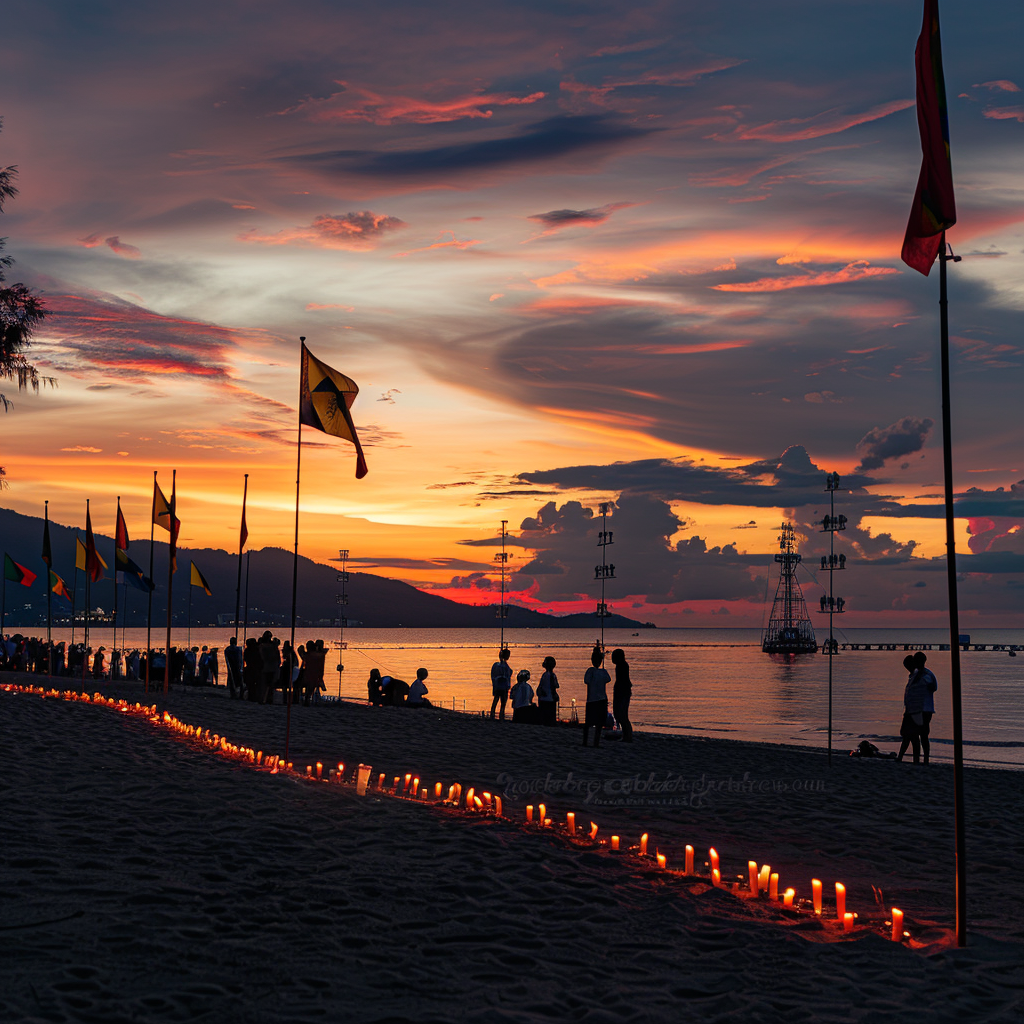
Fast forward to this Thursday, and the echo of that devastating event reverberates once more as Phuket prepares to host a significant commemorative event, marking the 20th anniversary since the tsunami. With a heart heavy with memories yet brimming with a resilient spirit, the residents of Phuket, alongside global visitors, are set to gather in honor of the past. Six southern provinces including Phuket, Phangnga, Krabi, Trang, Satun, and Ranong along the Andaman coast felt the fury firsthand, and they rise today to remember the lives that were intimately intertwined with theirs.

In the serene district of Thalang, the Tambon Mai Khao Administrative Organization (TAO) is orchestrating a poignant ceremony that promises more than just nostalgia. This year, a larger crowd is anticipated, mingling with survivors and bereaved families alike. According to Sarawut Srisakhookham, the ever-compassionate chair of Mai Khao TAO, the memorial will bring nations together in a colorful spectacle of flags from the 45 countries affected by this tragedy. While past events saw a dwindling number of attendees, this pivotal anniversary draws many towards a shared platform of remembrance and hope.

The calamity of 2004 served as a poignant lesson, prompting the installation of a robust disaster awareness and alert system. Together with the efforts of state agencies and quick-thinking locals, the country now houses sophisticated tsunami buoys in the Andaman Sea, numerous warning towers, and multilingual alert messages—covering Thai, English, German, Japanese, and Chinese.

Phuket's governor, Sophon Suwanrat, exudes confidence, affirming the public's peace of mind with the highly regarded disaster warning system. He lauds the progressive measures, including the newly installed high-tech tsunami buoys by the Department of Disaster Prevention and Mitigation (DDPM), logos of safety and reliability. Regular drills and educational efforts underpin the island’s unwavering resolve to protect its people.

Supported by the DDPM's steadfast surveillance, bolstered by two significant tsunami buoys—Station 23461 in the Andaman Sea and Station 23401 in the Indian Ocean—Thailand's readiness remains vigilant. Deputy director-general Saharat Wongsakulwiwat emphasizes the meticulous care given to these buoys every two years, safeguarding the effectiveness of these lifesaving sentinels.

Aligned with safety-minded initiatives is Adul Chuthong, Phuket's deputy governor, who emphasizes the criticality of ongoing maintenance not just of the technology itself, but in engrained community preparedness. Meanwhile, the determined Sopon Thongsai, head of Phuket's disaster prevention office, speaks of refurbishing and expanding warning towers—even as Chalermsak Maneesri, Patong Municipality's mayor, reinforces the need for robust, well-tested systems and ever-watchful lifeguards.

Yet, amid technological strides, reminders of vulnerability drift in. Sueksit Suwannaditsakul, president of the Southern Thai Hotels Association, calls for an ongoing commitment to beach safety and vigilant evacuation drills. Such management tactics can unwind in the daily hustle, he worries, unless steadily maintained.

Elsewhere in Takua Pa district, Phangnga, the village of Ban Nam Khem will again hold events of mourning and reverence. There, friends and relatives of victims will revisit the solemn site where Tor 813, a formidable 60-tonne marine police boat, found its calling as a landlocked sentinel—a sobering testament to the unstoppable force of the sea.

In reflecting on the tsunami's profound legacy, this spirited anniversary awakens more than sorrow. It galvanizes an enduring demand for vigilance, compassion, and an unwavering promise to remember the delicate dance we share with nature's fickle beauty and power.


36Comments
Sort by:
JDJohn Doe··1 pts · 4 replies
JD
John Doe
It's good to see communities and countries finally learning from past mistakes. The 2004 tsunami was a wake-up call the world needed.
1
MMaria··1 pts
M
Maria
Absolutely! But why did it take such a disaster for people to take action? Shouldn't this have always been a priority?
1
JDJohn Doe·1 pts
JD
John Doe
Governments tend to react rather than prepare. It's sad but true.
1
TTommyG··1 pts
T
TommyG
Action is better late than never. Let's hope we don't need more tragedies to keep this momentum going.
1
MMaria·1 pts
M
Maria
Truly, but it's also important for citizens to hold leaders accountable for these precautions.
1
SScienceBuff88··1 pts · 2 replies
S
ScienceBuff88
The new tsunami buoys are a marvel of technology. They reassure me that the region is safer now.
1
SSkeptic123··1 pts
S
Skeptic123
Well, technology can fail too. Over-reliance on these buoys might make us complacent.
1
SScienceBuff88·1 pts
S
ScienceBuff88
A fair point, but it's all about balance—tech combined with human preparedness is key.
1
SLSophia L.··1 pts · 2 replies
SL
Sophia L.
Has anyone thought about how global warming might affect tsunami patterns? We need to consider long-term implications.
1
GGreen4Life··1 pts
G
Green4Life
Exactly, Sophia! Climate change could lead to more frequent and intense storms. Are we prepared for that?
1
SLSophia L.·1 pts
SL
Sophia L.
Right, our safety measures need to evolve with the climate. It's an ongoing process.
1
TTravelerTim··1 pts · 2 replies
T
TravelerTim
Phuket is a beautiful place, despite its tragic history. This ceremony is a beautiful reminder of the resilience of its people.
1
LLisa_M··1 pts
L
Lisa_M
Yes, but tourists often forget the real people affected when visiting these spots. It's more than just a vacation destination.
1
CCultureFan··1 pts
C
CultureFan
That's true. Visitors need to show respect for the local culture and the memories of tragedies past.
1
AAlex_J··1 pts · 1 reply
A
Alex_J
It's amazing to see international cooperation in memorial events. These disasters remind us of our shared humanity.
1
WWorldTraveler88··1 pts
W
WorldTraveler88
Agreed. Disasters know no borders, and neither should our compassion.
1
PPeterB··1 pts
P
PeterB
The article mentions a decrease in attendees over the years. Are people becoming indifferent to these tragedies?
1
SSara··1 pts · 1 reply
S
Sara
Memorials like these are crucial for healing. They remind us of the past but also push for a better future.
1
RRealisticMatt··1 pts
R
RealisticMatt
Memorials are great, but aren't we doing enough already? How many events are needed?
1
CCuriousCat··1 pts · 1 reply
C
CuriousCat
What happens to these warning systems over time? Are they updated regularly or just when a threat emerges?
1
TTechUpdate22··1 pts
T
TechUpdate22
From the article, it seems regular maintenance is in place. But constant vigilance is a must.
1
MMarkX··1 pts
M
MarkX
Natural disasters highlight the importance of community action. How can we ensure these communities are prepared independently of government aid?
1
HHistoryBuff12··1 pts · 1 reply
H
HistoryBuff12
The tsunami shook the world, and it's a reminder of nature's power. Hopefully, this event remains in the history books with no new entries.
1
NNatureLover··1 pts
N
NatureLover
With how unpredictable nature is, history might repeat itself. We can only hope to reduce the impact next time.
1
ZZara23··1 pts · 1 reply
Z
Zara23
Why don’t we invest more in educational programs about disaster preparedness?
1
TTeach2Reach··1 pts
T
Teach2Reach
Education is key, Zara. Schools should include comprehensive disaster management in their curriculum.
1
WDWayne D··1 pts
WD
Wayne D
It's ironic how nature's beauty often masks its fierce power. We must never underestimate it!
1
LLocalPhuketGuy··1 pts · 1 reply
L
LocalPhuketGuy
As a Phuket local, these events are bittersweet. We've rebuilt, but we owe it to the victims to never forget.
1
SSupporter123··1 pts
S
Supporter123
Your community's strength is admirable! The world should pay more attention to both the past and the present stories of survivors.
1
ELEmma L.··1 pts · 1 reply
EL
Emma L.
The collective effort in preparing for future events is inspiring. But I wonder if this resolve will wane with time and complacency will set again?
1
OOptimistKay··1 pts
O
OptimistKay
Hopefully, regular drills and events like these ensure that we don't become complacent.
1
MMaxwell1985··1 pts · 1 reply
M
Maxwell1985
Tsunamis are terrifying. But they also show how humanity can come together against common threats.
1
GGlobalThinker··1 pts
G
GlobalThinker
Indeed. Disasters should unite us, not divide us.
1
SRSamantha R.··1 pts · 1 reply
SR
Samantha R.
While technology is a great aid, we shouldn't completely rely on it. Traditional methods and awareness are just as important.
1
AAlex_J··1 pts
A
Alex_J
True, a balance of tech and traditional wisdom could save more lives in the future.
1
RRealityCheck101··1 pts
R
RealityCheck101
Despite our preparedness, nothing can truly stop a tsunami. We need to manage expectations too.
1
