Prime Minister Paetongtarn Shinawatra's Strategic Plans for Thailand's Economic Revival in 2024
On a visit to the flood-slammed Chiang Rai province last Friday, Prime Minister Paetongtarn Shinawatra immersed herself in the concerns of the affected residents, her government’s goals churning in the backdrop.…
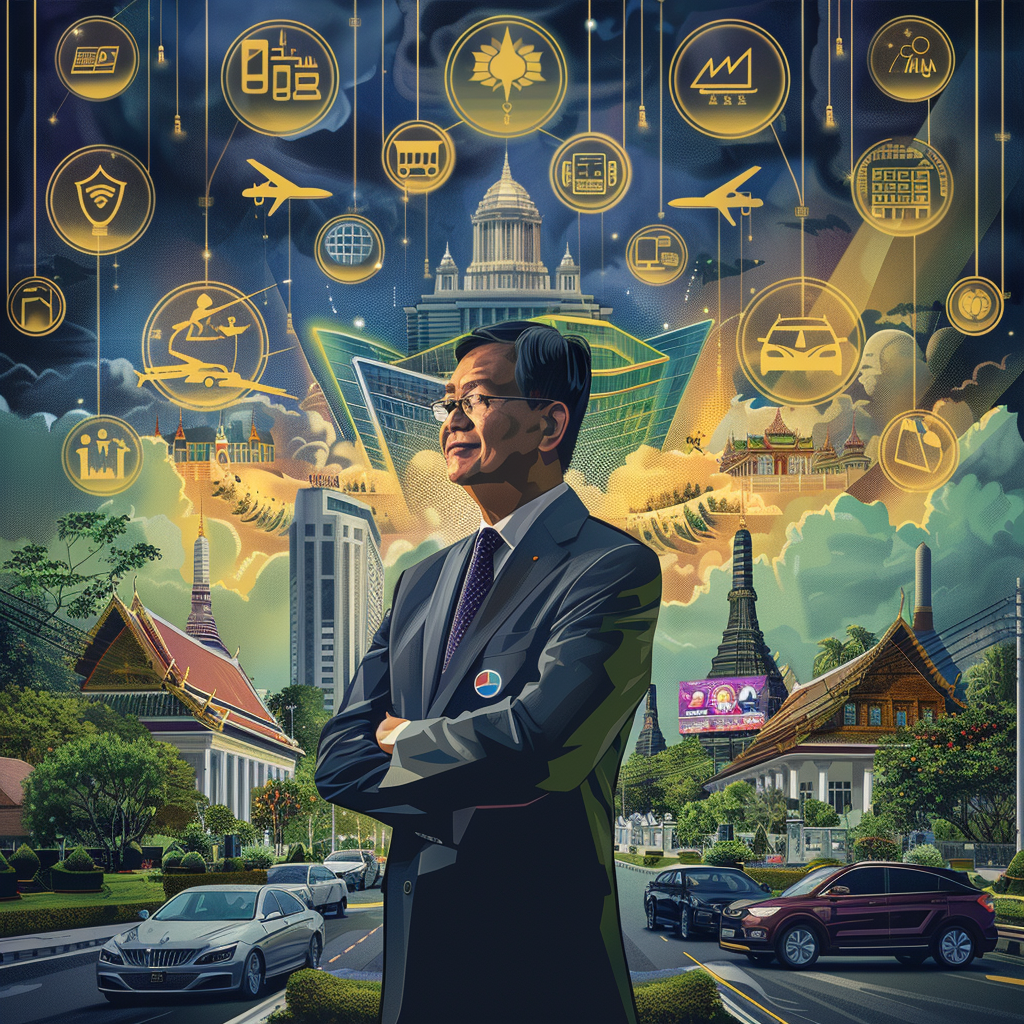
On a visit to the flood-slammed Chiang Rai province last Friday, Prime Minister Paetongtarn Shinawatra immersed herself in the concerns of the affected residents, her government’s goals churning in the backdrop. Economists and political pundits are keenly observing the fledgling administration’s policy maneuvers, eager to see how planned reforms will sculpt Thailand’s economic landscape.
In her government’s policy statement delivered to parliament last Thursday, Ms. Paetongtarn emphasized enhancing economic welfare and boosting the state's coffers. Key initiatives include easing the debt burden, especially home and auto loans, and providing relief for informal borrowers. Ambitious plans for entertainment hubs, which intriguingly feature casinos, and comprehensive water management to mitigate continual flood and drought problems were also laid out.
Before any concrete action, the government is mandated to present this policy framework to parliament. And while the intentions are clear, execution remains the defining test.
Focus on Economic Relief
Backing Ms. Paetongtarn’s vision, Nonarit Bisonyabut, a senior research fellow at the Thailand Development Research Institute (TDRI), noted that though promising, the policy statement felt about 20-30% incomplete. “This is simply a declaration of intent. We’ll have to wait and see if these ideas can be actualized," he cautioned.
Nonarit hailed the comprehensive debt restructuring approach as much-needed, given Thailand’s skyrocketing household debt. Previous policies, like debt suspension and negotiated relief, have largely floundered. The challenge now is implementing these policies without burdening future generations.
On the much-discussed 10,000-baht digital wallet scheme, Nonarit acknowledged the government’s shift in tactics but warned of the massive expenditures it entails. The initial phase plans to channel the stimulus to 14.5 million vulnerable citizens, including 12.4 million state welfare cardholders and 2.1 million disabled individuals, each receiving 10,000 baht.
For the second phase, intended for registered eligible recipients, the readiness of the payment platform will be crucial. An ambitious 187 billion baht budget has been set aside for this in the 2025 fiscal year.
Nonarit supports the targeted cash handouts, predicting significant impact as the money goes to those in dire need. The transition from a digital to a cash-based distribution is expected to amplify this effect.
Thanaporn Sriyakul, director of the Political and Public Policy Analysis Institute, echoed the necessity of rapid economic interventions. The 10,000-baht handout is imminent, yet speeding up debt restructuring within a 15-day window remains imperative, given its direct alignment with governmental prerogatives.
Citing past successes, Thanaporn pointed to reduced contributions to the Financial Institutions Development Fund as a beneficial step for housing debtors from state banks. “The principle is sound, but monitoring banks to ensure the funds are used right will be key,” he remarked.
Megaproject Concerns
Nonarit also discussed the legality of monetizing some underground economic activities, like the proposed casino-entertainment complex. While potentially lucrative, the social ramifications loom large. “It’s an intriguing concept, but making it work is the real challenge,” he said.
Another topic stirring debate is the Land Bridge megaproject, with ambiguous investment clarifications and potential financial risks if the state shoulders a significant portion.
“And suddenly, discussions about land reclamation and nine artificial islands to counter rising sea levels emerge—topics not even hinted at during the election campaign,” Nonarit noted. This ties into the broader challenge of climate change, where governments grapple with ever-evolving conditions despite well-laid plans.
Nonarit recognized the urgent need for sustainable solutions like the “Sponge City” concept, though lamenting the slow governmental uptake of such ideas.
Mr. Thanaporn added that new government projects mirror the visionary yet often lackluster initiatives of former Prime Minister Thaksin Shinawatra, Ms. Paetongtarn’s father. Given past controversies surrounding projects like the Baan Ua-arthorn housing scheme and the rice-pledging project, skepticism is warranted.
“Let’s watch how the Land Bridge and casino-entertainment complexes evolve,” Thanaporn commented.
Deal with Debt First
Chaiwat Sathawornwichit, an MP from the opposition People’s Party, emphasized the urgency of tackling household debt. Some families, he argued, are so financially strained they turn to non-formal loans.
Criticizing the Srettha Thavisin administration for failing to effectively address debt, Chaiwat proposed lowering interest rates as a more balanced approach to increasing income and reducing living costs.
He also voiced a strong caution against the digital wallet scheme, considering the 450 billion baht earmarked for it could be more judiciously employed for pressing issues like offering soft loans.
Chaiwat extended his critique to foreign policy, urging Thailand to leverage its position as ASEAN’s second-largest economy more strategically. Additionally, the sharp rise in call-center scams presents an opportunity for Thailand to strengthen international cooperation.
Potential Risks
Asked about governmental hurdles, Thanaporn pointed to the likely delays in charter amendments, anticipating resistance from the Senate. If the government is earnest about revising the charter before the next general election, discussions with the Bhumjaithai Party will be crucial.
Despite the legal spotlight and scrutiny from the Palang Pracharath Party, Thanaporn viewed the government's prospects with optimism. With a substantial parliamentary majority, significant risks seem minimal, he argued.
Chaiwat, however, spotlighted the “family cabinet” image of the government, raising concerns about continuity and clear leadership.
He also expressed doubts about the government’s genuine commitment to charter reforms, pointing out the vague discussions and inconsistencies in drug policies. The multiplicity of coalition partners further complicates coherent policy formulation and stability, likely hinging on the balanced distribution of interests among them.



Comment verification
Step 1 of 3
Verify your email once to publish your comment. Your email is never shown publicly.
Enter the 6-digit code sent to .
Choose the display name shown next to your comments.