When an 80-Year-Old Icon Decided to Celebrate the Old-Fashioned Way: By Throwing Fights
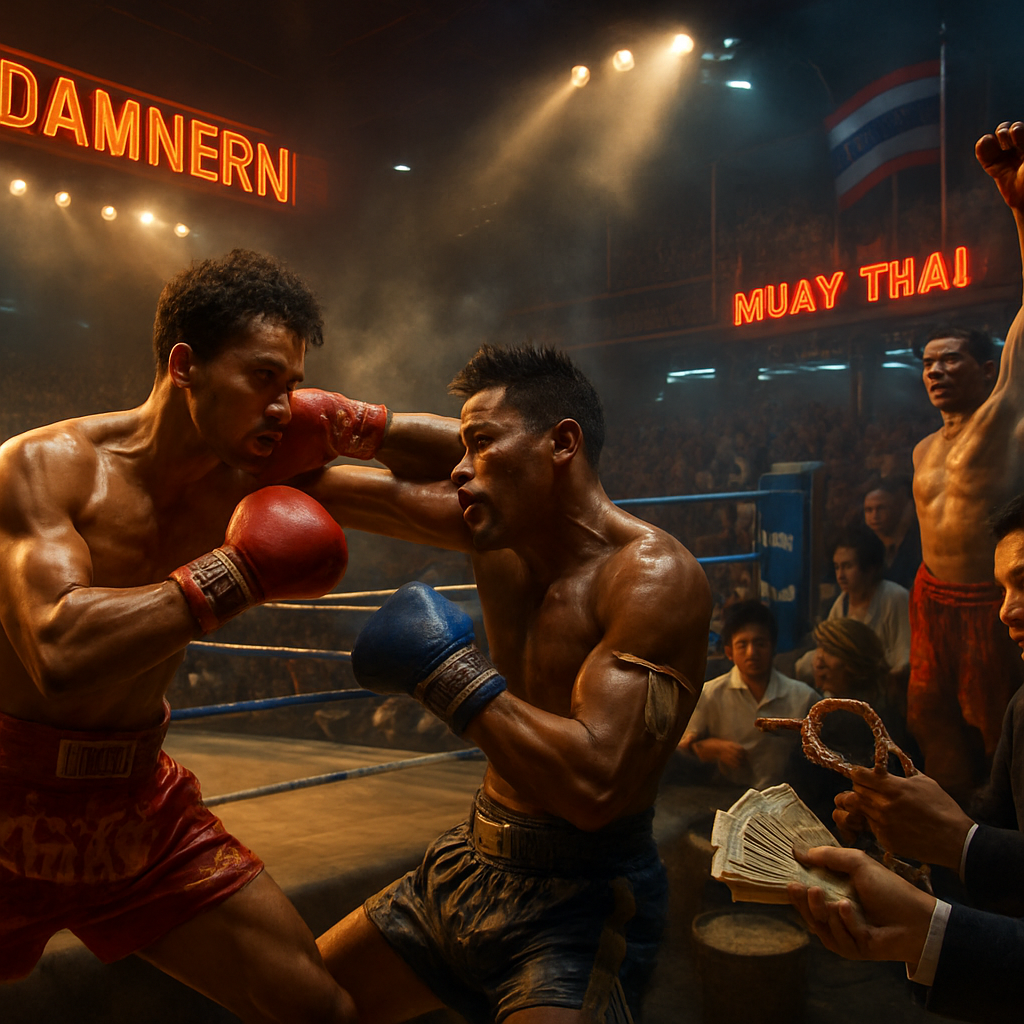
For eight decades Rajadamnern Boxing Stadium has been a crucible where Muay Thai earns its reputation the hard way — on canvas, under lights, and in front of unforgiving crowds. This year, for its 80th birthday, the venerable hall didn’t stage a polite tea and slideshow. It did what it knows best: it staged a night of war. The “R80 Rajadamnern Anniversary” wasn’t a nostalgia tour. It was a statement, equal parts spectacle and soul-stirring sport.
The theatre was packed, the air thick with incense and anticipation, and the sound that mattered most — the heel of a glove on flesh — echoed round after round. Fighters from Thailand and overseas answered the call, delivering a showcase of power, pinpoint technique, and the ritual respect that separates Muay Thai from mere combat sports. If you wanted proof that Muay Thai still moves with both tradition and the appetite for modern greatness, you needed only to be there.
Record Payouts, Record Drama
Numbers rarely tell the whole story, but they certainly made an entrance at R80. Total fight purses and bonuses topped 4.8 million baht, and of that eye-catching sum, a jaw-dropping 4.5 million baht was handed out in performance bonuses alone — the largest bonus payout in Rajadamnern’s 80-year history. Money isn’t why most fighters lace up, but it’s hard to argue with the urgent thrill of seeing the sport rewarded on that scale.
Mr. Thianchai Pisitwutthinan, CEO of Global Sports Ventures Co. Ltd., Executive Director of Rajadamnern Stadium, and Chairman of Rajadamnern World Series (RWS), captured the night perfectly: “This event marks a truly significant moment in Muay Thai history. The R80 Rajadamnern Anniversary is not only a celebration of 80 years of Rajadamnern Stadium, but a statement of where Muay Thai is heading in the modern era. Every fighter showed heart, discipline, and respect for the art. That is what makes Rajadamnern special.”
Main Event: A Weight-Class Ballet That Turned into a War
The headline clash read like a dream on paper — Daniel Rodriguez, Rajadamnern’s 154-pound champion, stepping up to face Petchmorakot Bangmadklongtan, the 160-pound middleweight champion. For Rodriguez it was the raw thrill of crossing weight classes; for Petchmorakot, it was a test of dominance. What unfolded across five rounds was fast-paced, physical, and intricately technical. Rodriguez landed the cleaner, more consistent shots and, by the final bell, had secured a points victory and the 500,000 baht super fight winner’s bonus. The image of him raising a bruised fist under the neon lights will stay with spectators for a long time.
Co-Main: Thailand Meets Japan — Technique vs. Precision
The co-main event stitched two worlds together: Rajadamnern’s 118-pound champ Charoensuk Boonlannamuaythai versus Kazuki Osaki, the RISE kickboxing world champion and a top-ranked pound-for-pound talent. This wasn’t just a fight; it was a cross-cultural conversation in movement. Charoensuk leaned on superior Muay Thai craft — teeps, clinch work, ring control — and convinced the judges over five rounds. Both men left with praise and a shared financial reward: a combined performance bonus of 1.5 million baht. It was a reminder that when two styles meet with respect, the result is more than the scoreboard.
More Titles, More Drama
- Khunseuknoi Boomdeksean claimed the Rajadamnern super bantamweight title by outpointing Petchsila W Uracha. The victory came with a stout 1 million baht bonus, and a new chapter in the division’s lineage.
- Saengmanee S Saman Garment successfully defended his lightweight crown against Somraknoi Muayded 789, collecting a unanimous decision and another proud entry in his storied career.
- One of the night’s most cinematic moments came when Ritthevada Petchyindee Academy stopped Russia’s Alexey Ulianov with an elbow that landed like thunder in round three — a finish that earned Ritthevada a 700,000 baht performance prize and had the crowd on its feet.
Between the whistles, clinches, and roars, R80 felt both like history and a promise. History because Rajadamnern remains a living monument to the sport’s roots; promise because the stadium — through RWS — is actively shaping Muay Thai’s global future with international matchups and meaningful investment in fighters.
When the last bell rang and the lights slowly dimmed, the takeaway was clear: Rajadamnern didn’t just celebrate 80 years — it reminded the world why it’s the standard-bearer for authentic Muay Thai. For fans who couldn’t be there, highlights and updates are available through RWS – Rajadamnern World Series on Facebook and the official site, www.rajadamnern.com. If the R80 anniversary was a hint of what’s to come, Muay Thai’s next chapters look very bright — and very loud.

















Thank you to everyone who came to R80 and to the fighters who honored the art of Muay Thai; the record bonuses were meant to reward performance and push the sport forward.
This reads like PR spin — the headline literally says ‘throwing fights’ and then you brag about bonuses, are you admitting the event was fixed?
Exactly, big money and vague statements are the textbook setup for shady decisions, I wouldn’t be surprised if judges were nudged.
We value transparency; all judges are vetted and performances reviewed. If fans have specific evidence we will investigate, but blanket accusations damage fighters who earned those bonuses.
Saying you’ll investigate after the fact doesn’t erase how it looks when payouts skyrocket and outcomes favor spectacle over merit.
Sometimes a spectacle is exactly what the sport needs to grow, but that shouldn’t mean compromising integrity.
Praising tradition while tossing giant cash bonuses is a weird juxtaposition, but as long as fighters eat and gyms survive I’m not going to complain.
I thought fights were supposed to be fair. Money is cool but fighting should be about skill, not money.
Proud of the win and grateful for the support — moving up in weight was a risk, but the reward and the crowd made it worth it.
Congrats Daniel, but some fans say Petch was too big; do you think the weight step gave you an unfair edge despite the title labels?
I trained specifically to handle power and speed at that class; the bout was five rounds of strategic exchanges and I beat him at his own game, nothing unfair.
Respect the answer, Daniel. Fighters should settle debates in the ring, not on forums.
Seeing you fight with that heart was inspiring, congrats on taking a bold step and winning big.
Those bonuses smell like a pay-to-play system; when money balloons, sport purity deflates — we need independent oversight, not press releases.
Economics of sport inevitably introduces incentives that can warp behavior. Transparent governance structures and third-party auditing are valid solutions.
Audits are fine but who enforces them when promoters run the stadiums? Power follows money, not rules.
We are exploring independent review options and welcome proposals from the community and regulatory bodies to bolster confidence.
As a fan I love big payouts — better shows, better athletes, more drama. But I get the worry about fairness.
R80 presents a fascinating case study: commodification of tradition can preserve a sport economically while simultaneously risking its ethos.
You make good points but the Japan vs Thailand co-main showed mutual respect and technical exchange, which is a positive sign of globalization.
Indeed, cross-cultural bouts can elevate technical standards and audience sophistication, though they must be managed to avoid cultural appropriation or commercialization excess.
Global fights are cool because I get to see more styles and different moves on YouTube.
That elbow KO looked brutal and amazing at the same time, the crowd totally lost it.
Thanks — timing and reading the guard made it land. We train that strike a lot; when it connects it’s show-stopping.
You deserve the bonus and the roar — hope you stay safe and keep putting on great fights.
The 700,000 baht prize for that finish was a signal: Rajadamnern rewarded electrifying moments more than long-term ranking consistency.
If the stadium genuinely cares about Muay Thai’s future, how will they balance performance bonuses with preserving fair judging and fighter safety?
We are increasing medical protocols and reviewing judging panels regularly; bonuses are intended to motivate excellence, not reckless behavior.
Medical checks are good, but perception matters — clear criteria for bonuses and publishing scoring details would help public trust.
Full transparency on criteria would be great, but I suspect promoters will keep some discretion to retain storytelling control.
Huge respect to Kazuki for stepping into Muay Thai; even in defeat he showed kickboxing precision and humility, that’s how champions grow.
Charoensuk used classic teeps and clinch to dominate; rules favored traditional Muay Thai techniques and he executed them perfectly.
Inter-style matchups push rule debates forward, and R80 seems to have handled it with professional parity, which is encouraging.
I crunched the numbers: 4.5M of 4.8M in bonuses is staggering and changes the economics for fighters and gyms, possibly permanently.
Back in the day fighters fought for pride and modest purses; today’s sums could tempt corners to prioritize entertainment over discipline.
That’s the tension — cash injects resources but also new incentives; managing that trade-off is the real test.
If money filters into grassroots and women’s programs, it could actually widen access, not just create spectacle.
That elbow happened because the opponent left a split-second opening; training and instinct won the prize, not theatrics.
Tough night for Alexey but no shame losing to a perfect strike; still think international fighters need better acclimation time.
Agreed, travel and style shifts matter. We try to be respectful and supportive, not predatory, toward visiting athletes.
Respect for the craft, but transparency about how bonuses are awarded would prevent rumors after big knockouts.
R80 felt like a renaissance and a risk at once; honoring tradition means resisting turning Muay Thai into pure spectacle.
Tradition evolves, though. If the stadium invests in gyms and youth programs with that money, it’s not all bad.
Loved the diversity on the card; does anyone know if Rajadamnern plans to add more female title fights with comparable bonuses?
Yes, expanding women’s divisions and equitable support is on our roadmap; we’re actively scouting top female talent for future RWS events.
That’s promising to hear — equal opportunity will draw more fans and talent globally.
All this pomp and record payouts smell like modern sport’s worst instincts: buy attention, manufacture drama, then call it legacy.
Harsh, but fair — commercialization can hollow things out unless checks exist to preserve meaning.
I was there and the energy was insane; whether you think it’s corrupt or not, nights like that electrify a generation.
Emotional intensity is part of sport’s appeal, yet institutional safeguards should evolve alongside spectacle to maintain legitimacy.
Took a tough loss but respect to Khunseuknoi; the million baht bonus stings but motivates me to train smarter and come back better.
You showed heart Petchsila, money aside both of you elevated the division with that fight.
Heart is great, but without structural fairness those bonuses will just fuel backstage bargaining rather than merit.
As someone who’s judged local shows, I worry judges could be influenced by crowd noise and storylines when big prizes are in play.
We train judges to focus on scoring criteria independent of crowd reaction and maintain rotating panels to avoid bias.
Why does everyone think big money = corruption? Sometimes it means fighters can quit side jobs and train full time.
That’s possible, but the same money creates incentives that can warp behavior, so both sides are true.
Rajadamnern is a cultural monument; I support evolution but not at the cost of ceremony and respect for lineage.
Ceremony was present last night with wai kru and respect, so maybe evolution and tradition can coexist if handled carefully.
Large one-off bonuses have historically changed fighter behavior in other sports; regulators should monitor for unintended consequences here.
Analogy is apt; institutional design, not just moralizing, will determine if R80 is a turning point or a warning.
Loved the RWS coverage on Facebook but wish they streamed all undercard fights for international fans who couldn’t attend.
We are expanding digital coverage and hope to stream more of the card internationally next events to reach global fans.
What’s to stop next year from being even more theatrical to chase clicks? Where is the line?
The line will likely be drawn by regulators, audience demand for authenticity, and how quickly gyms adapt their incentives.
As a trainer I like big bonuses because they mean better support for fighters, but we must teach discipline so athletes don’t chase highlights recklessly.
Coach voices are key — if trainers emphasize safety over spectacle, bonuses can be a force for good.
R80 made me want to fly to Bangkok — the mix of ceremony and violence is unlike any other combat sport I’ve seen.
Bring earplugs and a thirst for history; Rajadamnern delivers for international visitors but also depends on local culture.
From a business angle, R80 checked all boxes: PR, ticket sales, fighter incentives. The tricky part is maintaining credibility while scaling.
Promoters will push the spectacle, so independent oversight is the only way to keep fights honest.
I skimmed the article, saw big numbers, and wondered if athletes get taxed heavily on those bonuses.
Taxation varies, but transparency about net payouts would be a welcome addition to future reporting.