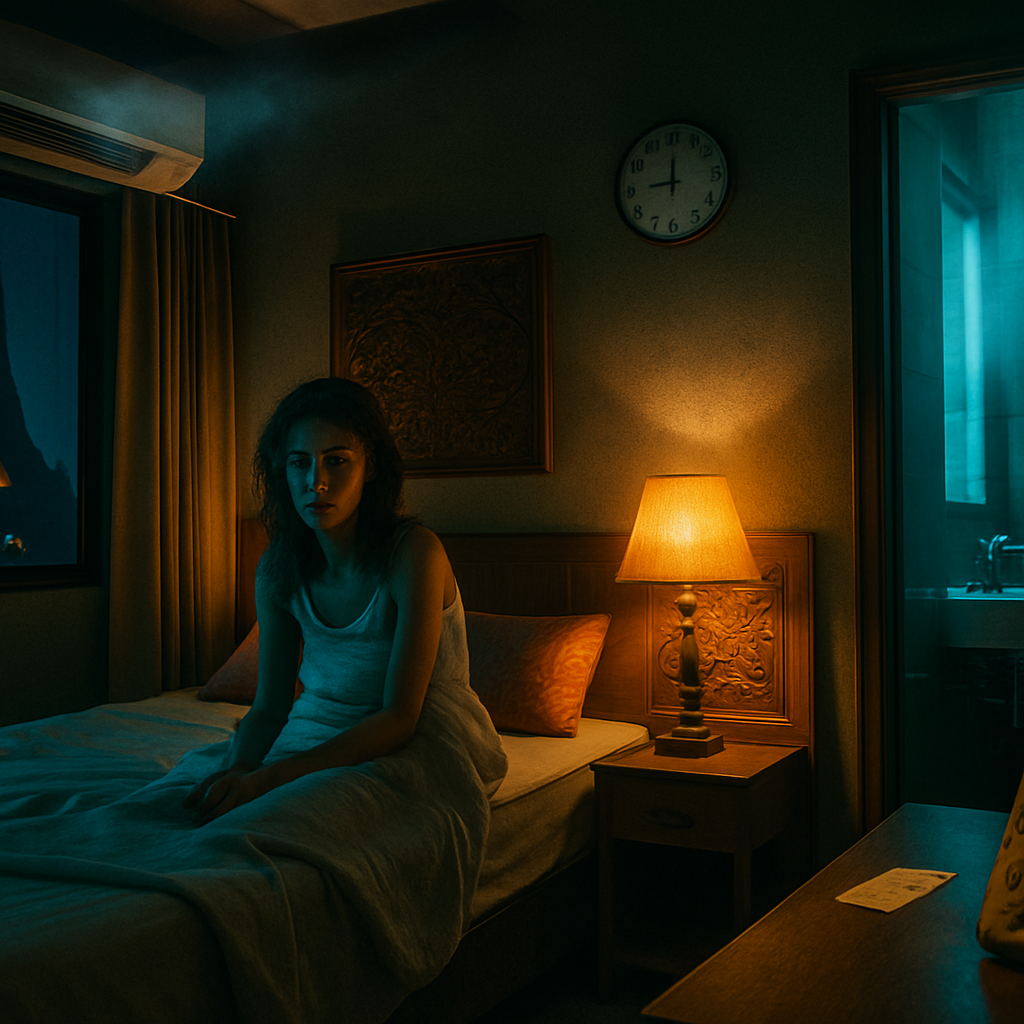
Ten Nights in Room 301: A Malaysian Traveler’s Uneasy Stay in Thailand
Imagine checking into a well-known hotel in Thailand for a ten-night stay, expecting relaxation and room service, only to find yourself in the middle of a nightly mystery series. That’s exactly what one Malaysian woman claims happened to her, and her Facebook post—picked up by Khaosod—has since made fellow travelers double-check their reservations and bed-time routines.
She didn’t name the hotel, only that it’s famous and that she stayed in room 301. What she did report, however, reads like a checklist of small annoyances stitched together into something much more unsettling: a bathroom light that began to flicker right after check-in, an air conditioner that stubbornly locked at 25°C, repeated awakenings between 3am and 4am, a mysterious fortune slip appearing where it hadn’t been before, a tap that wouldn’t stop dripping, and the odd vanishing-and-returning tissue roll.
It Started with a Flicker
The first sign of trouble was innocuous: the bathroom light started to flicker. The hotel staff fixed it—standard procedure. But instead of calming the situation, this small glitch felt like the opening scene of a longer narrative. When the problems kept cropping up, the guest began to notice a pattern of nightly disruptions that made the room feel less like refuge and more like a puzzle she couldn’t solve.
The AC That Wouldn’t Cooperate
Air conditioning should be one of the least dramatic parts of a hotel stay. Not here. According to the woman, the AC locked itself at 25°C no matter how she tried to change the settings. Oddly, the room still became uncomfortably cold, forcing her to turn to the fan mode for the rest of her stay. Whether this was a mechanical quirk, a temperamental thermostat, or something stranger, it added to an accumulating sense of unease.
The 3am Wake-Up Call
Perhaps the most unnerving detail: she claims to have woken up abruptly between 3am and 4am almost every single night. Waking up in the middle of the night happens to everyone, but recurring awakenings at the same hour for ten straight nights is eerie. The timing, she noted, felt deliberate—as if someone or something preferred to interrupt her sleep at that precise hour.
A Fortune Slip and a Dripping Tap
Then came the small mysteries. One day she found a fortune slip—known locally as a siam si—next to the television. It bore no obvious sign of being a prank, no clear indication of whether it promised good or bad fortune, and, she maintained, it definitely hadn’t been there earlier. Combine that with a bathroom tap that developed a persistent drip and could not be fully shut off, no matter how tightly she turned it, and the stay had transformed into a slow-burn thriller of trivial but disquieting incidents.
The Case of the Reappearing Tissue Roll
One almost comical moment cut through the tension: the woman checked the sink area and noticed there was no tissue roll. She stepped out briefly to fetch one, and when she returned, a roll had apparently appeared in its place. Was it a helpful housekeeper? A forgetful staff member? Or something more inexplicable? The story balances on that fine line between the mundane and the uncanny.
A Reminder for Fellow Travelers
At the end of her post, the traveler clarified that her goal wasn’t to sensationalize but to remind others to be careful choosing accommodations. It’s a reasonable takeaway: small issues can turn a trip sour, whether they’re caused by faulty wiring and indifferent plumbing or by less tangible disturbances that make you sleep with one eye open.
Khaosod reported her account, which has since circulated online and stirred comments ranging from sympathetic to skeptical. Some readers offered practical advice—inspect rooms on arrival, test switches, keep a flashlight handy—while others speculated about spiritual or supernatural explanations. Whatever the cause, the story is a reminder that travel is as much about feeling safe as it is about seeing places.
Related Twist: A Double Life in Songkhla
In a separate but equally headline-catching report, Khaosod also noted another Malaysian woman’s plea to religious authorities after learning that her brother’s wife had secretly married another man and led a double life in Songkhla province for more than a year. Different in tone but similar in the shock it caused, both stories underscore how travel and cross-border living can reveal surprising and unsettling truths.
Whether you chalk up the Room 301 episodes to bad luck, poor maintenance, or a story that’s taken on a life of its own online, it’s wise to take a few simple precautions when staying away from home: check the room on arrival, get the staff’s contact details, and trust your instincts. And if you happen to wake up at 3am during your next vacation, maybe peek at the door before you blame the minibar.


















This Room 301 story made my skin crawl and I travel a lot for work. The pattern of tiny annoyances adding up is what really got me, especially waking between 3 and 4am every night. I think people underestimate how anxious these ‘small’ things can make you feel.
Sounds like a maintenance nightmare more than anything supernatural. I’d have asked to move rooms after night two and taken photos as proof.
From a sleep-science perspective, repeated awakenings at the same hour often reflect circadian disruption or environmental triggers like noise or temperature shifts. Mechanical issues like a flickering light and AC glitches can create conditioned arousal. Documenting the events and reporting to management is important for both safety and potential liability.
I did try to document a few nights but it felt childish to set up a camera in a hotel room, and I worried about accusing staff without proof. Still, I reported it to reception and they said they’d inspect the fixtures.
Call it what you want, but that sequence reads like a deliberate haunting or someone messing with the guest. Tissue roll reappearing and a fortune slip don’t just ‘happen’ by coincidence ten nights running.
Not everything odd is paranormal; staff could have been entering unnoticed or someone playing pranks. CCTV or checking the housekeeping schedule would clarify things.
Maybe, but housekeeping showing up unannounced nightly would be a huge privacy breach and still creepy. The timing at 3am makes me distrust a simple maintenance explanation.
Culturally, a siam si could be left as a blessing or a prank, depending on who put it there. I’d give the benefit of the doubt but still be wary.
This story is a good case study in how environmental stressors compound to create a subjective sense of threat. Poorly regulated AC, irregular noise, and odd visual cues like flickering lights prime the brain for hypervigilance. Travelers should be advised to test conditions on arrival and request immediate remediation.
That’s scary, I would leave the hotel right away. I don’t sleep if something weird happens.
Leaving is reasonable if you feel unsafe, but for some people changing rooms or talking to management resolves the issue. If symptoms persist, consider checking indoor air quality or seeing a doctor for sleep disruption.
I appreciate the clinical take, but stories online also gain drama as they spread and details get amplified. Hard to parse truth from retelling sometimes.
Practical tip: always test lights, locks, AC and plumbing when you first check in and ask for a different room if anything’s off. A ten-night stay gives staff time to fix but also prolongs misery if they don’t take it seriously. Don’t feel guilty asking for a refund if problems persist.
Agreed — I once had a leak that management ignored until I posted photos online and they suddenly offered a room upgrade. Reviews and public records have leverage these days.
Exactly, escalate politely but firmly and keep evidence like timestamps or photos to support your complaints.
This is yet another example of hotels prioritizing reputations over real guest safety. If these issues were mechanical, the staff should have proactively checked, not shrugged and fixed them superficially.
Let’s not demonize staff — many problems stem from understaffing and poor maintenance budgets, not malice. Frontline workers often have little power to fix systemic issues.
Both points are valid: management needs accountability, and guests should document problems and demand escalation. Posting honest reviews helps future travelers decide.
Accountability matters; hotels should have transparent maintenance logs and a way for guests to verify repairs. If customers stop spending money on places that fail basic care, change will follow.
As a Malaysian it’s unnerving to see a fellow traveler share this and worry our tourists. These stories spread fast back home and make people anxious about even popular hotels.
In Thailand some small rituals like leaving slips happen in public places and can be harmless, but context matters. Tourists unfamiliar with local customs can easily misread them.
True, cultural context matters, but if you don’t feel safe it’s valid to leave or insist on documentation from staff. Safety and peace of mind are top priorities.
Linking the Room 301 story with the double-life Songkhla case makes travel sound like living in a soap opera. Maybe it’s coincidence, but both stories show how strangers’ private lives can ripple into public worry.
They’re separate issues — one is probably maintenance or prank, and the other is a personal scandal. Mixing them up feeds sensationalism.
Fair point, but the overlap is that both erode trust in places we assume are safe. That cumulative anxiety changes how people travel.
Legally, hotels have a duty of care to their guests and should address foreseeable risks promptly. If a guest documents repeated failures, there may be grounds for a complaint to consumer protection or even a negligence claim. Tourists should keep receipts, correspondence and any evidence if they intend to pursue remedies.
What would a foreigner even do if the hotel ignores them, professor? It seems overwhelming to pursue legal action while traveling.
Start by escalating to hotel management, request written confirmation of actions taken, and contact your country’s consulate for serious safety threats. Filing a report with the local tourism board and using documented reviews can also pressure management without immediate litigation.
I feel for the traveler and hope she found a better room or left early. If anyone ever feels unsafe abroad, contact your embassy or consulate for advice and support.
People love mysterious stories because they get clicks and sympathy. I suspect embellishment until proven otherwise.
Siam si are often harmless fortune slips handed out at temples or festivals, and they can appear in public places. Tourists seeing one in a room might misinterpret its presence as sinister when it’s meant to be benign.
Cultural literacy is important, but so is consent and privacy — finding something in your private room that wasn’t there before is different from seeing one at a temple. Context changes everything.
Good distinction, Mila; if something ends up in a private space unsolicited that crosses a line. Still, automatic supernatural conclusions aren’t necessary.