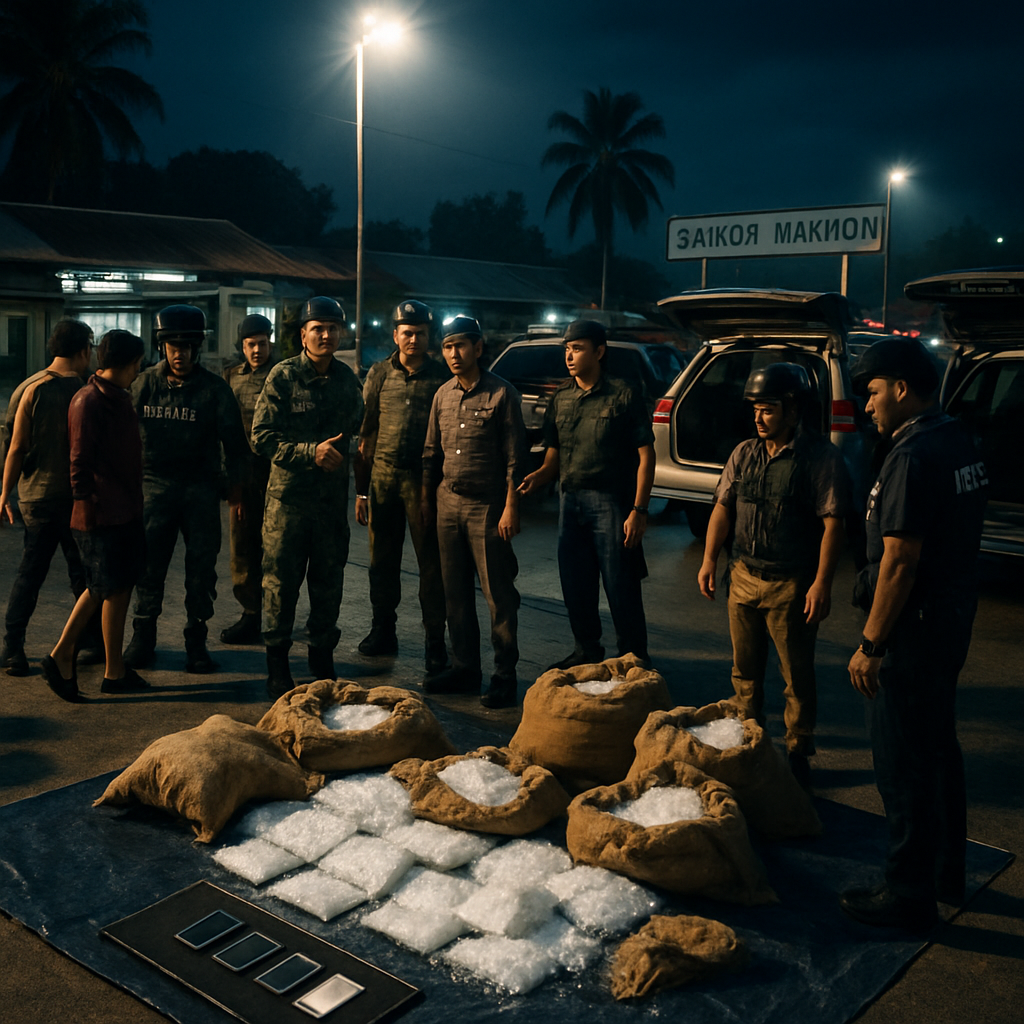
It was a quiet night in Mueang district, Sakon Nakhon—until it wasn’t. At about 9:10 p.m. on January 16, 2026, a coordinated security operation halted what investigators say was a sizeable shipment of crystal methamphetamine, locally known as “ice.” Officers found six heavy sacks in the parking area of the bypass market in Dong Mafai subdistrict, together weighing in at roughly 300 kilograms. Alongside the narcotics, authorities recovered two vehicles and two mobile phones that are now key pieces of evidence.
A tip, a tail, and a takedown
The takedown was not a stroke of luck. Officials say the operation grew from intelligence supplied by the Internal Security Operations Command, which flagged a trafficking group moving meth from border areas of That Phanom district in Nakhon Phanom province into inland destinations. That lead prompted surveillance and deployments that stretched from border checkpoints to the parking lot where the suspects were intercepted.
On January 17, the 2nd Army Area Command led the charge in coordination with Narcotics Suppression Division 24, Border Patrol Police Region 2, the Surasakmontri Task Force, and several other agencies. The result: two suspected members of the trafficking ring detained without incident and a major haul kept off the streets.
Who was arrested?
Police identified the detainees as Mr Rungsak, 34, from Bueng Kan province, and Mr Kritphat, 48, from Nakhon Phanom province. Both were taken into custody at the scene and transported to the Border Patrol Police Region 2 headquarters to process the formal arrest paperwork before being handed over to investigators at Dong Mafai Police Station to face charges under Thailand’s narcotics laws.
Why this matters
Three hundred kilograms of crystal meth is not a small quantity by any measure. Authorities say the drugs are believed to have originated from cross-border trafficking routes in the northeast—a region that continues to be a focus of enforcement because of its proximity to international smuggling corridors. The seizure represents a significant disruption to whoever was behind the shipment and a welcome result for communities at risk of the harmful effects of large-scale drug distribution.
It’s also a reminder of what coordinated intelligence and interagency cooperation can achieve. Military units, police, border patrols, and specialized narcotics investigators combined resources and checkpoints to track movements and execute the interception—turning a tip into a tangible blow against a trafficking network.
What’s next?
With the suspects formally charged and evidence in police custody, investigators will likely pursue lines of inquiry into the origins and intended destinations of the seized meth. Phone records, vehicle ownership trails, and the logistics behind the shipment could reveal additional players or routes, and may lead to further arrests. For residents and local authorities, the success of this operation underscores ongoing enforcement efforts aimed at preventing narcotics from flooding inland communities.
On the local radar
The story was first reported by Khaosod and has since circulated across local news outlets, highlighting both the scale of the seizure and the continued vigilance of security forces in the northeast. For ordinary citizens, such headlines are a mix of reassurance and concern—reassurance that law enforcement is active, concern about the persistent demand and supply chains that drive trafficking.
As the legal process moves forward, the details of the investigation—where the drugs were heading, who financed the operation, and whether the seizure will trigger further busts—will watchfully unfold. For now, authorities in Sakon Nakhon can report a clear win: 300 kilograms of meth, two suspects, and one less shipment making its way from the border into Thailand’s interior.
Police continue to urge the public to provide information if they spot suspicious activity, especially in border areas and transport hubs. In the cat-and-mouse world of drug enforcement, community tips often make the difference between a successful disruption and a shipment that slips through.
Photo credit: Khaosod


















Great work by the police and military — 300 kilos off the streets is a huge win for public safety. Coordination like this should be applauded and replicated across border regions. I hope they follow the money and find the kingpins.
Applaud? I worry this is just a show to calm people while the real networks keep operating. Arresting two couriers doesn’t mean the suppliers or financiers will be touched.
Fair point, Nok — arrests like this are only meaningful if they lead to higher-level arrests and prosecutions. Still, it’s a start and a deterrent if sustained.
Seizing 300 kg of meth is significant, but we must consider demand-side policies too. Punitive enforcement without prevention, treatment, and socioeconomic interventions will only cycle supply. Research shows supply shrinks only when demand falls and alternatives are available to vulnerable populations.
As an academic, I agree: interdiction alone rarely suffices. However, interagency intelligence sharing as described is a best practice for short-term disruption. Long-term strategy requires integrated health and social programs.
Reporting from the ground, I can say locals feel safer after a bust but worry drugs will just reroute. Media should keep pressure on investigators to publish follow-up results of their inquiries.
Exactly, Maya — transparency about follow-up arrests, prosecution outcomes, and rehabilitation figures would allow public assessment of effectiveness.
There’s no way two guys at a market were masterminds; this smells like a setup to blame small players while someone higher up walks free. Plus, how did so much contraband sit in public without being noticed sooner?
Conspiracy theories aside, operations like this often rely on tips and surveillance. The report names multiple agencies and a tip from ISOC, which suggests real-time intelligence rather than a staged arrest.
I still think we should watch for cover-ups. If phones and vehicles are key, I want to see tracing results and whether any officials are implicated.
I live near a border town and this scares me — I don’t want my grandchildren exposed to more drugs. Good that the police acted, but will they keep the area safe every day? One bust doesn’t change long-term risks.
We need harsher punishments and more checkpoints, not discussions about rehab. If dealers fear prison, maybe they won’t traffic here. Soft policies only embolden criminals.
Harsher punishments sound satisfying, but I’m afraid of innocent people getting caught in the dragnet too. We need balance — I want safety and justice both.
Whoa that’s a lot of drugs. I learned about meth in class and it’s really bad. Good job catching them!
Joe, it’s great you remember the lesson — community awareness helps. But remember, the issue is complex and people need support, not only punishment.
Thanks, Teacher An. I hope they help addicts get better too and don’t just throw everyone in jail.
Important arrest, but I’m concerned about due process. Were the suspects informed of rights? Evidence chains for phones and vehicles must be handled properly to avoid dismissal in court. Transparency matters to ensure convictions hold up.
Exactly, Larry. In narcotics cases, procedural errors can nullify strong evidence. Independent oversight and clear documentation will be necessary for a successful prosecution.
I’ve seen cases where evidence handling was sloppy and smugglers walked free. Hope this time they do it by the book.
If investigators publish chain-of-custody details and forensic results, the community will have more confidence. Keep the pressure on local prosecutors.
I’ve lived in Nakhon Phanom for years and trafficking routes adapt faster than roadblocks. The real fix is economic development so people don’t get pulled into the trade. Arrests alone are like bailing the sea with a cup.
We do focus on both enforcement and community work, but budgets are limited. Disrupting networks still reduces harm in the short term while development catches up.
Then give those development programs real funding and stop acting like arrests are enough.
As a local reporter, I want follow-up info: who financed the shipment and whether larger networks are implicated. The public deserves to know if this is a one-off or part of a bigger pattern. I’ll keep digging.
From an economic perspective, drug profits near borders are huge and resilient. Unless profitability is reduced, smugglers will keep innovating logistics and routes.
Thanks, Thammarat — I’ll ask investigators about the financial trail and whether assets will be seized under anti-money laundering laws.
Good. Now lock them up and make an example. Drugs ruin families, and leniency just sends the wrong message. Tough laws are what we need, not endless studies and committees.
Tough laws can help, but without rehabilitation many addicts cycle back to crime. We need balanced policy that punishes traffickers while treating substance use disorder compassionately.
Rehab is fine for users, but traffickers should get the full force of the law. My priority is protecting children and neighborhoods.
Seizures of this magnitude distort local markets temporarily and can increase street prices, which sometimes leads to violence over market share. Policymakers must anticipate unintended consequences of large interdictions. Coordination with social programs reduces negative spillovers.
Indeed, K. Thammarat. It’s why supply-side wins must be paired with harm reduction and community resilience initiatives, otherwise you just shift costs to the vulnerable.
Exactly — we should model the economic shocks and plan mitigations, including policing priorities and social supports.
People caught in trafficking are often trapped by poverty or coercion. I don’t excuse dealers, but we should investigate whether these suspects were small-time mules or coerced by larger gangs. Human rights standards must be respected during interrogation and detention.
We will monitor the case and urge authorities to allow access to lawyers and medical checks. International best practice calls for safeguards to prevent abuse of suspects.
Thanks — legal counsel and independent monitoring help ensure justice is served fairly and reveal whether broader networks used coercion.
Two phones seized — classic. They’ll unlock them, find a name and boom, a chain of arrests. I wonder if anyone thinks to ask which telecoms were used and who paid the bills. Paper trails are gold.
Phones are often the smoking gun, but privacy laws and encryption sometimes slow things down. Still, billing records and SIM registration can reveal contacts and locations.
Exactly, Sam — if investigators move fast on subpoenas and forensic analysis, they can crack the network. Hope they do.