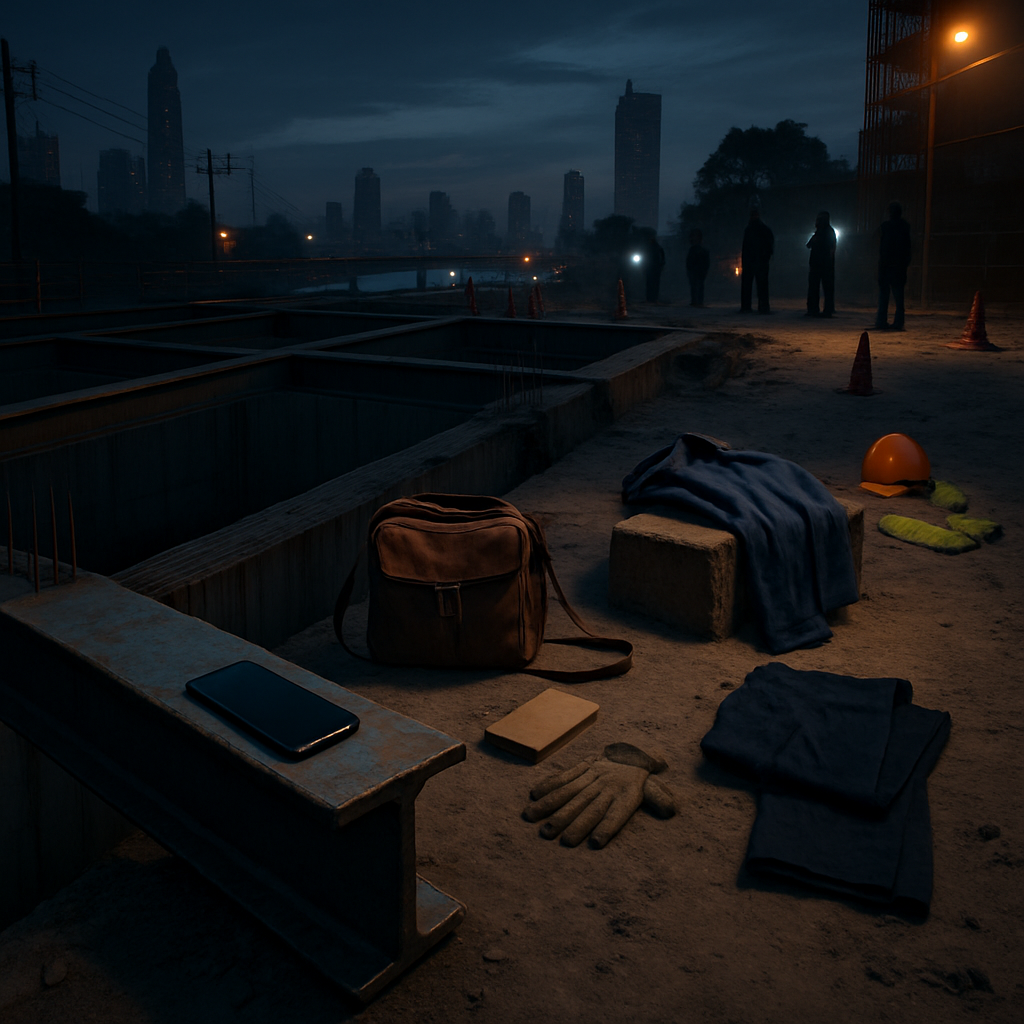
In the quiet hours before dawn on December 28, 2025, work at one of Bangkok’s most important flood-control projects turned tragic when a 59-year-old construction worker lost his life after slipping and falling into a drainage tunnel excavation. The accident occurred at the Klong Prem Prachakorn drainage tunnel site in Bang Sue district — a major artery intended to link Klong Bang Bua with the Chao Phraya River and help shield parts of the city from seasonal flooding.
Police Lieutenant Nitipol Changradom, Deputy Investigator at Bang Pho Police Station, said officers were alerted by an emergency call at about 4:30 a.m. Rescue volunteers, forensic teams and police rushed to the scene near Wat Soi Thong on Pracha Rat Sai 1 Road, where they found the worker’s body at the bottom of the construction area adjacent to the tunnel.
The deceased was later identified as Mr. Samai, 59. He was found wearing a dark blue long-sleeved shirt and black trousers. Investigators reported visible injuries consistent with a fall from height. Nearby, a brown shoulder bag containing his ID card, a notebook and other personal items provided immediate confirmation of his identity. Authorities say there were no signs of a struggle or interference at the scene.
Early findings from the site investigation suggest a heartbreakingly ordinary sequence of events: Mr. Samai dropped his mobile phone onto a steel beam while on the job. As he bent to retrieve the device, he lost his footing and plunged into the construction zone below. Officers believe the fall occurred quickly, leaving the worker no time to regain balance or call for help.
Police contacted the victim’s family soon after the incident. Relatives reportedly did not suspect foul play and agreed to allow a post-mortem examination to formally determine the cause of death. The body was taken to Phramongkutklao Hospital for autopsy, and officials said the results will be included in official records and workplace safety documents.
Italian-Thai Development Public Company Limited is the contractor overseeing the Klong Prem Prachakorn drainage tunnel project. The project, which aims to reduce flood risks by connecting Klong Bang Bua with the Chao Phraya River, involves deep excavation and complex tunneling work — activities that carry well-known hazards when strict safety measures aren’t followed or when a single misstep occurs.
The accident has renewed attention on safety at large-scale construction sites across Bangkok. Experts and community advocates alike point out that deep excavation, steel beams spanning open voids and early-morning shifts increase the risk of falls and other serious incidents. Authorities say they will coordinate with project supervisors to review safety procedures, equipment placement and worker protection measures. The goal: reduce the chance of similarly tragic accidents in the future.
While this tragedy is still under investigation, it highlights recurring concerns about protective barriers, secure walkways, adequate lighting for predawn work, personal protective equipment and protocols for retrieving dropped items. Small moments — a phone slipping from a pocket, a misplaced step on a steel beam — can have devastating outcomes on worksites where depth and hard surfaces magnify the danger.
For the local community, the incident is a sobering reminder of the human cost behind massive infrastructure projects. For the company and regulators, it’s likely to prompt immediate reviews and possibly new directives on safety briefings, supervision during night shifts and the placement of guardrails or nets beneath work platforms.
Investigators are collecting evidence and compiling their report. Once the autopsy and official inquiries are complete, their findings will determine whether further action is warranted — from revised on-site procedures to potential legal or regulatory follow-ups. In the meantime, friends, family and colleagues mourn the loss of Mr. Samai, described in reports as an experienced worker who was simply doing his job when a momentary lapse led to tragedy.
As Bangkok presses ahead with vital flood-prevention infrastructure, the challenge remains to balance urgency and scale with the non-negotiable need to protect the people who build it. Officials have pledged to use lessons from this accident to shore up safety on the Klong Prem Prachakorn project and elsewhere — a small but essential step toward preventing future heartbreaks on construction sites across the city.


















This is so sad — another worker dead on a big Bangkok project. We need immediate answers about why guardrails or nets weren’t in place. I hope the company and regulators don’t just make promises and forget.
Italian-Thai Development must be held accountable; this reads like negligence, not an accident. If a phone caused a death then basic safety protocols failed. Legal action should follow the autopsy.
Before jumping to lawsuits, investigators should publish the full safety audit and staffing logs for the night shift. Systemic failures often involve poor oversight, understaffing and ignored risk assessments. Transparency will show whether this was an isolated human error or organizational neglect.
Agreed — site logs, lighting reports and PPE checklists are critical evidence. From an engineering standpoint, temporary edge protection and debris nets are standard for deep excavations and should have been in place.
As someone who worked on tunnels, temporary protections are often skipped to save time, but that only costs lives later.
In many countries a death like this would trigger immediate fines and a work stoppage until all protections are certified. Why is enforcement so lax here?
Accidents happen, people drop stuff and lose balance. You can’t blame the whole company every time something bad occurs. Sympathy for the family but let’s not politicize every tragedy.
That sounds harsh — if prevention measures existed this might not have happened. Saying ‘accidents happen’ ignores preventable risks.
Tell that to the family. Prevention costs less than a funeral and a lawsuit.
Predawn shifts need floodlights and spotters, not just headlamps. The story about bending for a phone shows how fragile safety cultures are on big projects. Provide secure phone tethers or ban phones near edges during work hours.
Tethers are a practical idea, and toolbox talks should include retrieval protocols. Also, re-evaluate platform layouts so steel beams aren’t used as walkways. Simple engineering controls would reduce this risk immediately.
The company will ‘review’ and nothing will change — bureaucracy loves meetings more than guards and nets. Bangkok builders cut corners when money and schedules pressure them. Until inspectors start fining real amounts, these reviews are theater.
As a field inspector I can say we issue fines but prosecutions are rare; budget and staff shortages hamper enforcement. Public pressure helps, so keep asking for follow-through.
Comparing global practices is useful; some cities mandate independent safety auditors for such projects. Maybe Bangkok should require third-party safety certification before any shift resumes.
He was a father to someone. This isn’t just data or policy for families mourning him. We must remember the human cost while we debate rules.
Early morning shifts are brutal, especially in the dry season when workers are tired from long hours. Fatigue and poor lighting are a deadly combination and often overlooked in reports.
Fatigue management must be part of shift planning; contractors are supposed to rotate staff and limit overtime. We’ll ask for the shift roster and overtime records as part of the probe.
Good — check the roster and also any complaints filed by workers. Many are afraid to speak up for fear of losing pay.
So sad. They need more safety nets and lights. Phones should be kept away from edges.
This underscores a training gap: workers need repeated, practical drills about retrieving dropped items and securing edges. Education can change culture over time if companies commit to it.
Schools and on-site training both matter; families should learn about workplace risks to support reforms too.
Some will say ‘it was fate’ and move on. But fate is just a word used to excuse not fixing hazards. Cultural attitudes need to change as much as regulations.
Blaming culture is easy; show me the money — who will pay for extra safety measures and how will projects stay on schedule? It’s a complex trade-off, not just willpower.
If companies budgeted safety like they budget overtime, you’d see a different result. This is about priorities.
I worked on a canal once; we had harnesses and someone always stood by near edges. Small teams can enforce safety if managers care. Hope they learn from this one.
Thanks, Bancha. If field practices like that existed here we’d be seeing fewer tragedies.
Autopsies help, but they rarely reveal management negligence. The paperwork and safety minutes will tell the real story, and those can be altered if not independently audited. We need open records.
Why are phones even allowed near hazardous edges? Personal items create unnecessary risks and could be restricted during work near openings.
Enforcement is a joke until penalties bite. Companies will only change behavior when it affects their bottom line or reputation seriously.
Policy design can internalize safety costs; mandatory insurance premiums tied to safety records create financial incentives for compliance.
Reading this hurts. He was experienced, they say, but one slip ended everything. Experience isn’t a shield against structural hazards.
Simple fixes like guardrails and lights should be non-negotiable, regardless of timeline. Stop praising speed over safety.
What about worker representation? If labor unions or committees were stronger on-site, hazards could be raised without fear. Empower workers to stop unsafe work.
Back to technical points: temporary walkways, toe-boards, and catch nets beneath active platforms are low-cost interventions. Retrofits during construction are often feasible if management prioritizes them.
Thanks, EngineerTom — I mentioned guardrails earlier but nets and toe-boards make sense and should be part of the immediate fixes demanded from the contractor.
We need cameras on sites for independent review, not for spying on workers but to audit safety practices. Evidence helps accountability.
My neighbor worked night shifts and once complained about missing lights; contractors promised fixes and then nothing. This pattern must stop with stronger follow-up from authorities.