Srettha vs. Chaithawat: A Fiery Exchange of Wits and Critiques in Thailand's Political Arena
In the spirited arena of political discourse, a titanic clash unfolded as Srettha, the Prime Minister, and his challenger, opposition leader Chaithawat Tulathon, exchanged fiery salvos. The battleground was none other…
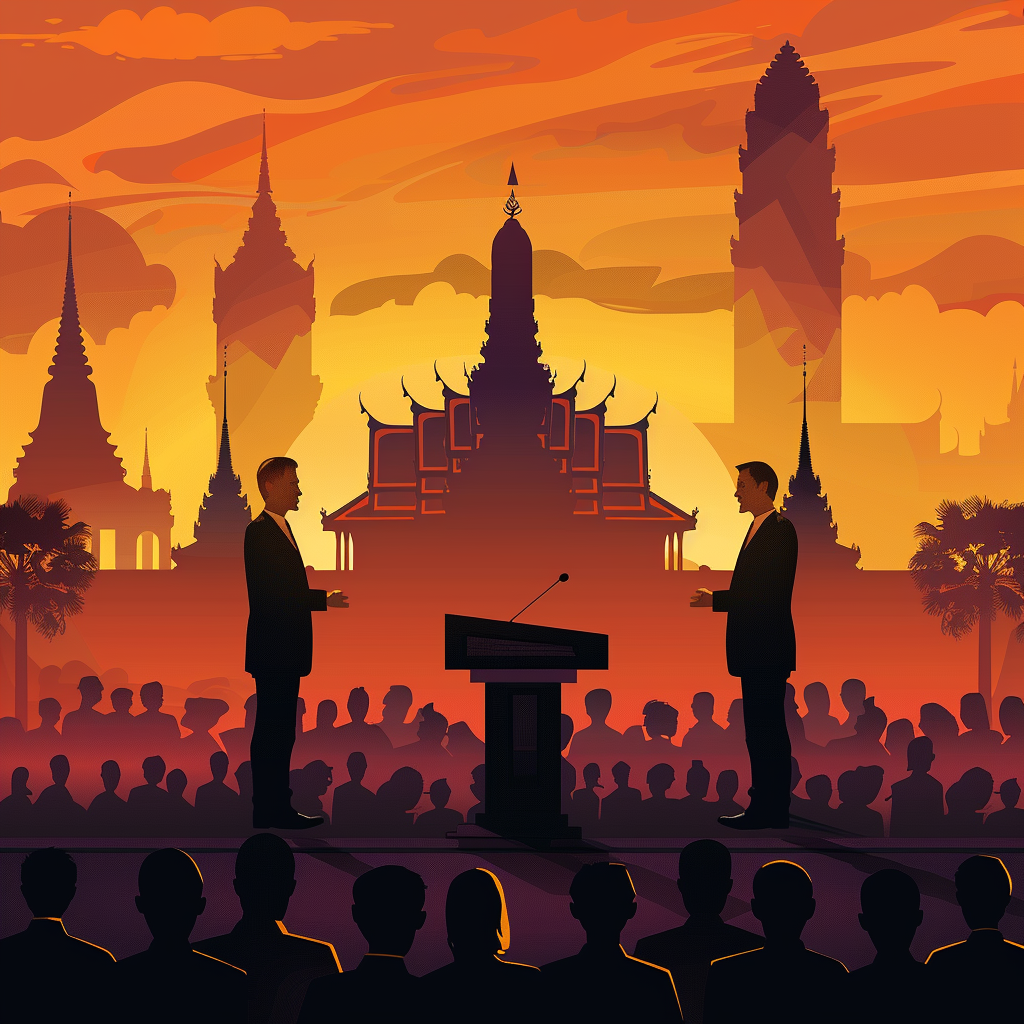
In the spirited arena of political discourse, a titanic clash unfolded as Srettha, the Prime Minister, and his challenger, opposition leader Chaithawat Tulathon, exchanged fiery salvos. The battleground was none other than the grand stage of the two-day general debate initiated under the lofty auspices of the Constitution’s Article 152. The air was thick with anticipation as Chaithawat launched the opening volley, decrying the supposed immature leadership of a premier whose ascent to power was eagerly awaited by the populace, hungry for a departure from the shadow of coup-backed governance.
“The people clamored for change, for a leader not forged in the crucibles of past conflicts but born of their collective hope,” Chaithawat thundered. “Yet, what they received was a Prime Minister bemused by the trappings of power and seemingly adrift in the vast sea of governance.”
Chaithawat’s critique was scathing, painting a picture of a Cabinet assembled not on the merits of qualification but divided as spoils of political conquest, a patchwork government offering little solace to a populace yearning for economic revival and an uplifting of their fiscal fortunes. “Rather than a master plan for prosperity, the people were handed a kaleidoscope of perplexing policies, favoring the titans of industry while leaving the common man adrift,” he lamented.
The opposition leader did not stop there. He laid bare the government’s stalling on political reform and the drafting of a new charter, seven months ticking past with nary a draft in sight. The public’s trust waned as the much-vaunted judicial reforms floundered amidst a crisis of confidence in the Royal Thai Police, beset by allegations of corruption and nepotism.
Chaithawat evoked the words of a former premier, ensnared in controversy yet defiant to critics, "if you don't like me, please mind your own business"—a phrase that became a rallying cry for those demanding accountability and equality under the law for all.
Enter stage, Srettha, who met Chaithawat’s blistering critique with a volley of his own. “Exaggeration!” he declared, staunchly defending his administration's track record. Far from eroding the foundations of Thai democracy, Srettha portrayed his government as the beacon of hope, transparency, and future prosperity. “We have not merely occupied office; we have sown the seeds of progress,” he asserted.
Srettha’s retort was laden with promises of transparency and integrity. He spoke of subsidies to ease the financial burdens of the populace, a relentless battle against narcotics, and bold initiatives to rejuvenate the tourism sector, from visa waivers to initiatives aimed at bolstering agricultural incomes and tackling the dire threat of air pollution.
“Yes, we’ve only begun our journey, a mere seven months at the helm,” Srettha acknowledged. “But in this short span, we have embarked on endeavors that I am confident will bear fruit. To the opposition, I extend an invitation: shine a light where you see shadows, and together, let’s clear the air for the sake of our democratic journey forward.”
In this exchange of verbal volleys, the debate raged on, a testament to the vibrant tapestry of democracy. As accusations flew and defenses were mounted, the underlying narrative remained one of hope—a hope that amidst the cacophony of political discourse, the guiding star of progress would emerge triumphant, leading the nation onward into a future where every citizen's aspirations could find fertile ground to flourish.



Comment verification
Step 1 of 3
Verify your email once to publish your comment. Your email is never shown publicly.
Enter the 6-digit code sent to .
Choose the display name shown next to your comments.