State Audit Office Scandal: Lavish Spending Amid Bangkok Earthquake Sparks Public Outrage
In the bustling heart of Bangkok's Chatuchak district, an imposing crane looms over the once-stalwart structure of the State Audit Office, now reduced to rubble by the unrelenting tremors of last Friday's earthquake. As…
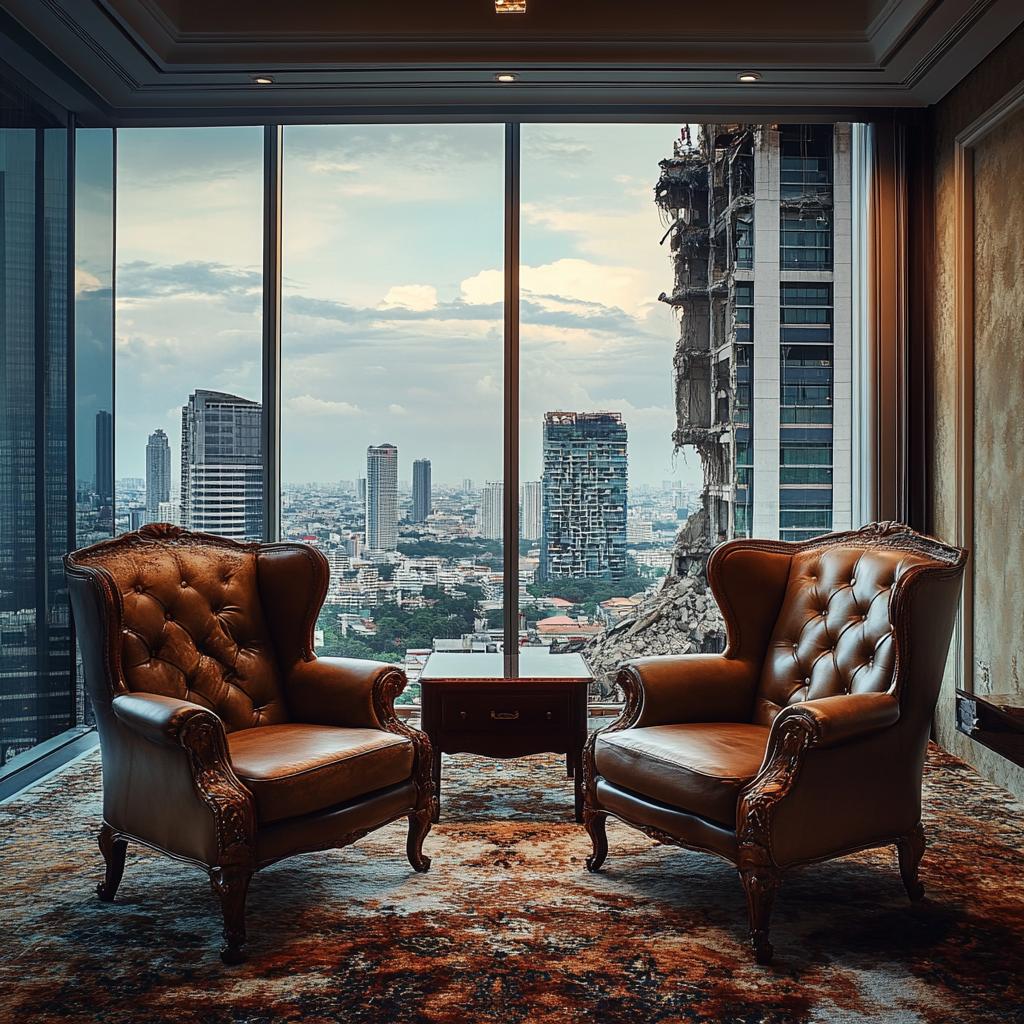
In the bustling heart of Bangkok's Chatuchak district, an imposing crane looms over the once-stalwart structure of the State Audit Office, now reduced to rubble by the unrelenting tremors of last Friday's earthquake. As if the very earth had sought to underscore the scandal unfolding, a meticulous tally of luxuriously excessive spending on the Office's new construction has ignited a wildfire of indignation across digital landscapes.
The STRONG Anti-Corruption Thailand Facebook page, a hub for over 180,000 avid watchdogs of fiscal propriety, laid bare staggering details of the palace that was to house public scrutiny. This revelation was not without its drama—it was the stuff of investigative thrillers, a sequel in the endless saga of transparency and embezzlement suspicions. The riveting post delved into exorbitant expenses that bordered on the absurd, each price tag a dramatic gasp inducing line item in a screenplay of impudence.
Picture this: A chair, no ordinary seat, but a conference chair crafted from the choicest beech wood, swathed in the most sumptuous Italian leather. Its destiny was the plush fourth-floor ceremonial meeting room and the formidable boardroom ensconced on the eleventh floor of the new SAO building. A throne would be a more fitting term, each valued at a jaw-dropping 97,900 baht. In a theatrical bout of consumer excess, 28 chairs graced two rooms, with a cumulative weighty price tag of 2.7 million baht.
Adding layers to this opulent tapestry, luxury handwoven nylon carpets—camera-ready—toasted the floors at 165,000 baht each. Lest the selected few decided to recline, they could do so on leather-upholstered sofas, each valued at 157,000 baht, positioned strategically around the rooms like regal entities gathered for a silent council. And for the pièce de résistance, the chairman’s office gleamed with carpets so costly they'd earn whispers of envy from their predecessors—each priced at a prodigious 110,000 baht.
Further detail revealed a world of gold-gilded sanitation luxury—98 faucets, audaciously priced at 8,250 baht each, joined allies with equally exorbitant soap dispensers and bathroom accessories, amassing a fortune written in water and fragrant in ivory soap.
Unsurprisingly, as the details unfurled like a never-ending scroll of financial debauchery, the public's response was swift and clear: seething outrage mingled with incredulity. Tweets and posts thundered across the digital realm. "I just paid my taxes last month, and now I see where my hard-earned money is going," one nettled taxpayer exclaimed. A chorus of others chimed in: "This is the agency that audits government spending—yet they need to audit themselves first!"
A clamor for accountability resonated through cyberspace, calls ringing like bells for transparency within the corridors where money and scrutiny are supposed to dance hand in hand. With the veil lifted on such lavish expenditures, the public's demand for clarification unfolds with a certain poetic justice, echoing the government's endeavors to call for austerity elsewhere.
As citizens of fleet-fingered electronics call for enlightenment, the saga of the SAO's restless expenditure echoes through the annals of current events, a riveting reminder that in the realms of governance and accountability, the plot is perpetually thick.



Comment verification
Step 1 of 3
Verify your email once to publish your comment. Your email is never shown publicly.
Enter the 6-digit code sent to .
Choose the display name shown next to your comments.