
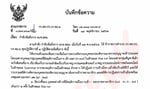
In a story that spread across Thai social feeds like spicy som tam at a family reunion, a private company in Thailand is under fire after issuing what many call an eyebrow-raising disciplinary notice: punishments for an employee who skipped the company’s New Year’s party. The post, originally shared by the Facebook page Tan Pao, included a translated version of the warning letter and a list of penalties that set social media alight.
The penalties on paper (and the outrage online)
According to the shared document, the company’s sanctions were clear and severe: a deduction equivalent to 50 hours of overtime pay, the annual bonus withheld, no consideration for a salary raise, and a formal disciplinary letter placed in the employee’s file. The photo of the translated letter — courtesy of Facebook: ท่านเปา — made the rounds almost instantly, prompting a flurry of comments and hot takes.
Some readers reacted as if their personal calendars had been invaded. “You can’t deduct wages like that — it’s against labour law,” several commenters pointed out, while others accused the employer of trampling on basic work-life boundaries. The letter’s timing also raised eyebrows: the event took place during a holiday period, yet the company apparently denied leave requests for those who wanted to skip the after-hours celebration. Critics called that a glaring contradiction — like being told to bring a dish for the potluck and then being fined for not bringing a cake.
Cultural clash: company expectations vs. personal time
Not everyone condemned the employer outright. A vocal group of commenters argued that social obligations are part of workplace culture in many Thai companies — that attending after-hours events can be an expected element of team cohesion. To them, skipping a mandatory-feeling event without notice was poor form, especially if the company had already planned seating and food. Some bluntly advised the affected employee to find a workplace better suited to their lifestyle if they weren’t willing to join after-work activities.
That debate — adapt or leave — is age-old. On one side, proponents of “office culture” say that showing up to social events can smooth professional relationships and even fast-track advancement. On the other, defenders of personal time argue that employees shouldn’t be coerced into giving up holidays and evenings for mandatory socialising.
Legal questions and the line between persuasion and penalty
Beyond the cultural tussle lies a more concrete worry: legal boundaries. Several commenters asserted that deducting wages or benefits like overtime and bonuses for skipping a party likely conflicts with Thai labour law. If true, that raises the stakes — what started as a corporate reprimand could morph into a legal headache.
Even where the company believes it has the right to enforce attendance, critics asked whether a punitive approach is smart business. Punishing employees for not attending social functions risks damaging morale, spurring resignations, and attracting negative attention in a country where online commentary can escalate rapidly into calls for boycotts or investigations.
When workplace drama spills into the market
As if one story about workplace conflict wasn’t enough for one news cycle, another confrontation played out in Jomtien market. Local CCTV captured a heated incident in which a mother, reportedly furious after her child’s dismissal from a job, attacked a new employee. Police reviewed footage and are pursuing legal action against those involved. That episode served as a stark reminder that workplace disputes can quickly spill into the public sphere and escalate beyond HR’s control.
Both stories illustrate the same theme: the line between professional expectations and personal boundaries is porous, and when crossed, consequences can play out far beyond the office walls.
So what’s the takeaway?
There’s no tidy moral here, only a messy checklist for modern workplaces: be clear about policies, respect employees’ personal time, and — most importantly — don’t weaponise festivities. If a company wants genuine team bonding, it should aim for inclusivity and voluntary participation rather than punitive measures. If employees feel pressured into attendance, a chilling effect will follow: lower morale, less trust, and possibly legal trouble.
For those watching the story unfold online, reactions ranged from calls to resign to advice to simply adapt — but many settled somewhere in the middle: know your rights, weigh your workplace fit, and document everything. And perhaps most importantly, be cautious when treating celebrations as an extension of the 9-to-5. Not everyone’s idea of a good time involves karaoke, party hats, or mandatory fun — and penalizing people for keeping their personal time personal is a risky move in the age of social media outrage.
As the Tan Pao post gathered shares and commentary, one thing became clear: workplace culture is changing, and firms that insist on old-school, after-hours conformity may find their approach is out of sync with today’s expectations — and their social feeds will reflect it.

















This is outrageous — deducting pay for not showing up to a party sounds illegal and abusive. Companies that weaponize celebrations like this are practicing a kind of emotional extortion. Someone should report this to labour authorities immediately.
I get that culture matters but you cannot force people to give up holidays and then dock pay, that’s crossing a legal and ethical line. In Thailand many firms expect socialising, but expectations are not the same as lawful penalties. The company might face serious consequences if this is verified.
Thanks Mai, I agree — cultural nuance matters but not when wages are at stake. Even if attendance ‘helps careers’, it can never justify wage deductions.
Just quit and find a place that respects boundaries; this is 2025 not some old factory town.
Legally speaking, arbitrary deductions and withholding contractual bonuses could violate labour regulations depending on the employment contract and statutory protections. If proven, the employee could seek remedies through administrative complaint channels or civil suit. Documentation and timestamps of the warning letter would be crucial evidence.
People are missing context — in many Thai companies after-work events are effectively part of work life and skipping without notice wastes resources. It may feel harsh, but if you sign up for a job where this is the norm, you accept some social obligations. Maybe the employee could have handled the leave request better.
No one is saying you must never attend social events, but making them mandatory and punishing absence with pay cuts is different from a cultural norm. You’re describing coercion masked as culture, and that rarely ends well for morale or legal standing. Labour standards exist for a reason.
Fair point about coercion, but nuance matters; if the company communicated expectations clearly and the employee ignored them, some penalty might be justified. I just worry people paint every tradition as abusive.
A compromise is to have voluntary events and encourage attendance with perks, not punishments. Clear policy and advance notice would avoid this entire mess. Culture should be built, not enforced by fines.
From a legal perspective this raises red flags: wage deductions have strict limits and must usually be agreed in writing or justified under law. Employers risk fines and reputational damage when they conflate social obligations with contractual duties. Employees should consult legal aid or unions when possible.
So if it’s illegal why did the company do it? Maybe they gambled no one would challenge them. Lots of companies push limits until someone pushes back.
Exactly, Korn — some employers rely on inertia and fear. That’s why public exposure and formal complaints can be effective, as long as the employee documents everything carefully.
This is simple: mandatory fun is not a thing, and any boss who demands it is toxic. Walk away rather than be bullied into karaoke.
As an HR manager I sympathize, but ‘walk away’ is not always realistic for everyone, especially those supporting families. HR should mediate, clarify policy, and ensure penalties align with contracts and law. Employers should offer alternatives and reasonable accommodations.
Sure, HR should fix it, but sometimes the system is the problem and leaving is the quickest self-care move.
This will blow over in a week after online outrage dies down, but the damage to trust is lasting. Social media amplifies these micro-abuses into corporate crises that companies didn’t plan for. The smarter move is proactive policy change, not damage control.
It’s not just online, my cousin quit because his boss made him sing and he felt disrespected. People get hurt by this kind of pressure. Companies need to stop forcing stuff.
Maya, that’s exactly the human cost I mean — amusement today, resignations tomorrow. Brand and retention suffer when employees feel coerced.
Online outrage matters because it signals consumer sentiment. If enough customers care, shareholder value responds. A small policy can cascade into layoffs or leadership changes if mishandled.
That is mean. People have kids, plans, religion, or just need rest and should not be punished for living their lives. Parties shouldn’t be a test to see who will kneel to the boss.
From a labor economics view, compulsory social events create negative externalities: they impose uncompensated time costs and can reduce productivity long-term. Firms that internalize employee wellbeing tend to have better retention and productivity metrics. So economically, it’s shortsighted to coerce attendance.
Thanks, Satoshi, that makes sense. Happy workers make better workers, simple as that.
Depends on the contract; some jobs explicitly include social duties. Read your contract.
HR should never allow punitive measures that could breach labour law; instead, create written policies about optional events and offer compensatory time or pay for required attendance. Communication, consent, and documentation are key. Penalising people for private time is bad policy and bad PR.
Agreed — a policy that ties bonuses or raises to social attendance is discriminatory and opaque. Performance metrics must be transparent and related to work outcomes, not karaoke prowess. Companies should establish clear complaint mechanisms too.
Absolutely Anita, and implement anonymous feedback channels so employees can flag coercive tactics without fear. Training managers to separate social bonding from evaluative processes is also essential.
I still feel managers should remind employees that informal bonding can aid teamwork, but yes, that reminder should never become punishment. Balance is the keyword.
This story shows the tension between old-school hierarchy and modern labor norms. If companies insist on old rites they either adapt or face turnover and brand harm. Employees should know their rights but also pick workplaces aligned with their values.
Practical step: document the notice, ask HR in writing about the legal basis, and seek legal counsel or labour office guidance before resigning. Social pressure can be swift but remedies exist if you follow the right procedures. Don’t act impulsively without a record.
Good point Anika, documentation is crucial. Public shaming is cathartic but internal remedies often solve things without burning bridges.
Companies that conflate social life with work risk losing diversity and alienating caregivers and religious minorities. Inclusion means respecting off-hours boundaries and offering alternatives for team bonding. Board-level oversight should include workplace culture KPIs.
Board-level KPIs for culture sound trendy but are hard to measure; still better than nothing. Public incidents like this force boards to pay attention when they otherwise ignore HR.
They’re hard but necessary—use employee surveys, turnover reasons, and exit interviews as metrics. Ignoring culture is a slow leak to performance.
Treating celebrations as quasi-contractual obligations creates inefficiencies and legal exposure. Rational firms will weigh the marginal benefit of forced social cohesion against the expected cost of turnover and litigation. Market discipline often corrects such misaligned practices over time.
And let’s not forget the Jomtien market incident — when emotions around jobs spill into public spaces it shows how small workplace disputes can escalate beyond HR and courts. Companies ignoring soft-power consequences are asking for community backlash. Social media simply accelerates the feedback loop.