Anutin decree closes parliament from 23 Dec
The Royal Gazette published a decree, countersigned by Prime Minister Anutin Charnvirakul, closing Thailand's second ordinary parliamentary session from 23 December 2026.
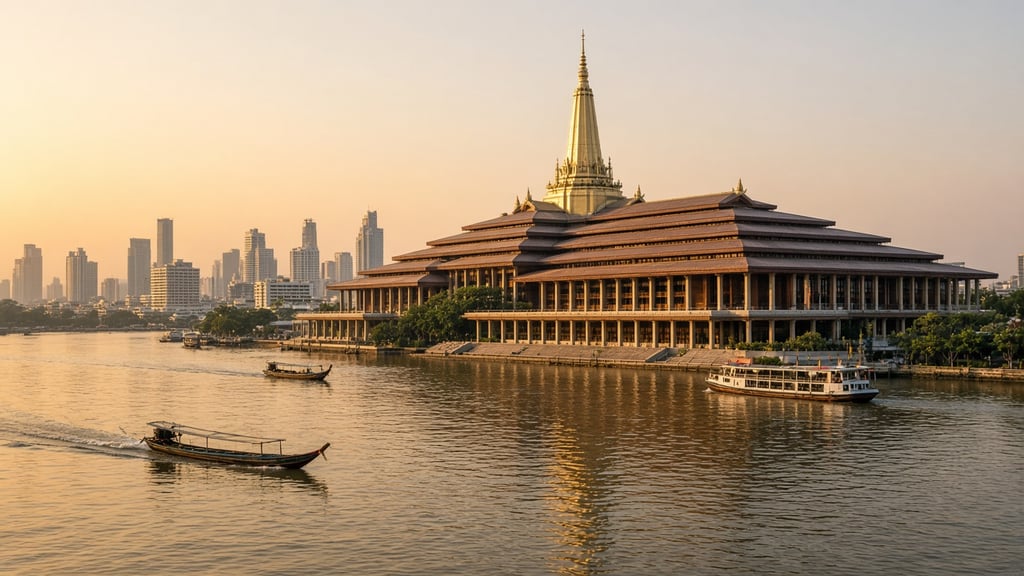
Thailand's National Assembly will stop sitting from 23 December 2026 after a Royal Decree appeared in the Royal Gazette on 27 November. Prime Minister Anutin Charnvirakul countersigned the instrument, which closes the second ordinary session of Buddhist Era 2569 at Sappaya-Sapasathan, the parliament complex on the east bank of the Chao Phraya River in Bangkok's Dusit district.
The decree does not dissolve the House or trigger an election. It ends a 120-day ordinary sitting that opened on 25 August, the constitutional maximum unless the King extends it. Lawmakers still have roughly three weeks of sitting time, including a crowded early-December calendar, before the chamber goes dark.
What the Gazette published
The Royal Gazette listed the decree on 27 November 2026 in Volume 143, Part 75 A, on page 1. King Maha Vajiralongkorn dated the instrument the same day, in the eleventh year of the present reign. Thai-language newsrooms including Thairath, Thai PBS, Matichon, and Krungthep Turakij carried the notice on 28 and 29 November. The official PDF is posted on the Gazette website as document 139546. The text records that an earlier decree had called the second ordinary session from 25 August 2026, that the 120-day span ends on 22 December, and that the sitting therefore closes from 23 December. Anutin signed as the countersigning official.
Why Sections 121, 122, and 175 matter
Section 121 of the 2017 Constitution sets two ordinary sessions a year, each lasting 120 days, and says an ordinary sitting may be closed early only with parliamentary consent. This close falls on the day after the 120-day mark, so it is a scheduled recess rather than an early shutdown that would have needed a House vote.
Section 122 vests the King with the power to call, open, and close sessions, including extraordinary sittings if required for the benefit of the state, and requires those acts to be done by Royal Decree. Section 175 is the general power to issue Royal Decrees that do not contradict statute. The 23 December instrument cites Sections 122 and 175, the same pairing used when this parliament was first called on 14 March after the 8 February 2026 general election.
The House itself fixed this year's calendar earlier in 2026: first ordinary session from 14 March to 11 July, second from 25 August to 22 December, with weekly sittings on Wednesday and Thursday from 09:00. Speaker Sophon Saram chaired that scheduling vote. The next ordinary session is expected to follow the same mid-March to mid-July window in 2027 unless an extraordinary session is called during the recess.
Business still inside the 120-day window
Opposition parties, led by the People's Party, have treated this sitting as their window for a Section 151 no-confidence debate covering 18 ministers. House and opposition whips in late October settled on a four-day debate plus a fifth day for the vote, totalling 72 hours, with 7 to 11 December as the latest dates the Cabinet offered. Finding a slot had already slipped past the 28-29 October sitting days. The Gazette now makes the 22 December deadline immovable.
A joint sitting of both houses is scheduled for 2 December, the first of this session. Opposition whip Parit Wacharasindhu has pressed Speaker Sophon Saram to clear leftover joint-sitting items: international agreements the government wants tabled, two organic constitution bills running on 180-day clocks, and a Section 236 amendment filed after the election that would limit the parliamentary president's discretion to reject petitions sending National Anti-Corruption Commission disputes to court. That draft has sat on the joint agenda since March.
When the second sitting opened on 25 August, the docket also included a 400 billion baht energy-transition loan decree and the 3.788 trillion baht fiscal 2027 budget. Opposition leaders still intend to press Senate-election collusion allegations on the floor. None of that work can continue after 22 December without a new Royal Decree calling an extraordinary session.
What This Means for Expats and Travelers in Thailand
A parliamentary recess is not a government shutdown. Ministries, the Immigration Bureau, the Revenue Department, and the courts keep working. What pauses is ordinary law-making: bills that have not cleared both houses by 22 December wait until the next ordinary sitting, unless the King calls lawmakers back.
Foreign residents watching visa, tax-residency, condominium, or cannabis rules should treat 23 December as a freeze date for new statutes, not for existing permits. Cabinet can still issue ministerial regulations and emergency decrees during the recess, so Gazette alerts remain worth watching through the New Year holiday. Political argument over the Anutin government will continue in public; the legal pipeline for most reforms will not resume in the ordinary way until March 2027.
Sappaya-Sapasathan, completed in 2021 as the world's largest parliament building by floor area, will stay a Bangkok riverside landmark either way. For readers, the practical question is narrower: which pending bills actually get a vote in the next three weeks, and which files slide into the long recess.
Comment verification
Step 1 of 3
Verify your email once to publish your comment. Your email is never shown publicly.
Enter the 6-digit code sent to .
Choose the display name shown next to your comments.