Thailand MOT, J&T push fairer parcel market
Deputy Transport Minister Siripong Angkasakulkiat met J&T Express to press fair parcel competition and cheaper shipping for Thai online sellers.
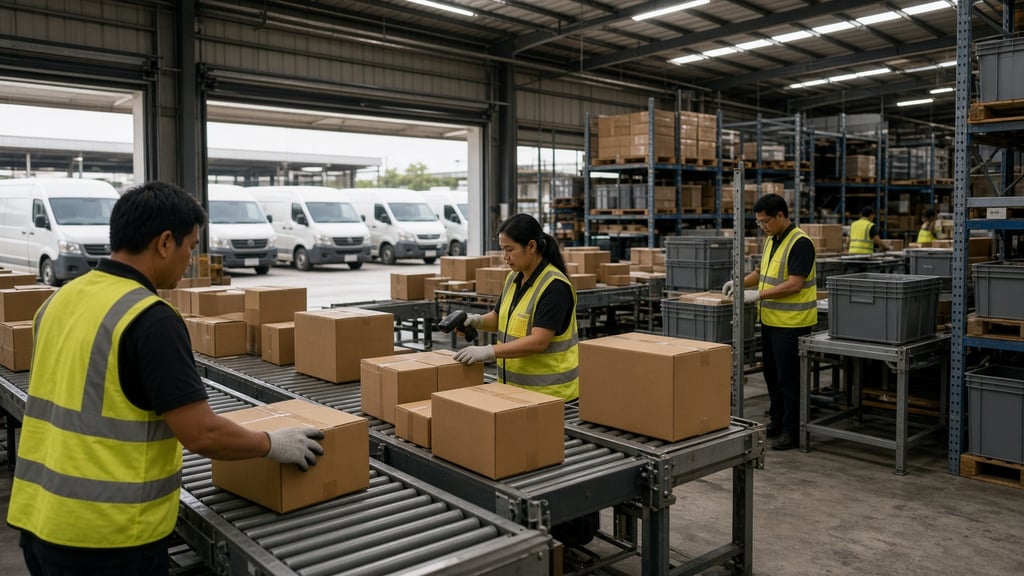
Thailand's Ministry of Transport sat down with J&T Express this week over a cost Thai online sellers meet on every checkout screen: who carries the box, what the waybill costs, and whether a cheaper rival can still win the job.
Deputy Transport Minister Siripong Angkasakulkiat, appointed on 30 March 2026, met a J&T Express team led by company director Apicha Nithianantaporn. The session, reported on 29 November, was framed around fairer competition among couriers, more automation in sorting hubs, and a lower cost per piece for e-commerce shops and the people who buy from them.
Siripong did not float a government price cap. He argued that every operator should get a genuine chance to compete, that new technology should build economies of scale, and that advertised express rates should track real operating costs rather than opaque platform rules. He also flagged conduct that can lock rivals out of the work. Apicha presented J&T as a network that grew inside Thailand's market. Coverage of the last mile, automated sortation, on-time delivery, and service quality, he said, now decide who wins volume. Concentrating enough orders in one network is how a courier drives down the cost of each box, which in theory feeds through to thousands of small Thai sellers.
Why the Ministry Is in the Room
The J&T meeting did not arrive in a vacuum. On 10 November the same deputy minister heard from Flash Express chief executive Komsan Lee after logistics firms complained that Shopee, Lazada, and TikTok were narrowing courier choice. Operators said some platforms defaulted to a single carrier, sometimes an affiliate, and set the shipping price themselves. Flash asked that buyers pick the courier and that couriers set their own rates. Siripong said the ministry would write to the Trade Competition Commission and to Deputy Prime Minister and Commerce Minister Suphajee Suthumpun, who oversees online marketplaces.
Those letters land in a live rule-making window. From 4 November to 3 December 2026, the Office of Trade Competition Commission is taking comments on a draft notice that would give shops and buyers a real right to choose a courier, including an outside firm, as long as tracking and safety standards are met. The draft would bar platforms from tying marketplace access or promotions to an in-house courier, and from punishing a shop that picks someone else by burying listings, hiking fees, or slowing payouts. Deputy government spokeswoman Lalida Pherdwivattana has already stressed that the text is still a consultation, not a live order.
A parallel track sits at the Ministry of Digital Economy and Society, where Deputy Minister Boonthida Somchai is pushing a draft postal business law that would require every parcel operator, including firms already on the road, to hold a licence. She has pointed to two or three Thai-owned couriers under strain as marketplace volume clusters on platforms such as TikTok Shop. Conduct that looks like unfair competition can already be referred to the OTCC under the Trade Competition Act B.E. 2560.
Where the Orders Actually Go
Krungthep Turakij reported on 29 November that Digital Economy Ministry sources put Thailand Post at about 5 percent of TikTok's auto-assigned parcel work, with a large share routed to J&T Express. Sellers' ask is blunt: if another courier is cheaper, faster, or better for the goods, the shop should be able to pick it. That is the same demand Flash brought to Siripong three weeks earlier, and it is the core of the OTCC draft now out for comment.
The money at stake is no longer a sideline. The Electronic Transactions Development Agency put Thai e-commerce at 634 billion baht in 2023, 694 billion in 2024, and 970 billion in 2025, with 2026 on course to pass 1 trillion baht. Marketing tallies circulating in Bangkok put Shopee near half the marketplace, TikTok Shop around a third, and Lazada under a fifth. J&T, founded in Jakarta in 2015 and in Thailand since 2019, grew up on that boom. Scale is the company's public argument for cheaper national logistics, and the thing smaller Thai couriers say they cannot reach if platforms keep the default button pointed at one name.
Walk-in sellers on Pantip still compare J&T with Flash, KEX, and Thailand Post on remote-area surcharges, cash-on-delivery hold times, and the gap between a 35-baht Flash drop and a 50-baht J&T bag of clothes. In April 2026, J&T, Flash, and KEX each added a 3-baht fuel surcharge per piece. Public rate tables checked in October 2026 still clustered many 1-kilogram Bangkok-to-Bangkok drops in the high 20s to mid 30s of baht. Volume discounts on Shopee and TikTok are a different price list, which is why control of the default courier matters more than the walk-in board at a shopfront.
What This Means for Expats and Travelers in Thailand
Foreign residents who live on Shopee, Lazada, and TikTok Shop already know the last-mile lottery. A Bangkok condo with a lobby desk is a different product from a Hat Yai soi where a rider logs a failed attempt and comes back after dark. Rural and island addresses still attract remote-area add-ons of 50 to 200 baht on some private networks, a fee Thailand Post does not charge on its basic service. If the OTCC draft sticks, checkout screens should show more than one courier and a comparable price. Until then, shops and buyers remain inside whatever default the platform sets.
For small sellers, including foreigners running side shops from Chiang Mai, Phuket, or a Bangkok condo, shipping is often the difference between a 39-baht item and a loss. Cash-on-delivery hold times still range from about one business day at some private firms to eight at J&T walk-in and Thailand Post, which ties up working capital. A fairer allocation of platform orders would not, by itself, cut those clocks. It would at least let a shop pick the network that actually reaches the customer.

Comment verification
Step 1 of 3
Verify your email once to publish your comment. Your email is never shown publicly.
Enter the 6-digit code sent to .
Choose the display name shown next to your comments.