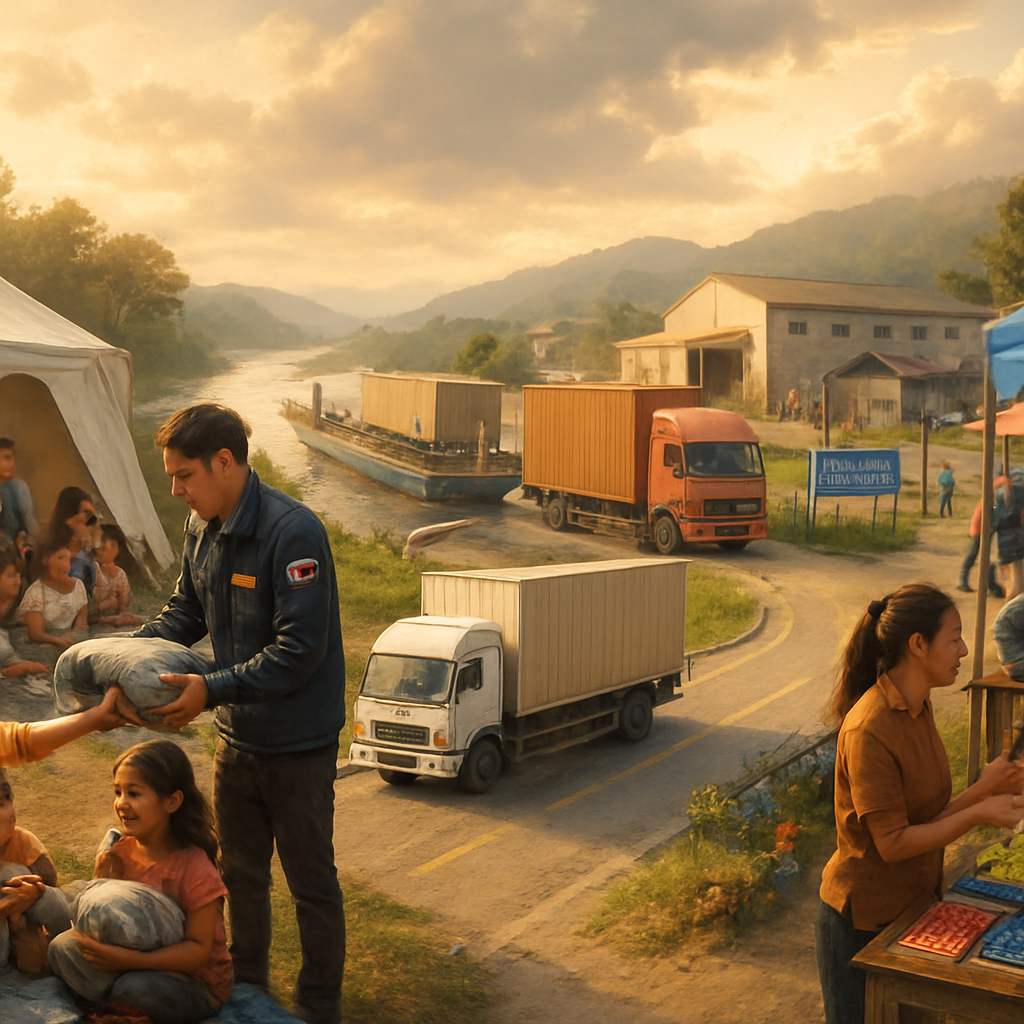
The 2025 Thailand–Cambodia Border Shock: How Communities and Commerce Were Brought Back from the Brink
When the 2025 border clashes between Thailand and Cambodia erupted, the human and economic fallout was immediate and stark. Thousands of residents across seven Thai provinces were forced from their homes, cross-border trade lanes fell silent, and factories that quietly plug into global supply chains hit an abrupt, costly pause. What followed was a mix of emergency compassion, rapid policy pivots, and a surprising display of private-sector ingenuity — all aimed at keeping livelihoods afloat and the wheels of commerce turning.
A Fast-Acting Lifeline for Families
In the early days of the crisis, the Thai government zeroed in on two urgent goals: prevent a humanitarian disaster and stabilise social order. The Thai Cabinet approved a targeted compensation package with a budget framework of 2.33 billion baht, designed to reach 467,128 households across the seven affected border provinces. The aid came in two tiers: households evacuated for eight days or more received 5,000 baht, while those displaced for up to seven days were allotted 2,000 baht.
That direct cash injection was more than just numbers on a ledger. It was grocery money, bus fares, and the small acts of normalcy that help families sleep at night. Alongside financial support, authorities mobilised mobile medical units, dispatched essential supplies, and set up temporary shelters — practical moves that prevented a short-term tragedy from becoming a long-term catastrophe.
Rescuing a Border Economy Under Strain
Short-term aid addressed immediate needs, but the bigger challenge was stabilising an economy that had become a vital node in regional manufacturing networks. Industries such as data storage, automotive parts, and textiles felt the shock first — and hardest. These sectors rely on tight, time-sensitive cross-border logistics, so even a brief closure can ripple into production delays and missed export windows.
The Commerce Ministry launched a multi-pronged response to re-route trade and shore up business confidence. One headline move was organising cross-border trade fairs that redirected goods through neighbouring markets — Laos, Myanmar, Malaysia, and China — essentially creating detours that kept products moving. At home, the “Thai-made, Thai-used, Thai-helping-Thai” campaign encouraged local consumption to absorb some of the excess supply and support businesses feeling the pinch.
Financial First-Aid for Businesses
To ensure companies could weather the downturn, state-owned financial institutions rolled out liquidity-support measures tailored to varied needs. Key actions included:
- Debt moratoriums: Short-term deferments on principal repayments gave firms breathing room to manage cash flow without defaulting.
- Emergency loans: Low-interest financing targeted farmers and SMEs to cover immediate operating costs and rehabilitation efforts.
- Liquidity support: Increased credit lines for exporters and extended repayment periods helped preserve operational continuity.
These steps weren’t glamorous, but they were effective. Credit lifelines kept factories humming, trucks loaded, and suppliers paid — all the little cogs that keep a frontier economy running.
Private-Sector Adaptation: Creativity in a Time of Crisis
Perhaps the most impressive response came from businesses themselves. Faced with border closures, many manufacturers and logistics firms pivoted quickly: rerouting cargo via inland waterways, arranging transit through Laos, or using alternative ports. These detours weren’t cheap — logistics costs climbed by more than 30% and transit times stretched by two to four days — but they kept supply chains from snapping.
That extra cost was absorbed in different ways: some firms tightened margins, others renegotiated contracts, and a few accelerated investments in contingency planning. The message was clear: resilience is expensive, but a shutdown is far more costly.
What Comes Next — Building a More Durable Border Economy
Out of crisis often comes clarity. The 2025 clashes exposed structural vulnerabilities in cross-border production networks, and policymakers and business leaders appear to have taken note. Future priorities emerging from this episode include diversifying logistics routes, investing in infrastructure that can withstand geopolitical shocks, strengthening regional trade ties, and expanding financial instruments (insurance, emergency credit lines) tailored to border communities.
There’s a hopeful silver lining: the crisis forced rapid experimentation and collaboration. From mobile clinics to trade fairs and emergency loans, the combined public-private response revealed a playbook for dealing with geopolitical disruption. It won’t prevent every setback, but it does mean Thailand’s border provinces — and the industries that depend on them — are better positioned to weather the next storm.
In short, the clashes were a painful reminder that peace and prosperity often ride on fragile threads. But the response showed a country determined to repair those threads and weave them stronger than before.


















The compensation sounds generous on paper but 5,000 baht for long evacuations is barely enough to cover one month of real expenses for many families. The government should have included housing assistance and longer-term livelihood support instead of a one-off payment. I worry this will leave people vulnerable when the cash runs out.
You’re right about housing, but cash quickly distributed can still stop immediate hunger. Politicians love one-offs though, so we need watchdogs to push for follow-up aid.
From a policy perspective, the tiered payments were fast and targeted, which matters during acute displacement. However, long-term recovery needs conditional programs linked to employment and reconstruction grants. Monitoring and transparency will determine whether those 2.33 billion baht actually reach the intended households.
Exactly — speed mattered, but without transparency many will slip through the cracks and local corruption can absorb funds.
The Commerce Ministry’s detour strategy was clever and pragmatic, showing that flexible trade routes can blunt shocks. Redirecting through Laos and Vietnam demonstrates regional cooperation and private sector agility. Still, higher logistics costs will hurt margins long-term if not subsidised or insured.
But isn’t subsidising logistics just another way to prop up inefficient supply chains? Maybe firms should have diversified earlier instead of depending on a single fragile route.
Diversification is cheaper said than done. Companies sign contracts and build plants near borders for a reason. Expecting them to move overnight is unrealistic and unfair to workers who depend on those factories.
True, Larry, factories can’t relocate quickly, but public policy can incentivize multiple hubs and rail/port upgrades. A combination of private contingency plans and public infrastructure investment is the realistic path forward.
My teacher told us kids were scared when the news showed people leaving their homes. I think the families should get more help so kids can go back to school soon.
As a teacher, I appreciate that. Schools need targeted support to reopen and to provide psychosocial help for children who witnessed trauma. Education continuity is crucial for long-term recovery.
Kids bounce back fast but only if parents aren’t stressed about money. Those one-off payments might calm things a little, but counselling and school supplies matter too.
Thanks, TeacherJen. I hope everyone gets to go back to school and play again.
Logistics costs skyrocketed and that 30% bump will be passed down the chain straight to consumers and small buyers. The private sector adapted, yes, but adaptation is expensive and not all SMEs can shoulder these losses. Someone should quantify how many firms went bankrupt despite the loans.
We saw freight rerouting, transloading, and multi-modal shifts in real time, but capacity constraints in alternative routes raised unit costs. Insurance payouts are still slow, and many SMEs never qualify for emergency loans due to weak balance sheets.
As a small transporter, I can confirm margins evaporated. Clients expected the same prices but delivery took longer and cost more, so we took a hit to keep the contracts.
Exactly my point — the hidden survivors are many struggling micro firms that are now indebted and precarious.
This case exposes classic supply-chain fragility where geographic concentration and just-in-time systems converge to magnify shocks. The policy measures were competent but reactive; a strategic reserve of critical components and cross-border contingency pacts would be smarter. Economically, we should expect some re-shoring or near-shoring incentives as a medium-term response.
Re-shoring might be politically appealing but raises costs and doesn’t solve regional development inequality. A balanced hybrid—near-shoring within ASEAN—could be optimal if paired with infrastructure upgrades.
The notion of strategic reserves for components is interesting, but who pays for them? Governments, firms, or international consortia? It’s complex and fraught with moral hazard.
Good questions — shared public-private cost models and tiered reserves for critical industries could spread the burden and reduce moral hazard risks.
Small farmers got emergency loans but paying them back will be hard when buyers delay payments. Our crops sat because trucks couldn’t move and perishables were wasted. The article didn’t mention cold chain support which we desperately needed.
Cold chain failures are a blind spot in many crisis responses. Grants for portable refrigeration and cooperative storage could have reduced losses and supported farmer bargaining power.
Exactly, Agronomist, cooperatives could help but they need initial funds and training first.
As someone living in an affected border province, I appreciated the mobile clinics and shelters but local clinics were overwhelmed for days. The volunteers were heroes yet the system looked brittle. We need more permanent health infrastructure, not just mobile fixes.
I was planning a trip near that border and canceled; tourism businesses took a hit too. Recovery funds for hotels and guides should be part of the package since livelihoods are interconnected.
Tourism will come back slower than trade, Mark, so targeted grants for local entrepreneurs could help restart that economy.
The Thai-made campaign was a smart psychological nudge to boost domestic demand, but nationalism can alienate trading partners if overused. Balancing local consumption drives with regional diplomacy is key. I hope policymakers are mindful of soft-power costs.
Demand stimulation is useful short-term and can be financed prudently, but central banks will watch for inflationary pressures. Coordinated fiscal-monetary actions are needed if consumption rises rapidly.
Agree, John, fiscal stimulus must be targeted and temporary, and central bank communication matters to avoid overheating smaller border economies.
Factory floors suffered, and workers faced unpaid overtime or layoffs even with loans available. Credit supports mostly help owners, not the shop-floor laborers. Labor protections and wage subsidies should have been front-loaded.
I lost two weeks’ pay while the plant adjusted routes. Loans to firms don’t put food on my table; wage support would have kept families afloat and morale up.
We need a worker-first approach in any emergency scheme. Otherwise unemployment spikes and consumption collapses.
The private sector adaptability was inspiring, but 30% higher logistics costs may accelerate automation to cut human labor. That could be the hidden long-term harm from the clashes.
I liked the article’s optimistic tone about learning from crisis, but optimism shouldn’t obscure accountability. Who audited the emergency spending and the trade detours? Citizens deserve answers. Transparency will build trust for future crises.
Audits and independent reviews will be crucial. A post-crisis commission with public reporting could increase institutional learning and legitimise continued investments in resilience.
Exactly, a commission would also recommend legal reforms to speed future assistance while maintaining oversight.
I transport goods across the border; rerouting through Laos added days and costs but saved contracts. Yet the real solution is better infrastructure inland and quicker customs processing. Borders are political but logistics can still be fixed.
Customs reform is easier said than done because of vested interests. But digitisation of permits could reduce human friction and speed things up drastically.
Agreed, digitisation would cut corruption points and speed transit, which benefits everyone from drivers to exporters.