Washington is quietly leaning on Bangkok and Phnom Penh to honor a ceasefire pact they once signed — and, according to U.S. officials, there’s a real chance the two neighbors will fall back into line by early next week. U.S. Secretary of State Marco Rubio voiced cautious optimism in a briefing in Washington, saying diplomats are working “around the clock” to restore the truce first agreed to in Kuala Lumpur last October.
Rubio reminded reporters that both Thailand and Cambodia put their names to the agreement in writing, but simmering grievances and renewed skirmishes have since frayed that commitment. The foreign ministers of the Association of Southeast Asian Nations (ASEAN) are due to take up the crisis at a meeting in Kuala Lumpur on Monday — a timely forum, given that the original terms were hammered out there.
Diplomacy is clearly in motion. Rubio spoke by phone with Thai Foreign Minister Sihasak Phuangketkeow and said follow-up calls are scheduled over the weekend. That sense of urgency reflects not only the potential for cross-border violence to escalate, but also the political need to show progress — especially after high-profile statements earlier this year.
In a move that grabbed headlines, President Donald Trump declared success in brokering a ceasefire and listed the Thailand-Cambodia dispute among the international tensions he touted as resolved. Despite that fanfare, clashes have resumed, and that rollback has prompted a renewed diplomatic sprint to get both sides back to the negotiating table and, critically, to the letter of their agreement.
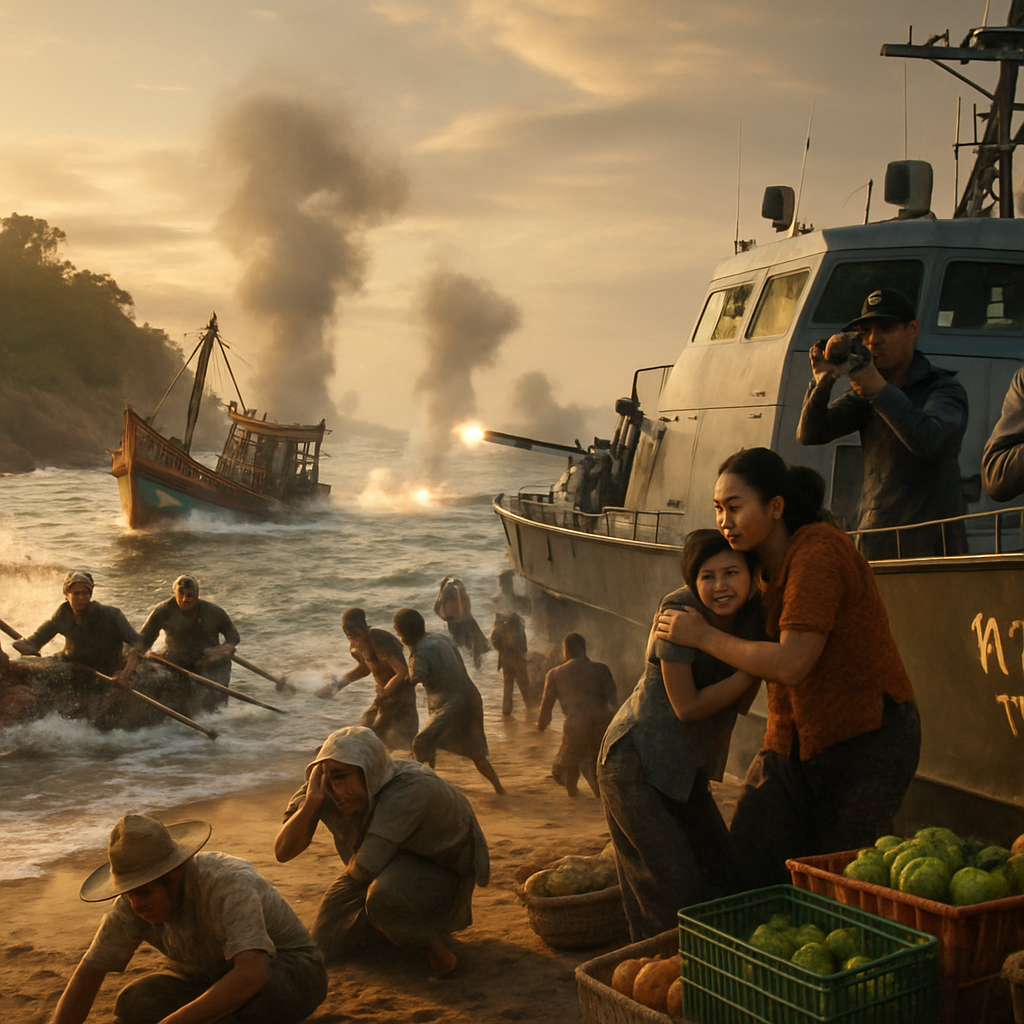
The situation boiled over briefly on Friday, December 19, when the Royal Thai Navy fired warning shots after a Cambodian vessel entered waters Thailand considers its own near Hat Lek in Trat province. The encounter lasted only minutes but sent local residents scrambling for cover. Officials said more than 10 warning rounds were fired as a signal to withdraw; there were no injuries or damage reported and the vessel retreated. Patrols were stepped up and authorities emphasized that clear, agreed procedures are needed to avoid future misunderstandings along the thorny maritime boundary.
At the same time, Phnom Penh has acknowledged the involvement of China’s special envoy for Asian affairs, Deng Xijun, who visited to push de-escalation. Cambodia’s foreign ministry issued a statement — picked up by the Bangkok Post — saying Beijing is committed to facilitating dialogue and helping negotiate a peaceful outcome. That diplomatic triangle of the U.S., China and ASEAN underscores how regional and global players see the Thailand-Cambodia border flare-up as more than a local dispute.
Back on the ground, arguments over which side must first declare a ceasefire remain a flashpoint. Thailand insists Cambodia should be the one to say it first and withdraw troops from disputed border areas; Phnom Penh has its own version of events. Rubio defended U.S. efforts by saying American diplomacy initially helped end a wave of hostilities, even if the ceasefire’s durability has been tested.
For ordinary people living near the border, the diplomatic wrangling has very real consequences: market traders, farmers and fishermen have had to contend with disruptions, evacuations and the constant anxiety that a sudden skirmish could upend lives and livelihoods. Local officials have been juggling intensified patrols with appeals for calm and clear communication to prevent accidental escalation.
ASEAN’s upcoming meeting in Kuala Lumpur will be watched closely: ministers will aim to coordinate a regional response and to encourage both capitals to recommit to the written terms they previously accepted. Diplomats hope that peer pressure on the Southeast Asian stage, combined with bilateral nudges from the U.S. and China, will be enough to restore quiet along the border.
Until then, residents of Trat and neighboring provinces will be on edge, and foreign observers will parse every statement and troop movement for signs of progress or renewed danger. The ceasefire’s fate now seems tied to a diplomatic relay — phone calls, weekend consultations and a Monday meeting in Kuala Lumpur — where momentum, timing and goodwill must come together if the fragile peace is to hold.
Whatever happens next, one thing is clear: the border dispute has grown beyond a simple neighbourly spat. It has become a regional litmus test for how quickly and effectively ASEAN, with support from external partners, can manage and defuse tensions before they spiral. For the moment, diplomats are betting on procedures, pressure and patience to do what gunfire and headlines could not — bring both sides back to the agreement they once signed and keep the border calm.

















This is scary for people living there — why can’t leaders just agree to stop firing and let folks go to market? It feels like big powers are playing chess with villagers’ lives. Someone should be held accountable for dragging this out.
Blaming is easy, but ASEAN’s norms and quiet diplomacy are actually designed to prevent escalation without humiliating either side. Public shaming by outside powers often backfires and strengthens nationalist rhetoric. We need a coordinated, face-saving plan that restores the written truce and builds monitoring mechanisms.
As someone who grew up near a border, I can tell you people don’t want politics — just safety and trade. Patrols make sense, but clear maps and hotlines would stop these stupid incidents. Why is that so hard?
I get the diplomacy point, but while they negotiate people are running for their lives. Hotlines and maps sound nice; deliver them now, not after another bout of shots.
The US waving fingers at both sides is rich coming from a country that sells weapons everywhere. If Washington is ‘leaning’ on Bangkok and Phnom Penh, what are they really trading for it? This smells like geopolitics, not peace.
As a fisherman from Trat, I don’t care whose geopolitics it is — I want to go back to the sea without being scared. We need neutral observers at sea lanes, not political theater. Local livelihoods are the ones paying for big power games.
Calling it purely hypocrisy simplifies the problem. U.S. involvement can help convene talks, but ASEAN must lead for legitimacy. Blaming the messenger won’t stop border boats getting warning shots fired at them.
But if a messenger has always been biased, why trust their mediation? ASEAN needs independent monitors, not the same countries that have strategic stakes.
Exactly — independent monitors or let ASEAN do it without Washington or Beijing breathing down their necks. Otherwise it’s just another proxy negotiation.
ASEAN’s consensus model is broken when urgent conflicts require swift action. You can’t wait around for unanimous approval while people flee their homes. Reforming ASEAN’s crisis response should be a priority.
As someone who studies regional institutions, I disagree that consensus alone is the problem; it’s the lack of enforcement mechanisms and rapid deployment tools. ASEAN was never meant to be a military bloc, but it needs standing civilian monitors, rapid fact-finding teams, and clearer dispute rules. Incremental reform is political, yet necessary.
I hear that, but incremental is too slow. Can we pilot a rapid response cell in the next meeting so people on the border aren’t bargaining with their lives while bureaucrats debate?
Why can’t they just sign a paper and promise not to fight? That’s what friends do.
Living in Trat, I’ve seen soldiers and fishermen talk, but then something small sparks and it blows up. Local councils want clear boundaries and joint patrol rules, not chest-thumping from capitals. Practical steps on the water would calm nerves quickly.
From the Cambodian side, many of us feel the same — we want joint fisheries management and clear civilian channels. But national pride makes leaders play hardball, and that hurts ordinary families. People are tired of being pawns.
Exactly, Sophea — if both provinces set up mixed committees for markets and fishing, that would reduce patrol confrontations. Try to make it local and technical, not political.
Local committees are good, but without legal backing at the national level they can be undermined by military orders. We need parallel national commitments and local implementation.
China’s engagement is unsurprising and strategic; Beijing wants stability but also influence. The diplomatic triangle between the U.S., China and ASEAN shows the competition over regional governance. Any truce that ignores regional power balances is fragile.
So are we saying China is good or bad? I don’t understand. People just want to be safe.
China’s mediator role can be constructive if it’s genuinely neutral, but it rarely is. That said, great-power mediation can sometimes provide the leverage needed to get reluctant governments back to the table. The key is transparency and local buy-in.
Neutrality is the question here. Realpolitik demands we scrutinize motives, but practical outcomes — demilitarized zones, verification teams — are what actually preserve peace.
Enough with talk. If one side keeps sending troops into disputed areas, you need a clear, enforceable withdrawal and consequences. Words mean nothing without enforcement on the ground.
Enforcement risks turning a border spat into a bigger fight. I’d rather see verified pullbacks supervised by neutral observers and confidence-building steps before any punitive measures. Lives matter more than punitive satisfaction.
Neutral observers plus teeth — yes. If a country re-enters disputed areas after agreeing to pull back, economic sanctions or targeted measures should be on the table.
Everyone is acting surprised but borders have been disputed forever. This is routine posturing to look tough domestically. I bet it peters out like usual.
Minimizing the impact ignores displaced families and disrupted markets. Routine or not, lives are affected and mechanisms must be real, not just optics. ASEAN’s credibility is at stake if it keeps being ‘routine.’
Maybe, but I think after a few headlines everyone will go back to business. People have short memories and leaders will find a compromise that saves face.
Don’t be so cynical — sometimes these flare-ups reveal deeper resource contests and political calculations, not just a news cycle. Land, maritime rights, and domestic politics are durable drivers.
Trump crowing about brokering a ceasefire that didn’t hold is embarrassing. It undermines real diplomacy and makes conflict resolution a partisan talking point. Leadership shouldn’t be about photo ops.
Presidential posturing aside, the practical work happens behind closed doors. The weekend calls Rubio mentioned and ASEAN meetings matter more than headlines. Watch the diplomats, not the tweets.
Headlines matter because they shape public expectations. If leaders claim victory too soon, it reduces pressure to follow through with monitoring and support. Accountability needs follow-up.
Exactly — premature victory laps let governments off the hook. The people on the ground will remember whether the ceasefire held, not which leader boasted first.
I already said this in another reply, but markets are closed and my kids are scared. The politicians should visit the border towns and see for themselves. Empty words won’t fill our nets or crops.
Field visits are symbolic but necessary for empathy. More important are concrete economic relief measures and cross-border trade agreements to stabilize markets. Humanitarian aid can be coupled with confidence-building initiatives.
Relief helps, but I want long-term fixes: joint fishing seasons, agreed lanes, and compensation for lost income. Until then, people will keep paying for political stunts.