
Thailand is gearing up for a nationwide emergency alert test today, January 20, at 2pm — so if your phone suddenly belts out a spine-tingling tone, don’t start composing your last texts just yet. The Department of Disaster Prevention and Mitigation (DDPM) has confirmed the planned drill to evaluate the Cell Broadcast emergency alert system, the tech that delivers automatic, location-based warnings straight to mobile devices.
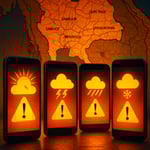
Here’s what to expect: at 14:00 sharp, mobile phones across all provinces will emit a loud alarm lasting roughly eight seconds and display an on-screen message clarifying the situation. The alert will read, “This is a test message from Department of Disaster Prevention and Mitigation (DDPM), not a real situation. No action required.” The message will appear even if your phone is muted, locked, or set to vibration — by design, so nobody in the path of danger misses it during an actual emergency.
DDPM officials stressed the alert is strictly a test — not a warning about real danger — and urged the public not to panic. The Bangkok Metropolitan Administration (BMA) likewise asked people to spread the word to family and neighbors, especially older relatives who might be startled by an unexpected blare. Think of it as a drill for your phone rather than your nerves.
The exercise aims to simulate conditions similar to natural disasters, such as earthquakes, allowing authorities to observe how different phone models and mobile networks respond. Suriyachai Rawiwan, Director of the BMA’s Disaster Prevention and Mitigation Office, said the test builds on smaller-scale trials conducted last year. “We’ve adjusted the system based on feedback,” Suriyachai noted, “so this nationwide run will help us fine-tune coverage, speed and reliability.” The goal: faster, clearer messages when seconds matter most.
Cell Broadcast has already proven useful in non-emergency public-health contexts. Bangkok has previously used the system to alert residents about high PM2.5 pollution levels, giving vulnerable groups a timely heads-up to avoid heavily affected areas. That kind of targeted, immediate communication is increasingly valued in a city where air quality, weather and other risks can shift quickly.
If you’re wondering whether you’ll be inconvenienced afterward — you won’t. Phones can be used normally once the eight-second alarm finishes. The DDPM asks only that people remain calm, check in with friends and family if they’re concerned, and report anything unusual through official channels rather than amplifying alarm via social media rumors.
For authoritative updates about the test or future alerts, follow DDPM’s official outlets: the 1784 hotline, LINE (@1784DDPM), Facebook, and X (@DDPMNews). Those channels will carry confirmations, troubleshooting guidance and any follow-up information if adjustments are needed after the test run.
On a related note, the BMA is working on another public-health measure: expanding its work-from-home (WFH) program to 300,000 participants next year to help cut PM2.5 levels across Bangkok. It’s a reminder that emergency planning, pollution mitigation and everyday urban policy increasingly intersect.
This nationwide test is as much about people as it is about technology. The message is simple: better prepare systems now so communities can act fast and confidently when real emergencies occur. So when your phone gives that unexpected chime at 2pm, take a breath, read the notice, and maybe give an elder in your family a quick call to say, “It’s just a test.”
And if you’re curious afterward — did your device respond properly? Did your neighbor’s phone stay silent? — let authorities know through the DDPM channels so they can patch weak spots. After all, the quieter we keep the panic and the louder we make the system’s reliability, the safer everyone will be.

















My phone screamed so loud I thought the apocalypse had begun. I get why the alert bypasses mute, but eight seconds is long and startling. A gentler test tone or pre-notice might keep elders calm.
It bypasses mute by design so nobody misses a real emergency, that’s the whole point. Still, many people will be frightened, especially if they haven’t heard about the drill. Authorities should use multiple channels to warn the public beforehand.
Good point — multiple channels would help. Maybe SMS reminder a day before and a community hotline call for elders.
If people panic over an 8-second beep they need resilience training, not censorship. In real disasters seconds save lives, and the system could be the difference between safety and tragedy. Let’s focus on education rather than complaining.
Cell Broadcast can reach thousands simultaneously without overloading networks, so it’s ideal for rapid warnings. This nationwide test is essential to measure delays, formatting across devices, and carrier compliance. I hope they publish the performance metrics so researchers can analyze results.
Latency and interoperability are crucial; if the message reaches some devices 30 seconds late, that’s a problem. I want to know which carriers and phone models underperformed in previous trials. Transparency will build public trust and help vendors fix firmware issues.
They mentioned adjusting the system after last year’s trials, which is encouraging. Still, ‘adjusted’ is vague without data on false positives and delivery rates. Independent audits would reassure civil-society groups.
I remain uneasy about ‘location-based’ tech in the hands of governments. How do we ensure the system isn’t repurposed for surveillance or political control? Legal safeguards, audits, and limits on data retention should be spelled out.
Broadcast messages are sent to cell towers and not to individual trackers, which reduces privacy risks. But the legal framework must be explicit to prevent mission creep. Citizens should demand clear statutes and accountability mechanisms.
I was in class and my phone blasted so loudly everyone jumped. The teacher thought it was a prank and then had to explain it was a test, which wasted class time. Next time the school should get a heads-up so kids aren’t startled.
We had to stop the lesson and calm students, and many parents called the school confused. A formal notice to educational institutions would prevent disruption. It would also allow teachers to use the moment as a civics lesson about disaster preparedness.
A civics moment is a good idea—we could teach kids how alerts work and why they’re important. But practical notices first, please. If schools are warned teachers can plan a short activity around the test.
This feels like a slippery slope — first it’s tests, next it’s constant nudges and surveillance disguised as safety. Citizens should demand technical transparency before accepting widespread, unavoidable alerts. I don’t trust vague reassurances without access to code, logs, and independent oversight.
Exactly. Today ‘test’, tomorrow mandatory geo-fences and curfews controlled through your phone. Wake up people and read the small print before you accept it.
I’m not into conspiracy, I just want clear limits and democratic oversight. Technology without checks often gets repurposed. Let’s push for an independent oversight board with technologists and civil-rights reps.
Stop the fearmongering—this tech is standard in many countries and literally saves lives during floods and tsunamis. Emergency communication isn’t the same as surveillance if it follows strict rules. We need a balanced debate rather than alarmist takes.
Using Cell Broadcast for PM2.5 alerts is a smart public-health application that can protect people with asthma or heart conditions. However, the system should allow some customization so vulnerable users aren’t overwhelmed by non-critical messages. I hope the BMA explores targeted thresholds and optional opt-ins.
Customizable filters would be ideal, but can Cell Broadcast support that technical granularity or is it purely geographic and all-or-nothing? Maybe combine broadcast with an opt-in app for personal thresholds. That way, broad alerts warn everyone while apps give personalized guidance.
Combining broadcast for area-wide emergencies with apps for personalized alerts seems pragmatic. It respects both universal coverage and individual needs.
As part of BMA we briefed neighborhoods beforehand, yet many elders still called to ask if it was real and what to do. Community outreach clearly needs to be more thorough and repetitive. We’re piloting volunteer hotlines to call older residents before tests.
Public briefings help but many elderly don’t use LINE or social media, so word-of-mouth and phone calls work better. Community volunteers can bridge the digital divide. Funding and coordination for such programs are the tricky parts that must be solved.
We’re seeking funding and coordinating with temples and community centers to spread the word. Volunteers will get basic scripts so messages are consistent.
Cell Broadcast is technically robust because it uses the network layer, but carrier implementations vary and some vendor ROMs ignore or mis-handle alerts. This test should identify legacy devices and firmware problems. I hope carriers will push OTA updates and manufacturers will prioritize compliance.
Fragmented Android builds and outdated baseband firmware are real obstacles, and some operators have custom settings that interfere with broadcast channels. The authorities should collect device-level delivery stats to map gaps. That data will tell us which manufacturers need to issue fixes.
Agreed, a compatibility matrix and public delivery rates would be useful so we can diagnose whether silent pockets are due to devices, carriers, or user settings. Without that, follow-up patches are guesswork. Public data encourages accountability and faster fixes.
My heart was racing and I thought someone had broken into the house when the phone blared. I don’t use LINE much, so I didn’t get any pre-notice and my grandson wasn’t home to tell me. Tests like this are useful, but please include more reminders for seniors.
Call your family and tell them to put up a note or set preferences for test messages, but also insist officials do more outreach. Many seniors are isolated and need direct phone calls or community visits. This is a social problem as much as a technical one and requires long-term community investment.
A phone call from a volunteer before the test would have calmed me down. Please BMA, make that happen next time.
Stay calm and follow official channels; rumors on social media can escalate faster than the alert itself and cause unnecessary panic. The DDPM’s instruction to check the 1784 hotline and official social accounts is how we verify situations. We’re coordinating with telecoms to improve speed and accuracy of future alerts and to streamline verification processes.
Official channels haven’t always been the fastest, which is why people turn to social media for real-time updates. But social platforms are noisy and rife with misinformation, so we need verified feeds and better signal-to-noise. Authorities must be faster and more transparent to regain trust.
We’re testing methods to push verified content onto social platforms concurrently with cell broadcast. That should reduce the vacuum that misinformation fills. We welcome feedback on which platforms and formats people trust most.
Expanding WFH to reduce PM2.5 exposure is laudable but raises equity concerns, especially for low-income workers who can’t WFH. Policy should be accompanied by subsidies, job protections, and investment in broadband for disadvantaged groups. Otherwise, it’s a nice slogan that leaves the most vulnerable behind.
WFH reduces emissions for some sectors but not all, and it can exacerbate inequality if not paired with redistributive measures. The labor market and urban planning must be rethought together, including support for informal workers. Pricing externalities through pollution taxes and funding remote-work infrastructure could be part of a holistic package.
Agreed, a package approach is needed and pilots can reveal unintended consequences. Let’s watch policy design closely rather than just cheer headlines.
I appreciate the idea of public safety, but I worry about one-size-fits-all alerts. Some communities might need different messaging or timing. Localized planning matters as much as national tests.
I hope rural areas were tested properly too because network gaps are real. An urban-centered rollout doesn’t help people in remote provinces. Coverage mapping should be transparent.
If the alert saved one life, it was worth the noise. But drills should be less startling and better explained. People will cooperate when they understand the benefits.
In China similar systems have worked well for floods, but governance context differs. The tech isn’t magical—it needs institutional capacity and trust. Thailand should adapt best practices, not copy blindly.
Eight seconds feels arbitrary; why not a 3-second gentle tone for tests and a harsher tone for actual emergencies? That would reduce panic while preserving noticeability. Small UX tweaks matter.
I missed it because my phone was on airplane mode—so the system isn’t foolproof. People shouldn’t assume they always get alerts. There must be multiple redundant channels.
Also worth noting: older devices might never get updates, so there will always be a tail of non-compliant phones. Policy could subsidize simple firmware fixes or exchange programs for the most vulnerable users. Otherwise coverage will be uneven.
Please make sure the message appears in Thai and in English in tourist areas. Tourists might panic if they don’t understand. Multilingual support is a small detail that improves safety.
As a guide, I had to reassure guests that it was a test; better outreach to hotels and tourist businesses would prevent alarm. Tourism depends on perceived safety and orderly info. A pre-notice to the hospitality sector would help.
PM2.5 warnings are lifesaving for patients with respiratory issues, and integrating health services with alerts could trigger pharmacy and clinic readiness. Alerts could include simple instructions like ‘mask recommended’ to be actionable. Health authorities should be part of the alert-design team.
I’m skeptical that people will use the official channels to report failures—they’ll post on social media instead. Authorities should monitor both and respond quickly to correct misinformation. Engagement matters more than just sending alerts.
A national test is a good stress test, but they should publish anonymized delivery logs and post-mortem reports. Data drives improvement and public confidence. Without evidence, claims of ‘adjustment’ ring hollow.
Can they combine Cell Broadcast with message localization—for example, different wording for seniors or businesses? One message fits all less well than a few tailored templates. Tech allows variants if policy permits it.
I liked that phones return to normal use right after the eight seconds. Quick disruption and clear labeling ‘this is a test’ are important. Still, more predictable scheduling and reminders would reduce irritation.
The hotline 1784 is good, but it needs sufficient staff during and after tests to answer calls. Empty hotlines or long waits undermine trust. Invest in capacity, not just systems.
I agree with Joe—education over panic-mongering. If the system is made reliable and transparent, people will learn to interpret the tone. The loudness is preferable to silence in a real emergency.