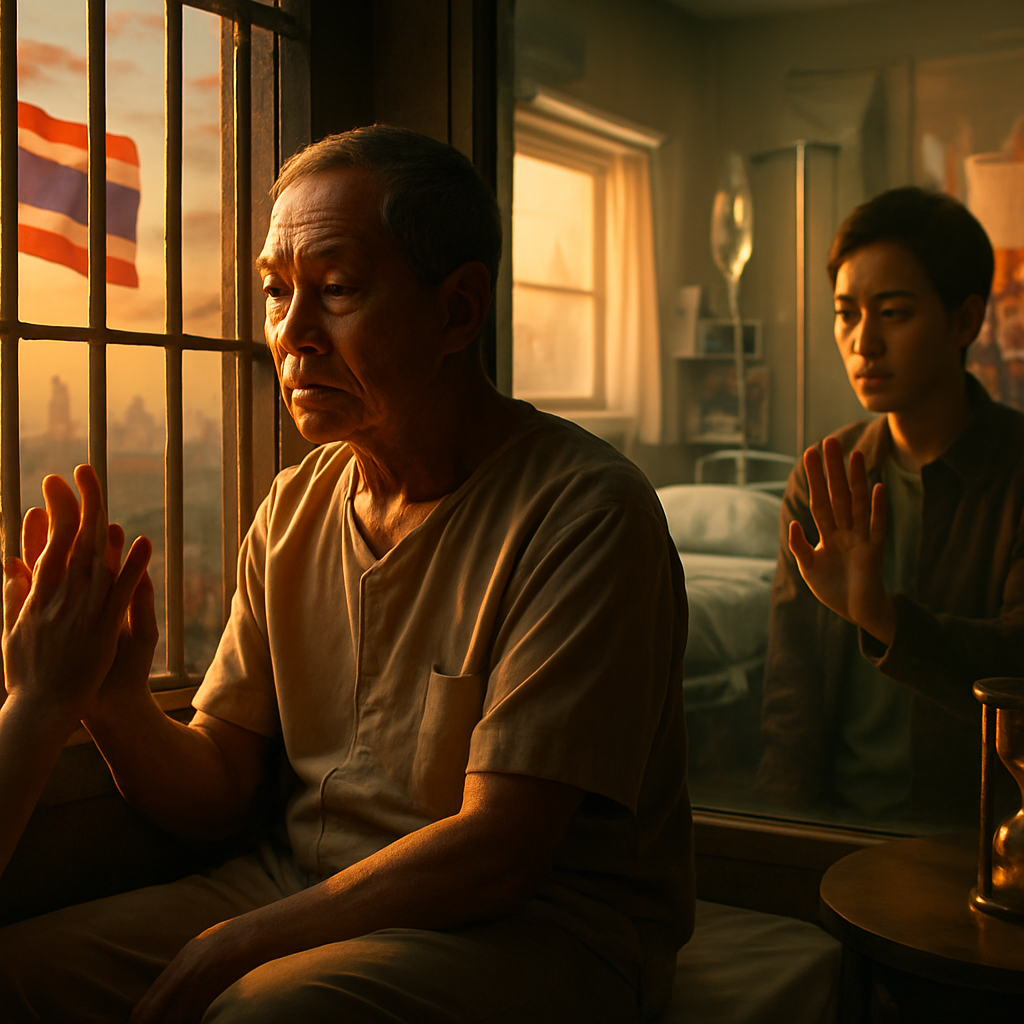
Thaksin Shinawatra — once Thailand’s most polarising prime minister, now an inmate whose next move could reshape the political conversation — may be eligible for parole as soon as May, the Department of Corrections has confirmed. It’s a timeline that has turned a familiar drama into a ticking calendar: returned home in August, detained under special hospital arrangements, sentenced to one year and moved to Klong Prem Central Prison on September 9. Now, with the arithmetic of prison regulations pointing to an eight-month threshold, many are watching to see whether May will bring freedom, furlough, or another twist.
From hospital ward to prison cell: the controversy that followed
Thaksin’s re-entry into Thailand last year didn’t play out like a discreet legal handover. He was taken into custody and, under unusually discreet arrangements, transferred to the 14th floor of the Police General Hospital. That decision kicked off a heated public debate: critics questioned whether his medical condition justified a hospital-based custodial stay and whether serving a sentence in hospital conditions stretches the law’s intent. The court ultimately moved the case along and handed down a one-year prison sentence, setting the clock on his detention from early September.
Family visits, morale and a man keeping tabs on politics
On January 15, Pidok Suksawat — the husband of Thaksin’s daughter, Paetongtarn Shinawatra — paid his 32nd family visit since the former PM’s imprisonment. The meeting lasted roughly 30 minutes, and Pidok emerged to tell reporters that Thaksin’s spirits appear steadier than some feared. “He’s not lonely,” Pidok said, noting improvements in the former premier’s mental health and a renewed engagement with the political pulse of the country.
According to Pidok, Thaksin is closely following political news, candidate debates, and developments tied to the upcoming General Election — all of which seem to buoy him. He also reportedly sent words of encouragement to candidates from the Pheu Thai Party, expressing how heartened he felt by their campaigns.
Beyond the political theatre, Thaksin has remained attentive to national tragedies too. Pidok said the former PM offered condolences over the fatal crane collapse in Nakhon Ratchasima — an incident that killed dozens after striking a moving train — although he did not elaborate further on the disaster.
How parole timing is calculated
The Department of Corrections, speaking to Channel 3, laid out the mechanics: inmate classifications and promotions are typically reviewed four times a year — in March, April, August and December. While Thaksin has been assessed as a well-behaved inmate, his review didn’t make the cut for the August and December cycles. Still, the department confirmed he meets the criteria for parole consideration.
Under current rules, inmates serving a one-year sentence may apply for parole after serving two-thirds of their term — which translates to eight months behind bars. Given that Thaksin has been detained since September 9, that calculation puts possible parole eligibility squarely in May. Officials say further details about the parole process will be released in due course, leaving the public to ponder what form the announcement might take.
Politics, optics and what May could mean
Even the suggestion of a parole date is politically charged. Thaksin’s name remains a lightning rod in Thai politics — adored by some for his populist policies and reviled by others for controversies that stretch back decades. His attention to campaign activity and visible encouragement for Pheu Thai candidates ensure that, even behind bars, his influence is felt.
Whether May becomes a moment of reconciliation, renewed political campaigning, or a fresh round of legal wrangling, the weeks ahead promise to be watched closely. For now, family visits keep the human element front and centre: a man who once governed a nation, counting the days, watching debates on television, sending encouragement, and following headlines about tragedies that touch the country he once led.
As the calendar pages turn toward May, Thailand will be tracking not only the legal steps that determine Thaksin’s status, but also how that status intersects with a charged election atmosphere and a public still divided over his legacy.


















May parole for Thaksin will ignite protests and celebration in equal measure. The timing feels blatantly political to me and will test Thailand’s institutions. Authorities are playing with fire if they ignore optics.
This is a legal technicality, not a gift — two-thirds of the sentence is the law. But hospital stays for VIPs expose double standards that people won’t forget.
You sound like you’re defending the system as-is; it’s obvious he’s getting soft treatment and that angers a lot of citizens.
I didn’t expect the hospital custody either, and I’m skeptical about secrecy. If the parole process is open and by the book, fine, but fairness is the key. I’ll be at the protest if it’s staged.
This smells like a political reward, not justice. Remember his influence over Pheu Thai and how that reshaped policies. Parole during an election would be shameless and predictable.
Shameless? If he met the legal criteria, it’s not a reward, it’s law. Millions still support his policies and that matters for voters.
People loved his vote-buying too and that’s not something to celebrate. Populism isn’t an excuse for eroding institutions; accountability matters.
If you think vote-buying is trivial, you’re missing the larger point about rule of law. Corruption weakens institutions and harms future governance. I want policy, not patronage.
Thaksin’s return and possible early release threatens democratic norms in my view. He still runs campaigns from behind bars and that distorts politics. The country can’t keep toggling between legalism and populism.
Democracy requires both rule-bound institutions and accountable leadership. Parole laws exist for a reason, but applying them with clear, documented criteria is vital. The optics can be managed by transparency; otherwise every legal move becomes political theatre.
Transparency would help, but I fear standards will be bent for political convenience. Citizens need equal treatment to trust outcomes.
Thaksin gave poor people a lifeline with healthcare and subsidies; many forget that quickly. Parole would be a victory for ordinary Thais who benefited. You can’t ignore the material improvements some communities saw.
Those programs were popular, but they came with costs to governance and transparency. Populism can hollow a state if left unchecked, and nostalgia shouldn’t trump institutional integrity.
You sound elitist when you dismiss what people feel in their daily lives. If people’s living standards improved, it’s valid politics and deserves respect.
Calling it elitist hurts the debate; tell poor families their rice subsidies didn’t matter. The policy impacts are real even if you dislike the man behind them.
I don’t like jail for old people. He said nice things before and helped some people. Maybe he should be let go because he’s sick.
Age and health complicate incarceration, but standards must be applied evenly to maintain public trust. The hospital custody was exceptional and unsettled many Thais. If parole is granted, the authorities should publish clear reasons so the electorate can judge.
I want to know why rules change; it doesn’t feel fair without answers.
The arithmetic is simple: two-thirds of a one-year sentence is eight months, so May checks out on paper. Laws are clear, yet enforcement must be consistent. The corrections department’s scheduling just looks oddly convenient to some.
Even the mention of parole puts pressure on election narratives and will be weaponised by all sides. Parties will spin it as proof the system is biased or finally just. This will drown out policy debates.
Political scientists note that high-profile paroles during election cycles can sway undecided voters, especially in clientelist systems. Media framing and party machines determine whether a release energises a base or provokes backlash. If Thaksin’s supporters mobilise, turnout effects could be decisive; monitoring is essential.
So you’re saying it’s strategic and not purely legal — cynical but probably true. We should watch turnout patterns closely.
This was prearranged by palace courtiers and power brokers; don’t be naive about the choreography. Hospital stays, quiet reviews — it’s all choreography to stabilize certain factions. Every move seems staged for ‘stability.’
Please avoid unverified conspiracy claims and stick to verifiable facts or clearly flagged opinion. We welcome strong debate but not baseless accusations.
Patterns are evidence: VIP hospital placements, selective review cycles, friendly statements from allies. Ask the families harmed by past corruption — silence doesn’t equal innocence.
The article’s mention of Thaksin expressing condolences over the crane collapse felt like image management to me. Did he genuinely enquire about victims, or was that a rehearsed PR line? The sincerity of gestures from imprisoned leaders matters to public morality.
It’s humane to show concern even from prison, and we should separate gestures from political choreography. Empathy doesn’t erase guilt, but it’s still a human act worth noting.
True, but when politicians perform empathy, it often doubles as strategy. We have to be wary and demand substance behind the sentiment.
Under Thai corrections law, the two-thirds rule is standard for parole eligibility, and classification cycles matter. The discretionary element lies with the parole board and review timetables. Given quarterly assessments, timing may reflect administrative logistics more than politics, but opacity invites suspicion. Transparency is non-negotiable if institutions are to retain credibility.
Legalese won’t comfort those who saw VIP treatment in hospitals; publish the paperwork and health assessments. Prove it’s routine and not preferential.
Agreed, publish assessments and medical evaluations where possible and invite impartial observers to audit the process. That would restore some trust.