Thailand

Typhoon Yagi's Impact on Thailand: Heavy Rain and Windstorms Forecasted for Northern Regions

As a woman casually strolled past a newly fallen tree—courtesy of Typhoon Yagi's ferocious impact—Hanoi, Vietnam felt the lingering aftershocks on Sunday. The Reuters-captured moment symbolized nature's unpredictable…
Typhoon Yagi's Impact on Thailand: Heavy Rain and Windstorms Forecasted for Northern Regions

As a woman casually strolled past a newly fallen tree—courtesy of Typhoon Yagi's ferocious impact—Hanoi, Vietnam felt the lingering aftershocks on Sunday. The Reuters-captured moment symbolized nature's unpredictable might.

Weather enthusiasts and forecasters keep a vigilant eye on what's unfolding. In Thailand's North and upper Northeast, the remnants of Typhoon Yagi are flexing their muscles. Known on Sunday as a downgraded tropical storm since its departure from the "severe tropical storm" title, Yagi was in no mood to retire quietly. By 7 AM, Yagi had convoluted its initial path to Vietnam, and forecasters noted it was trekking westwards with a plan to devolve further into a depression, ultimately morphing into a low-pressure area.

So what does this mean for Thailand? The Meteorological Department's insights are anything but inspiring for sunseeking tourists. The North and upper Northeast regions are on course to brave heavy downpours and windstorms. If you were hoping for a serene, sun-dappled Sunday, better sit tight.

Simultaneously, the strong monsoon system reigning over the upper Andaman Sea, Thailand, and the upper Gulf of Thailand, adds another layer of complexity. We're talking intense rainfall hammering the East and the western coast of the South. Break out those rain boots and umbrella hats, folks, because the sky is falling.

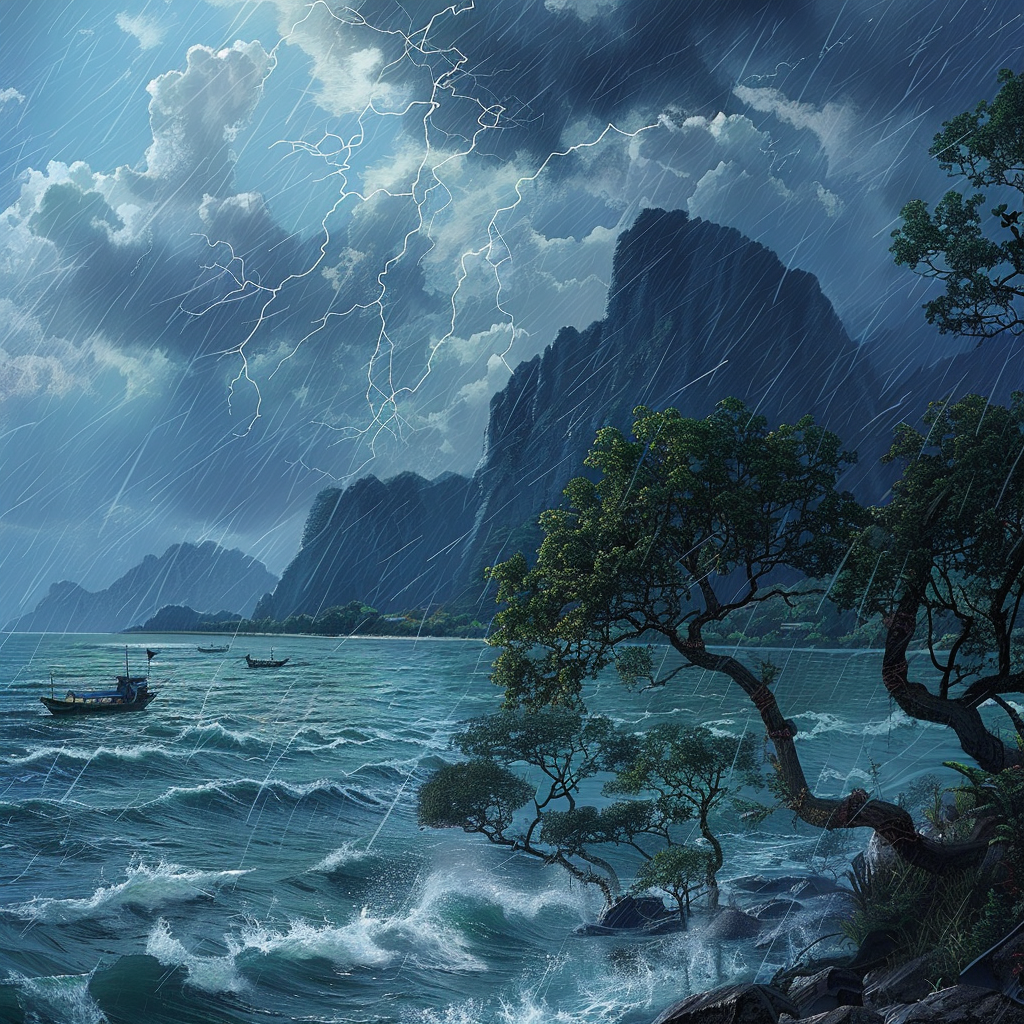
On a more practical note, the Meteorological Department has issued a firm advisory: small boats, especially in the upper Andaman Sea and the upper Gulf of Thailand, are better off hugging the shorelines today. Neptune's wrath is no joke, and cautious living beats a shipwreck saga any day.

So there you have it—Mother Nature's capricious ballet continues, her pirouette now painting the skies of Southeast Asia. Let's hope for some respite as Yagi gracefully exits, stage west.


36Comments
Sort by:
TNTommy Nguyen··1 pts · 4 replies
TN
Tommy Nguyen
It feels like every year there's another big storm around this time. Why don't they have better plans for these situations?
1
AAnna··1 pts
A
Anna
It's hard to prepare for nature's unpredictability. Building proper infrastructure costs a lot of money.
1
DLDavid L·1 pts
DL
David L
True, but how many lives could be saved if governments allocated more resources to disaster preparedness?
1
TNTommy Nguyen·1 pts
TN
Tommy Nguyen
Exactly, infrastructure is important but governments seem to always find money for other things instead.
1
WWeatherGuru123··1 pts
W
WeatherGuru123
Actually, there have been improvements, but weather patterns are becoming more erratic due to climate change.
1
JJessica··1 pts · 2 replies
J
Jessica
Honestly, people just need to heed warnings and stay safe. I don't understand why some folks take such risks during storms.
1
MMick··1 pts
M
Mick
Some people don't have the luxury to leave their homes. It's not as simple as just 'staying safe'.
1
BMBecky M·1 pts
BM
Becky M
Yeah, especially for those living in vulnerable areas. Evacuating isn't always easy or affordable.
1
GGrower134··1 pts · 3 replies
G
Grower134
The problem isn't the storm but the human activities that worsen its impact. Deforestation, poor urban planning, you name it.
1
EEcoWarrior··1 pts
E
EcoWarrior
Exactly! We've altered natural barriers and systems that helped control such events.
1
TNTommy Nguyen·1 pts
TN
Tommy Nguyen
Governments should enforce better environmental regulations. Short-term gains always overrule long-term safety.
1
BJBetty J··1 pts
BJ
Betty J
Why don’t more people realize this? We’re causing our own problems and then acting surprised.
1
MMichael··1 pts · 2 replies
M
Michael
I feel for the fishermen who can't go out because of these storms. Their livelihoods are at stake.
1
SSandy··1 pts
S
Sandy
True, but what's worse: missing a few days of work or losing your life? Safety first.
1
JKJoey K··1 pts
JK
Joey K
The government's compensation program needs to be better so that people don't have to risk their lives.
1
LLiam··1 pts · 3 replies
L
Liam
Is it just me or do these weather reports always sound like end-of-the-world scenarios? Some calm language would be nice.
1
SSarah··1 pts
S
Sarah
They need to get people to take it seriously though. If they downplay it, people won't prepare adequately.
1
LLiam·1 pts
L
Liam
Good point, but there has to be a balance between urgency and causing panic.
1
CChris··1 pts
C
Chris
Drama sells, just like in any news report. It's no different here.
1
MRManuel R··1 pts
MR
Manuel R
Typhoon Yagi's path shows how interconnected our region is. Events in one country can have drastic impacts on another.
1
MMargaret··1 pts · 1 reply
M
Margaret
I just hope after the storm passes, there will be proper relief efforts for those affected. That's often where the system fails.
1
JKJoey K··1 pts
JK
Joey K
Yes, and not just immediate relief but long-term rebuilding and support.
1
HBHannah B··1 pts · 1 reply
HB
Hannah B
I was planning to visit the North this week. Guess that's out of the question now. Disappointed but safety first.
1
MMick··1 pts
M
Mick
Smart decision. Sometimes plans change and it sucks, but it's not worth the risk.
1
JPJonathan P··1 pts · 3 replies
JP
Jonathan P
Why aren't more countries investing in technology that can predict and mitigate the impact of these storms?
1
DKDr. Karen··1 pts
DK
Dr. Karen
Some are, but it's incredibly expensive and requires international collaboration.
1
JPJonathan P·1 pts
JP
Jonathan P
International collaboration always seems to be the problem. Countries need to work together on these issues.
1
EEcoWarrior··1 pts
E
EcoWarrior
The focus should be on prevention too. Mitigating impact without addressing root causes is short-sighted.
1
BBobby··1 pts
B
Bobby
It's all because of climate change. Deny it all you want but look at the increasing frequency and intensity of these storms.
1
GGail··1 pts
G
Gail
Every time a storm hits, it showcases how fragile our world is. We need to be more prepared for natural calamities.
1
LDLarry D··1 pts · 2 replies
LD
Larry D
Do you think the government advice about staying off the water will be followed? People are stubborn.
1
MMick··1 pts
M
Mick
It depends. Some will heed the advice, others will think they're invincible.
1
SSandy··1 pts
S
Sandy
Cultural factors play a role too. In some places, people are more likely to follow official advice.
1
NNancy··1 pts · 2 replies
N
Nancy
What happens to the wildlife during such massive storms? The impact on animals is often overlooked.
1
AAnimalLover··1 pts
A
AnimalLover
Some species are incredibly resilient, but many suffer, especially those in disrupted ecosystems.
1
NNancy·1 pts
N
Nancy
It’s heartbreaking. Wildlife organizations need more support during such crises.
1
