Adm Adung Pan-Iam Leads Royal Thai Navy in Rescue Mission Amid Myanmar Turmoil
In a tale that feels plucked from the pages of a high-seas adventure, the Royal Thai Navy stands ready, a guardian watching over the tumultuous waters of the Andaman Sea. Their mission? A potential rescue operation of…
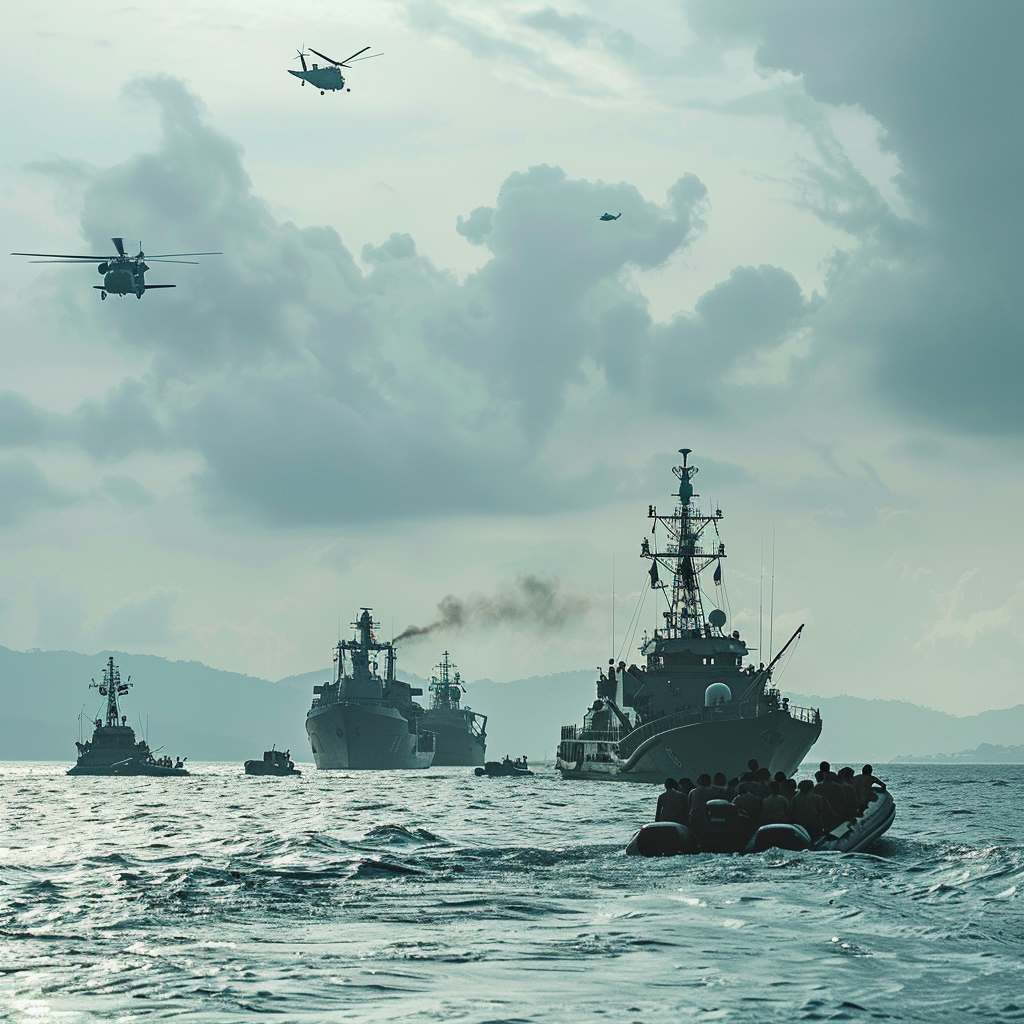
In a tale that feels plucked from the pages of a high-seas adventure, the Royal Thai Navy stands ready, a guardian watching over the tumultuous waters of the Andaman Sea. Their mission? A potential rescue operation of cinematic proportions, prepared to whisk Thais away from the escalating turmoil in Myanmar. At the helm of this operation is none other than Navy chief Adm Adung Pan-Iam, a name now synonymous with vigilance and preparedness. He's directed the Region 3 commander, the custodian of the Andaman coast's safety, to ready a quartet of vessels for a mission of hope.
Leading this maritime brigade are two frigates, the HTMS Saiburi and HTMS Prachuap Khiri Khan, flanked by a pair of landing ships, the HTMS Mannok and HTMS Mattaphon. Like knights of the sea, these four vessels stand by, their engines humming with anticipation, ready to dart into action. Their goal? To ensure the safety of Thais caught in the crossfire of a conflict that shows no sign of abating, safeguarding lives against the backdrop of a power struggle between Myanmar's government army and spirited resistance forces.
Meanwhile, a ray of hope pierces the shadow of conflict along the borderland. The battle-torn area of Mae Sot and Myawaddy has seen a momentary respite, a brief exhale after the storm. Just when the specter of chaos loomed large, an unexpected ease descends, a testament to the unpredictability of human conflict.
Yet, the tales of bravery continue to unfurl. About 120 resistance fighters, in a daring display of valor, captured and set ablaze a government military base, a beacon of defiance that lit up the night sky, visible all the way from the Thai frontier. This act of rebellion occurred in the Dawei region, a mere stone's throw from the tranquility of Ban Thai Muang in Sai Yok district, where the air now carries the weight of impending history.
In these times of unrest, the saga of migration takes a hopeful turn. The Labour Ministry, in a move echoing tales of sanctuary and safety, has extended a hand of friendship to Myanmar migrant workers. No longer confined to the perilous journeys by land or sea, these workers can now take to the skies, flying from the heart of Myanmar, Yangon, to the bustling metropolis of Bangkok. This initiative, a brainchild of a memorandum of understanding between the Thai and Myanmar governments, offers a beacon of light amidst the shadows of conflict.
This airborne exodus is more than a journey; it's a lifeline, offering a semblance of normalcy and security in a world upended by strife. The skies, unmarred by the scars of battle, provide a passage of peace, a much-needed respite for those seeking refuge and a chance to rebuild in Thailand. Anchoring this operation of hope is Somchai Morakotsriwan, the architect behind this aerial bridge of compassion, ensuring every landing is not just an arrival but a promise of a new beginning.
Yet, the journey doesn't end with a touchdown at Don Mueang airport. It unfolds further, weaving through the steps of health checks and vital training, each step a testament to the resilience and indomitable spirit of the human will to thrive against odds. In these turbulent times, the story of the Royal Thai Navy's readiness, the brief calm at the border, and the opening of the skies for migrants interlace into a narrative of hope, courage, and humanity's enduring quest for peace and safety.



Comment verification
Step 1 of 3
Verify your email once to publish your comment. Your email is never shown publicly.
Enter the 6-digit code sent to .
Choose the display name shown next to your comments.