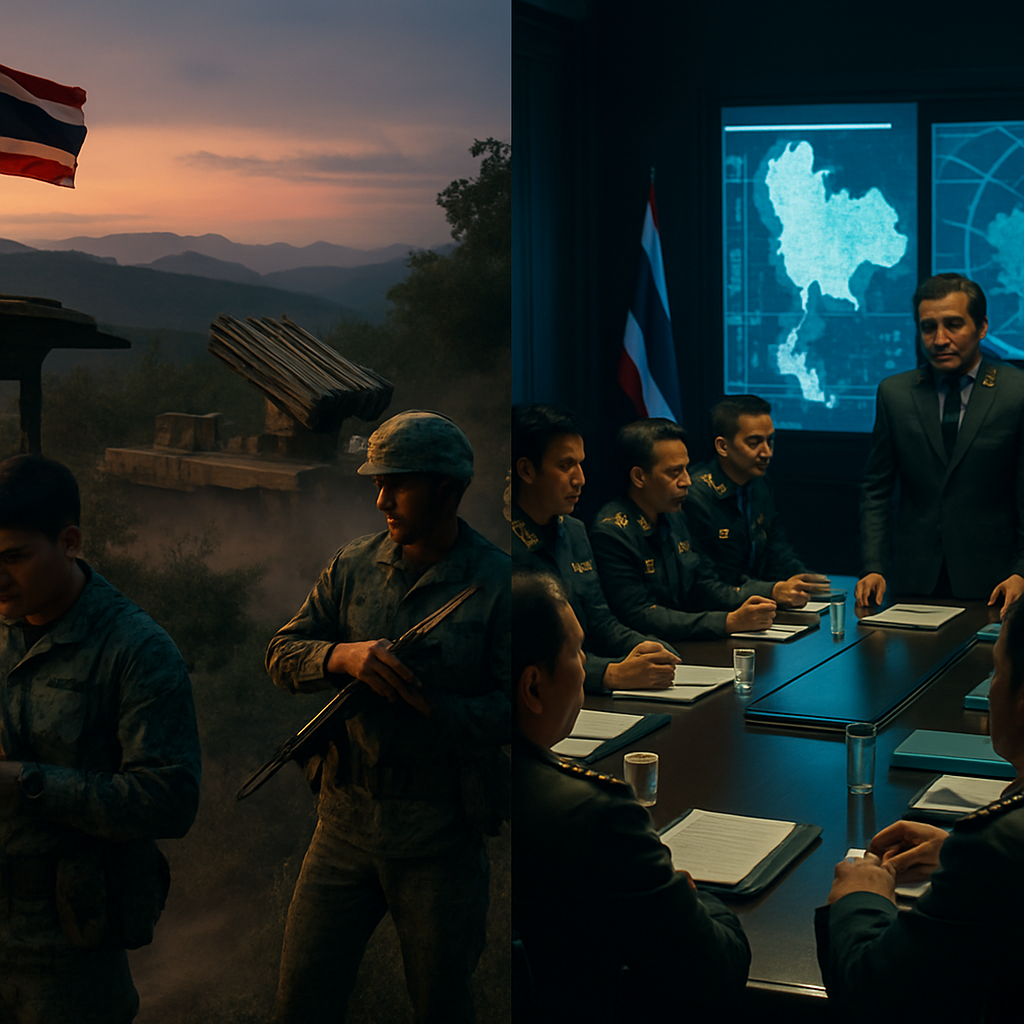
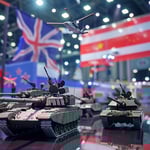
When plans meet the rumble of armaments, schedules change fast. Reporters learned that Prime Minister Anutin Charnvirakul abruptly cancelled a planned visit to the Thai–Cambodian border on Monday, December 8, after clashes erupted at several points along the frontier and Cambodian forces were seen repositioning heavy weaponry—RM-70 multiple rocket launchers, tanks and BM-21 systems—closer to Thai-held areas.
Rather than making the trip north, Anutin convened a high-priority security briefing at Government House at 9 a.m., summoning the country’s security agencies to take stock of an increasingly tense situation. The picture emerging from the Second Army Area’s accounts reads like a tactical map coming to life, sector by sector.
According to the Second Army Area, Cambodian troop movements and orders were reported in several key sectors opposite Thailand’s border provinces:
- Opposite Chong Sai Taku, Ban Kruat district, Buri Ram: Cambodian troops based at Chub Koki Khangkoet village reportedly moved landmines into covered storage. The relocation suggests either consolidation of defensive resources or preparations to limit accidental detonation during movement—either way, it’s an unmistakable sign of heightened logistical activity.
- Opposite Phanom Dong Rak district, Surin: Soldiers stationed around the Prasat Ta Muen Thom complex claimed to have shot down a Thai drone. Unmanned aerial vehicles have become a staple of modern border surveillance, and any loss—real or alleged—adds a new layer of friction to patrols and reconnaissance missions in the area.
- Opposite Kantharalak district, Si Sa Ket: Cambodian commanders reportedly ordered frontline troops to refrain entirely from using the internet or taking photos during operations that could be posted on media platforms. Units under higher command were also told to ensure that frontline personnel thoroughly clean and maintain weapons, shelters and bases—preparations that point toward forthcoming inspections of combat readiness by higher headquarters.
- Opposite Chong Bok in Nam Yuen district, Ubon Ratchathani: Cambodian commanders reportedly ordered all troops who had left their bases to return between December 9 and 10, a directive that could indicate a consolidation of forces or a pause before any next moves.
Thai security sources added a tactical detail that raises stakes: if Cambodian forces decide to fire BM-21 rockets, they’re expected to launch from Choam Khsant District in Preah Vihear province—directly opposite Kantharalak district in Si Sa Ket. Both the BM-21 “Grad” and the Czechoslovak-made RM-70 are multiple rocket launcher systems capable of delivering rapid salvos over a wide area, and their movement closer to the frontier is a sobering reminder of how quickly border skirmishes can escalate.
The cancelled visit and emergency meeting underscore how delicate the situation is. For Bangkok, sending the prime minister to a flashing frontline would have been a potent symbol of resolve—but also a risk. Opting to hold an urgent meeting instead signals a pivot toward coordinated, centralized decision-making, at least for the immediate term.
On the ground, the orders to go dark online and refrain from posting images reflect a modern battlefield reality: information is part of the conflict. Social media and open-source footage can shape public perception and even influence tactical behavior, so commands to limit digital traces are unsurprising—if also worrying for transparency.
Observers watching the border will likely focus on a few immediate questions: Will those stored munitions and rocket systems be fired? Are the troop returns a de-escalatory gesture or simply a tactical repositioning? How will Thailand’s security agencies respond to the observed movements, and what measures will the government announce following the Government House meeting?
For now, residents in border provinces and officials monitoring the frontier are bracing for a week of uncertainty. The movements reported by the Second Army Area read like preparatory chess: mines secured, drones contested, troops ordered to clean and report, and artillery positioned within striking distance. Whether this becomes a short-lived flare-up or the spark of a more sustained confrontation depends on decisions made behind closed doors—decisions Prime Minister Anutin and his security chiefs were summoned to make at 9 a.m.
As the situation unfolds, expect official updates, heightened patrols, and increased diplomatic noise. In volatile border zones, every repositioned launcher and every order to maintain silence online sends a message. For now, the most visible one is that both sides are taking the developments seriously—which, in military terms, means nothing is off the table.














Cancelling the PM’s visit was the right call — sending him to a tense frontline is a political optics move, not a solution. But now the public will demand answers and that pressure could make things worse. Someone should explain what ‘heightened logistical activity’ really means in plain terms.
Plain terms: they moved rockets and mines closer to the line and told troops to stop posting selfies. That sounds like preparation, not just a drill, and it’s scary for folks living nearby.
Exactly — people near the border need clear evacuation plans and timely warnings, not vague reassurances. Silent orders about social media make me worry they expect incidents they don’t want tracked.
Social media blackout always smells like hiding something to me. If both sides are quiet online, who’s left to fact-check the claims?
This reads like two armies playing chicken with artillery. The mention of BM-21 and RM-70 moving closer makes escalation a real possibility, not just a headline. Diplomacy should be running on overdrive right now.
Diplomacy is constrained when both sides have plausible deniability and domestic audiences demanding toughness. Thailand cancelling a symbolic visit reduces immediate risk but doesn’t reduce the weapons in the field.
True, symbolism matters domestically. But the leader staying put to coordinate is better if it prevents a miscalculated strike.
Calling for diplomacy is fine, but who mediates? ASEAN’s track record is weak and external powers complicate matters. Someone needs leverage to stop the hardware moving.
Why would Cambodian troops bring mines into covered storage unless they planned to move them? That seems like a red flag. We need transparency from both militaries NOW.
Or they could be securing them before relocating to avoid accidents during transit. Not every move equals imminent attack, but it is suspicious timing.
Maybe, but given drone shootdowns and artillery placement, ‘suspicious’ feels like an understatement.
Shooting down a drone is provocative and escalatory. Drones are part of reconnaissance, not just spying; taking one down risks retaliation. This could quickly spin out of control if both sides overreact.
If drones are mapping positions for artillery then they’re legitimate targets in warfare. Civilians still bear the brunt when tit-for-tat begins, though.
Exactly — military logic doesn’t mean civilians won’t suffer. That’s why restraint matters right now.
Restraint is a luxury in border disputes. Once toyed with hardware like BM-21s are in place, mistakes are inevitable.
From a strategic standpoint, ordering troops to ‘go dark’ online reflects modern operational security concerns but also reduces transparency and accountability. International law and human rights observers should press for open access. Secrecy amplifies mistrust.
Agree on accountability. However, in contested zones operational security can prevent misinformation and panic. It’s a fine balance between safety and rights.
Fine balance indeed, but defaulting to secrecy without oversight invites abuses and amplifies propaganda from both sides.
International observers could help, though access is politically sensitive. Still, a neutral third-party monitoring mechanism would defuse a lot of tension.
As someone from a border town, I hate the fear. We hear rockets can reach towns quickly. Why do leaders play chess with our lives?
A technical note: BM-21 ‘Grad’ and RM-70 have ranges that, when launched from just over the border, can threaten populated areas. Their presence is both a tactical and psychological weapon. Militarily it’s about area denial, not precision strikes.
Area denial explains the posture, but it also raises proportionality concerns if used against civilian-adjacent targets. International law considerations should inform rules of engagement.
Yes, but in real-time confrontations legal norms often lag behind operational imperatives. That’s why diplomatic pressure is crucial to prevent misuse.
And legal norms mean little if soldiers in the field get panicked orders. Training and clear command control are essential.
So basically big rockets = scary for everyone. Got it.
The PM’s cancellation looks smart tactically, but it’s politically risky; some will call it cowardice. Leaders must balance visibility with safety. I’d prefer a quick, clear contingency plan broadcast to border communities.
Also, if there’s intelligence suggesting Choam Khsant as a launch site, Thailand should harden infrastructure and preposition aid teams, not just brief in a room.
Prepositioning aid is good, but militarizing the border more will only increase local fear. Soft power measures like emergency hotlines could help.
People forget that mines moved into storage could still be lethal if shells hit depots. Moving ordnance always carries risks for civilians nearby. Transparency about storage locations would calm fears, but that’s unlikely from either side.
A point often missed: media framing shapes escalation. If outlets highlight rocket movements with alarmist headlines, political actors get pushed toward hardline responses. Responsible reporting is part of de-escalation.
Responsible reporting is rare when national security and nationalism collide. Sensationalism sells and politicians exploit it.
Precisely. Editors should verify claims like ‘drone shot down’ before amplifying them; unverified claims can be a casus belli in the public mind.
But sometimes only loud media pressure makes leaders act. It’s a double-edged sword.
A neutral monitoring mission along the border could prevent misunderstandings and provide independent verification of movements. ASEAN or the UN should push for observers now. Silence and secrecy are the worst combos in conflict zones.
ASEAN is slow and member states fear sovereignty issues. Still, a fast, limited observer presence focused on de-escalation is worth trying.
Even limited observers create space for dialogue and reduce the chance of accidental exchanges. It would be a step forward.
Observers can be targeted or ignored. Without enforceable guarantees, they only report after the fact.
Observers help with verification, but the parties must accept their findings. Otherwise it’s just another layer of contested narratives.