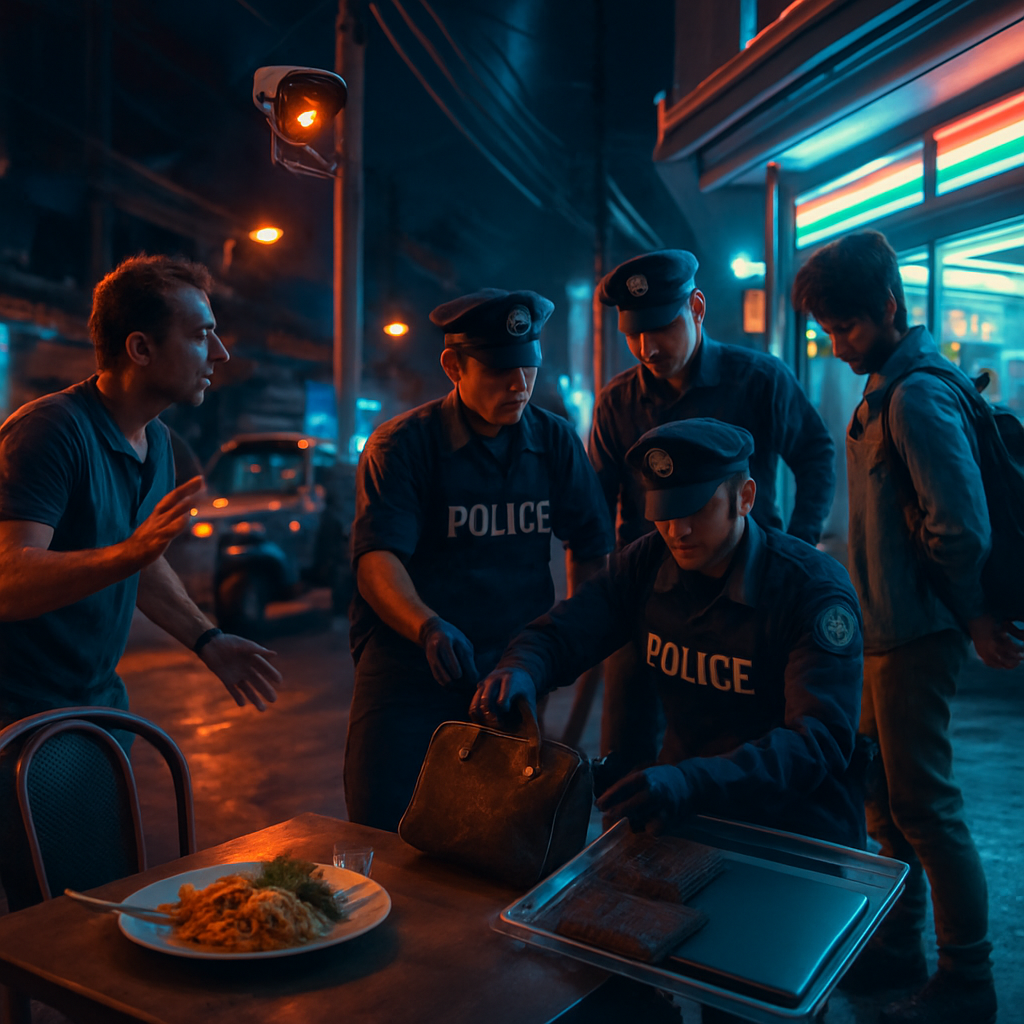
Bangkok’s Yan Nawa district served up an unwelcome reminder to tourists and locals alike on the evening of Friday, January 16, when a Chinese visitor’s luxury haul was snatched right outside a restaurant on Narathiwat Ratchanakarin Road. What started as a relaxed meal turned into a high-speed recovery mission by police — and a cautionary tale about leaving valuables unattended.
The victim reported the theft to Yannawa Police Station at around 9:45 p.m., saying she had briefly stepped away from her table and left two bags outside the restaurant for roughly 15 minutes. When she returned, one bag — containing a laptop — and another high-end Gucci bag were gone. Inside the Gucci bag were items no traveler wants to lose: a Louis Vuitton wallet, passport and debit cards. The Gucci bag itself was valued at approximately 100,000 baht.
Thanks to nearby CCTV cameras, investigators didn’t have to rely on guesswork. Footage showed a man quickly scooping both bags and making off. The suspect’s wardrobe — khaki trousers, a black long-sleeve plaid shirt layered under a light denim jacket and a black backpack — made him identifiable on camera. Within two hours of reviewing the footage, officers tracked him down.
At roughly 11:30 p.m., police arrested 45-year-old Piya Khamkao outside a convenience store on Lan Luang Road. All of the tourist’s belongings were recovered and seized. During questioning, Piya told officers he was homeless and said he had noticed the unattended bags, which prompted him to take them and flee. He was charged under Section 335 of the Criminal Law: theft at night. That offence carries a penalty of one to five years in prison, a fine of 20,000 to 100,000 baht, or both.
The case underscores how effective basic police work — CCTV review, quick identification and timely arrest — can be when evidence is clear and response is fast. It also highlights the vulnerability of travelers who leave valuables in plain sight, even for short periods, on busy Bangkok streets.
Bangkok has seen a string of theft-related incidents in recent weeks, suggesting that thieves are opportunistic and sometimes bold. On January 9, police nabbed a motorcycle thief within an hour of a theft in a car park at Suan Luang Square. Earlier in January, a Thai transgender social media influencer discovered a male bar host had broken into her home and stolen designer bags and cash. In December, two Tunisian men were arrested after allegedly snatching a gold necklace worth 150,000 baht from a British tourist, and around the same time a foreign woman was targeted by a pickpocket gang while walking on Songwat Road near Chinatown.
Those cases, paired with the Yan Nawa incident, present a clear message: whether you’re in the heart of hectic Chinatown or dining on Narathiwat Ratchanakarin Road, a moment’s inattention can be costly. Travelers are urged to keep passports and cards on their person, avoid leaving valuables unattended and use hotel safes or locked luggage when possible.
For their part, Bangkok police continue to rely on surveillance cameras and community tips to solve street crimes quickly. While CCTV isn’t a cure-all, it dramatically improves the odds of a swift arrest — and in this case, led to the recovery of all stolen items within hours.
If there’s a silver lining to this episode, it’s twofold: the victim’s belongings were recovered, and the suspect was apprehended without reported injury or further escalation. Still, the incident is a reminder to be vigilant. Luxury brands like Gucci and Louis Vuitton are easily recognizable and, unfortunately, attractive targets for thieves in tourist-heavy areas.
Whether you’re a first-time visitor or a seasoned expat, a few practical habits go a long way in Bangkok: keep bags zipped and on your person, use crossbody bags in crowded areas, don’t leave valuables on chairs or stools outside restaurants, and take digital photos of important documents like your passport before you travel. Those small steps can spare a lot of hassle — and help ensure your Bangkok memories are about temples, tuk-tuks and street food, not theft and paperwork.
Authorities have reiterated that anyone with information about thefts around the city should contact their local police station. In busy metropolises, community vigilance often pairs with technology to keep streets safer — and in this case, helped return what had been taken from a tourist who, for one evening, learned that Bangkok’s nightlife can be as unpredictable as it is vibrant.


















This is exactly why I never leave my bag on a chair even for a minute, no matter how nice the area looks.
Blaming the victim is weak — yes, be careful, but should we ignore the poverty and homelessness that push people to steal?
Poverty isn’t an excuse for theft; being homeless doesn’t give you a license to take things that aren’t yours.
I don’t think anyone is excusing the thief, I’m just saying tourists need to adapt to local risks and police should do more prevention too.
Both points are valid: structural causes of crime matter, and so do practical safety measures — policy responses should address both prevention and social support.
As a frequent traveler, I still think the real fail is leaving passports and cards out; that’s asking for trouble no matter where you are.
Police solved it fast; give them credit. CCTV works when it’s used properly.
Sure, but what about CCTV privacy creep? Cameras everywhere make everyone a suspect in a surveillance state.
Privacy concerns are real, but if it stops repeat offenders and recovers valuables quickly, I’m leaning pro-CCTV.
You can be pro-safety without normalizing constant observation; oversight and limits matter.
This case is an intersection of criminology and urban policy: quick arrest shows good policing but doesn’t solve root causes.
From the force’s perspective, rapid response and CCTV evidence are key; community reporting helps too.
I’m worried tourists will stop coming if these stories keep circulating; that hurts local economies and honest vendors.
Tourism worries are understandable, but sugarcoating social problems doesn’t help long-term safety or justice.
People act like it’s simple: ‘don’t leave your bag’ — but what if you need to use the restroom? There’s always a vulnerable moment.
That’s why restaurants should offer hold-for-you services or lockers, it’s not all on the customer.
Exactly, infrastructure and business practices play a big role; blaming tourists alone is lazy.
One to five years in prison seems light for brazen theft at night; I say harsher penalties deter these opportunists.
Harsher penalties don’t fix poverty and may overcrowd prisons; rehabilitation and social services matter too.
As someone who grew up here, I can tell you Bangkok has always had opportunists. It’s not new, but it feels bolder now.
Perhaps visibility of designer brands fuels the problem; the logos are like neon signs to thieves.
So you’re saying the theft is the victim’s fault for carrying designer stuff? That’s absurd.
Not their fault, but choice of visible luxury does increase risk; people should weigh that.
That sounds dangerously close to victim-blaming; choices don’t justify crime.
Sixth grade logic: if you leave candy on the table, a kid will take it. Same thing here, folks.
I travel solo and this makes me nervous. Are there recommended neighborhoods to avoid at night?
Stick to well-lit tourist areas, but even there be mindful; ask hotel staff for current safety tips by neighborhood.
Local police stations and hotel concierges can advise on hotspots and patrol times; vigilance plus info reduces risk.
Why are we talking only about tourists? Locals get targeted too, but the headlines focus on foreigners because it sells.
Media bias toward foreign victims is real; it shapes policy and public perception in skewed ways.
Headlines drive tourism narratives; sadly, the industry amplifies stories that affect foreign confidence more.
We arrested the suspect quickly thanks to CCTV and community reports; public cooperation is crucial.
Do police follow up to make sure victims get their passports back before flights? That bureaucratic snag can ruin a trip.
The police do what they can, but systemic issues like case backlogs and resources limit outcomes sometimes.
Structural fixes: better social housing, daytime shelters, and job programs would reduce theft born of desperation.
Those are long-term solutions; in the short term, businesses need to change practices and travelers need to adapt.
I support social programs, but let’s not forget accountability — theft is still a crime and should be treated seriously.
Agreed, accountability plus support is the balance; punitive measures alone won’t stop the cycle.
Would hate to be a tourist now; this reads like a cautionary tale for the Instagram crowd.
Social media shows off luxury, which indirectly signals targets, so maybe influencers should be more responsible.