Bangkok's Leap Towards Modernity: A Vision of Accessibility and Urban Renewal
Imagine strolling down Sarasin Road, right by the lush, green haven of Lumpini Park, and witnessing an astonishing transformation. Where once stood a clutter of 80 power poles, there now lies a seamless stretch of…
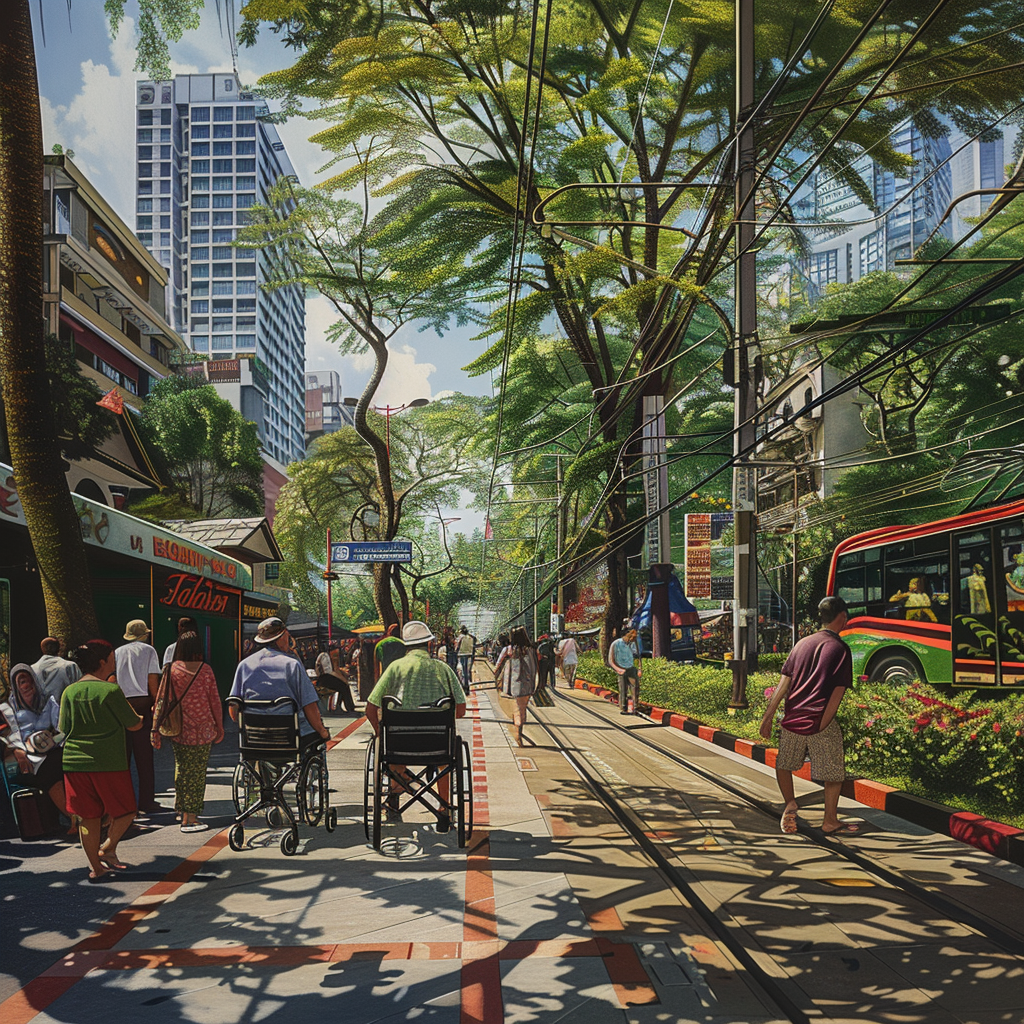
Imagine strolling down Sarasin Road, right by the lush, green haven of Lumpini Park, and witnessing an astonishing transformation. Where once stood a clutter of 80 power poles, there now lies a seamless stretch of pavement, with all the wires and cables neatly tucked away underground. This makeover, spanning from Ratchadamri intersection to Witthayu intersection, isn't just a facelift; it's a tale of a city taking bold strides towards modernization and accessibility.
The Bangkok Metropolitan Administration (BMA) is not just stopping there. They're on a mission, a quest to redefine urban living and accessibility in Bangkok. With Deputy Governor Wissanu Sapsompol at the helm on a bright Wednesday, the announcement came forth: the BMA is contemplating a revolutionary idea. They're pondering the feasibility of a city planning law that could potentially offer compensation to landowners kind enough to contribute a slice of their property for the greater good. This noble cause? It's all about upgrading public infrastructure, creating a city that welcomes one and all, including our friends on wheels.
From expanding pavements for a seamless stroll through the city to constructing ramps that offer a warm embrace to wheelchair-bound pedestrians, the BMA's vision is clear. They want to weave accessibility into the very fabric of Bangkok. And here's the heartwarming bit - several property owners, in a grand gesture of community spirit, have already nodded in agreement, joining hands with City Hall in this ambitious endeavor.
But, like any epic tale, there's a twist. The current city planning law, it seems, is a bit of a party pooper. It doesn't allow for compensating these generous landowners. Yet, hope is far from lost. The BMA, with a glint of determination in their eyes, is on a quest to rewrite this narrative, to tweak the law, and to sketch a new city plan where generosity is met with gratitude and compensation.
Meanwhile, Bangkok Governor Chadchart Sittipunt, has been busy too. Under his watch, the city has seen the repair of 300 kilometers of pavements, creating paths that invite citizens to walk, to explore, to live. But why stop there? An additional 80 kilometers of brand-new pavements are on the drawing board, ready to pave the future of Bangkok. Yet, this journey, too, has its hurdles - from stubborn signboards that stand in the way to the city's leafy guardians that some believe must be sacrificed for progress. It's a delicate balance, one that Chadchart and his team are navigating with care, trying to sculpt a city that moves forward without losing its soul.
The saga of Bangkok's transformation is more than just concrete and laws; it's about building bridges, both literal and metaphorical. It's a narrative of a city in flux, a testament to the power of collaboration, and a beacon of hope for a more inclusive urban future. So, the next time you find yourself meandering along the revamped pavements of Sarasin Road, or any of the new paths being carved out in the heart of Bangkok, take a moment. Look around and soak in the city's evolving story, and perhaps, just perhaps, you'll feel a little flutter of excitement for what lies ahead in this grand urban adventure.



Comment verification
Step 1 of 3
Verify your email once to publish your comment. Your email is never shown publicly.
Enter the 6-digit code sent to .
Choose the display name shown next to your comments.