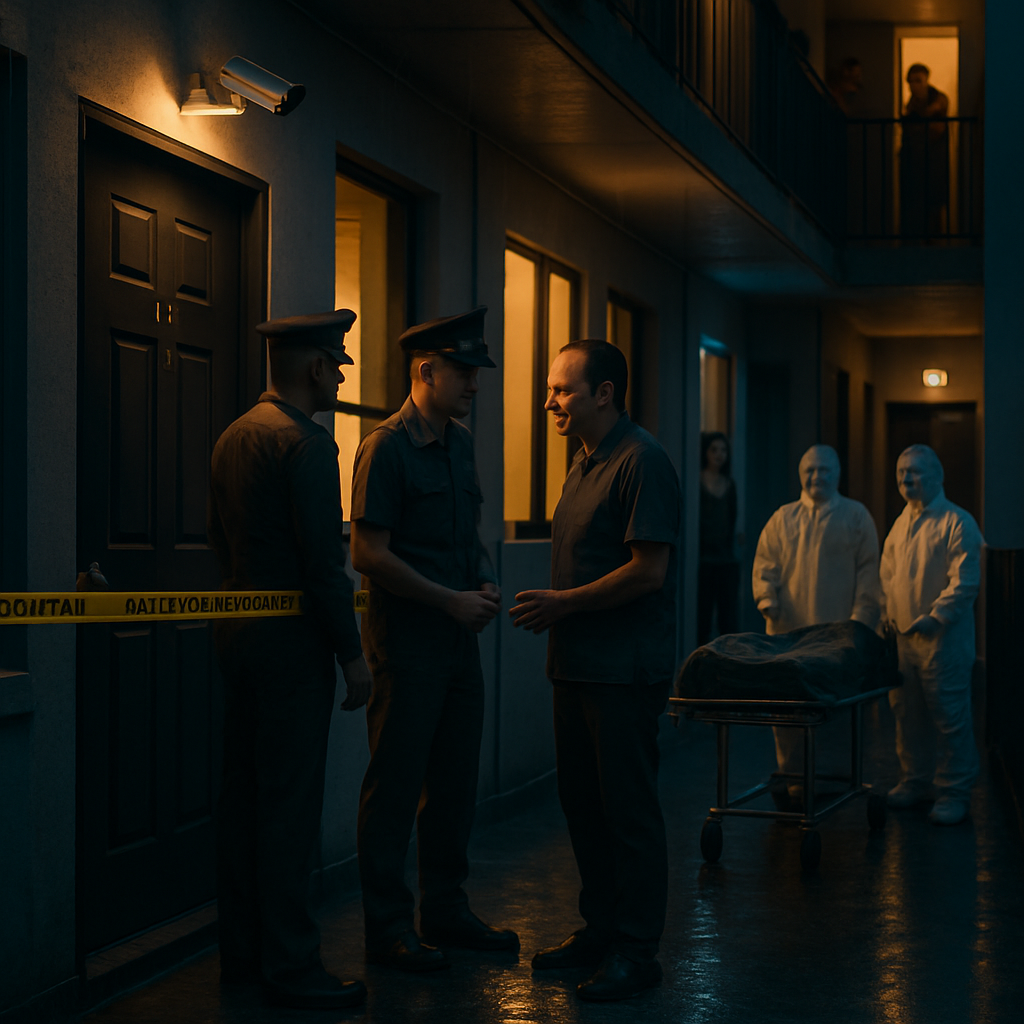
Last week, Bangkok’s quieter streets were jolted by a grim discovery that has since captured public attention and renewed calls for vigilance in relationships that turn sour. On December 1, officers from Khanna Yao police station responded to a worried call from 58-year-old Mr. Saiyon (surname withheld), who asked them to check on a flat in the Eua Arthorn Koobon 27 condominium in Tha Raeng, Bang Khen district.
Saiyon had been trying to reach his daughter, Irin (surname withheld), for about two weeks with no success. He learned she had been staying with her boyfriend, 34-year-old Mr. Thanathan (surname withheld), and when his knock on the door went unanswered a neighbor told him a foul smell was coming from the unit. Fearing the worst, he alerted police.
Scene and arrest
When officers arrived and announced themselves, Thanathan opened the door and was immediately taken into custody. Inside the flat, they found Irin in the bedroom, covered with a blanket. Police say Thanathan admitted to assaulting her on November 16, which resulted in her death, and that he remained at the scene until officers arrived.
The suspect was detained pending formal charges, and the body was transported for an autopsy to establish the precise cause of death and to help piece together the timeline. Investigators have described the case as part of a complex inquiry that will require forensic analysis, witness interviews and a careful review of the couple’s recent history.
How this fits into a worrying pattern
While the Khanna Yao case is unfolding, Bangkok police are juggling multiple, similarly troubling incidents. Just days earlier, Samsen police were called after a young woman was found dead in a rented room — her boyfriend reportedly vanished after the discovery, prompting a separate investigation and public alarm. Meanwhile, Hua Mark police probed the death of another young woman who fell from a condominium following an alleged dispute with her boyfriend; that man was questioned as part of the inquiry.
Local media outlet Khaosod has been following these stories closely, reporting that authorities are coordinating with forensic teams and reviewing CCTV and phone records where available to build clearer timelines. The clustering of such cases has heightened community concern and raised questions about how early warning signs in volatile relationships can be spotted and acted upon.
What police say and what comes next
Officials have said that the investigation into Irin’s death remains active. Forensic results from the autopsy will be critical in determining the exact cause and manner of death, and investigators will use those findings alongside witness statements and digital evidence to formulate charges and reconstruct events. Police reiterated that while a confession has been reported, due process will be followed and evidence must corroborate any statements made by the suspect.
Detectives are also asking anyone with information — neighbors who noticed unusual activity, delivery staff who might have approached the unit, or acquaintances aware of disputes — to come forward. Even small details can help establish timelines or provide context for motive and opportunity.
Community reaction and the bigger picture
The news has left many in Bang Khen and across Bangkok shaken. Social media threads and neighborhood chat groups have buzzed with concern, sympathy for the victim’s family, and calls for better support networks for people in potentially dangerous relationships. Local advocacy groups have used the moment to urge greater access to hotlines and shelters, and encouraged friends and relatives to take threats seriously rather than dismissing them as private matters.
Bangkok’s patchwork of rental flats and condominiums creates anonymity that can make it harder for neighbors to notice trouble early. Police sources admit this complicates prevention efforts, but say vigilance from residents — reporting odd smells, extended silence from tenants, or sudden disappearances — often proves crucial in prompting welfare checks that save lives.
Closing thoughts
For now, the Khanna Yao case is a developing story: a family’s worst fears confirmed, a suspect in custody, and a community seeking answers. As detectives work through forensic results and witness testimony, the hope is that the autopsy and subsequent legal process will provide clarity and a measure of accountability. In the meantime, authorities continue to appeal for help from the public in piecing together what led to this tragic outcome.
Anyone with information about the Eua Arthorn Koobon 27 case or the related incidents in Bangkok is asked to contact the relevant police stations — Khanna Yao, Samsen or Hua Mark — to assist investigators as they strive to complete these sensitive inquiries.


















This is heartbreaking — another young woman gone and a boyfriend arrested. It feels like the city is finally waking up to patterns we’ve ignored for too long.
Wake up? People have been talking for years, but authorities move slowly and neighbors prefer minding their own business. We need better reporting systems, not just outrage on social media.
Better reporting only works if people trust it’ll lead to action, Joe. Many fear retaliation or being dragged into police procedures.
Exactly — trust is the missing link. Hotlines and shelters are fine on paper, but without guarantees of confidentiality and safety, people won’t call.
Guarantees are naive. Systems fail; individuals shouldn’t rely on them blindly. Neighbors must intervene more directly when they see red flags.
Intervening directly can escalate danger though. You can’t recommend civilian confrontation without training or protection.
So we do nothing and wait until the smell of decomposition triggers a police visit? That’s a terrible standard.
No one wants confrontation, but discreet steps like calling welfare checks, leaving anonymous tips, or contacting NGOs can be safer and effective.
As a social worker, I agree. Multi-pronged responses—legal protection orders, emergency shelter access, and community education—reduce risk more than lone heroics.
But shelters are full and underfunded. People call and are told to wait or given one-night stays. That’s not a solution.
Funding is the core issue. Advocacy must push local and national governments to budget for long-term shelter capacity and counseling services.
And who pays for that? Taxpayers. There’s always a cost, and politicians promise but rarely deliver.
True, but the cost of inaction includes lives lost and long-term societal trauma. Preventive spending is cheaper in the long run.
I’m skeptical of that argument unless there’s clear data proving prevention programs actually reduce femicide rates in our context.
There are peer-reviewed studies showing reductions when coordinated interventions are sustained. Context matters, but the evidence is persuasive.
We should cite those studies publicly to pressure policymakers rather than only lamenting tragedies.
Agreed. Data-driven campaigning beats emotional posts. But it takes organization and leadership we don’t always have.
Leadership could emerge from local community groups if they get resources. Centralized NGOs can’t reach every neighborhood.
Fine in theory, but local groups often lack training and end up doing harm. It’s complex.
Complex doesn’t mean impossible. Small wins build momentum: training volunteers, creating safe reporting channels, and partnering with police.
Partnerships only work if police are responsive and not corrupt. Too many stories of reports ignored.
Police reform is part of the puzzle. Accountability, training on domestic violence, and victim-centered protocols help immensely.
Until police start caring about domestic disputes as seriously as bigger crimes, we’ll keep seeing cases like Irin’s.
That’s why public pressure and media attention matter here; they force institutions to allocate attention and resources.
But media can also sensationalize and retraumatize families. Responsible reporting is essential.
Indeed — balancing transparency and sensitivity is difficult but necessary for constructive public discourse.
So we want pressure but not sensationalism, action without vigilantism, and funding without raising taxes. Good luck.
It’s messy, yes, but insisting on better systems is the only ethical route. We owe it to victims like Irin.
I just hope the investigation follows due process and doesn’t become a political football. Evidence should guide justice.
Agreed. Confessions might be reported but must be corroborated. Autopsies and CCTV will be crucial here.
I’ll keep following the case and donate to local shelters in memory of Irin. Talk is cheap; action matters.
If you share vetted shelter links, I will too. Collective action like that is a start.
I can provide contacts for reputable NGOs that operate helplines and emergency housing. PMs are safer for sharing.
PMs again — we keep circling back to privacy as the limiting factor.
Privacy is non-negotiable; many survivors won’t engage otherwise. Training on confidentiality should be mandatory for helpers.
Mandatory training and funding. Sounds great. Now show me the bill that passes parliament.
Belief in systemic change shouldn’t be cynical paralysis. Start local, document outcomes, and scale up with evidence.
And keep asking tough questions about why these patterns keep repeating — culture, poverty, and impunity all play a role.
Exactly. This tragedy is a call to address root causes, not just treat symptoms. Let’s make sure Irin’s story leads to concrete change.
Why do these things seem to happen in condos a lot? Is anonymity to blame or something else?
Condos create distance between neighbors, so warning signs are easy to miss. Also turnover means strangers move in and out quickly.
Rentals and short-term tenancies reduce community ties. Building management should be more proactive with welfare checks.
I worry about privacy rights though. When does welfare checking become intrusive surveillance?
It’s a balance. Smell of decay and weeks of no contact should tip the scale toward intervention.
Neighbors also need education on non-confrontational reporting — call the police or building staff before opening doors.
Yes, and management companies should have protocols to escalate when multiple complaints are raised.
Good protocols, but enforcement and accountability for management is rarely prioritized.
Maybe tenant associations could pressure management to adopt those protocols. Collective voice works.
I’ll bring it up at our building meeting. If enough residents care, it can change norms.
Keep us updated. Real change often starts in small meetings like that.
Will do. Small steps, hopefully big impact.
I say we make it public shame when someone is violent in relationships. Scare tactics work faster than bureaucracy.
Public shaming can destroy lives of the innocent and deter reporting. It’s a dangerous idea in close-knit societies.
Then what? Let predators stay hidden? Sometimes radical steps are needed.
Radical doesn’t mean reckless. Effective prevention protects victims and ensures fair due process for suspects.
Due process should never be sacrificed for moral outrage. That’s how miscarriages happen.
I’m not asking to skip trials — just to use social pressure as a tool. It can warn others and reduce access to victims.
Social pressure without evidence risks vigilantism. We must be careful about encouraging public campaigns before facts are known.
This is a systemic failure at multiple levels: relationship support, law enforcement, and housing policy. We can’t pretend it’s isolated.
Agreed. But naming systemic failure is one thing; proposing implementable policy fixes is another.
Start with mandatory DV training for police, emergency housing funds, and anonymous reporting channels tied to welfare checks.
Those are solid starting points. Funding and sustained political will are the hurdles, not the ideas.
As a college student, I’m terrified. My friends joke about bad breakups but you never expect murder could be a result.
It’s scary and real. Education about red flags should start early in schools, not just adult shelters.
School-based programs about healthy relationships show promise; early prevention is crucial.
Please, if anyone has resources for campus workshops, share them. We need real conversations, not jokes.
Why do news sites keep giving step-by-step scenes that almost romantically describe the death? It’s morbid and disrespectful.
Coverage walks a fine line between informing the public and sensationalizing. Editors should be more considerate of victims’ families.
Exactly. Graphic details don’t help the investigation and only feed voyeurism.
But transparency helps the public understand patterns. It’s a tough editorial balance.
Transparency without gruesome detail is possible and preferable.
Maybe technology can help — more accessible CCTV and smart door sensors can detect prolonged inactivity. Is that privacy-invasive?
Tech helps, but it can also be misused by abusive partners for surveillance. We need careful regulation.
Agreed. Design tech with survivor safety in mind, not just convenience for landlords.
Good point. Maybe opt-in welfare monitoring services rather than 24/7 surveillance would be better.
As someone living in Bang Khen, this hit too close to home. I passed that condo last week and never imagined.
Scary to think it was so close. Community watch groups could help, but they need clear protocols.
I’ll propose a protocol at our building meeting: anonymous reporting line, designated contact, and a checklist for welfare checks.
Share the checklist here — others could adopt it too. Practical tools spread faster than lectures.
I’ll draft one tonight and post the main points publicly — let’s see if neighbors actually use it.
From a forensic perspective, autopsy and toxicology will be decisive here. Confessions must be checked against physical evidence.
Absolutely. Media should avoid declaring guilt until the facts are corroborated in court.
Forensic timelines also help prevent wrongful accusations and clarify whether others might be involved.
This reminds me of other countries where femicide rates dropped after legal reforms. Why can’t we learn faster?
Politics, culture, and resource allocation — change is hindered by all three. Plus reform requires sustained civic pressure.
Civic pressure is possible if communities organize. Social media outrage helps but must convert to policy demands.
I feel for the family. Two weeks of unanswered calls must have been agonizing before the discovery.
Yes. That father did the right thing to report his concern rather than assume everything was fine.
Small actions like his can save lives in other situations — we should encourage them, not blame.
The clustering of cases is the worst part. This looks less like isolated incidents and more like a social crisis.
Clustered incidents often reveal systemic failures and shared stressors, like economic strain or cultural tolerances for violence.
So fix those root causes and stop treating each case as a standalone tragedy.