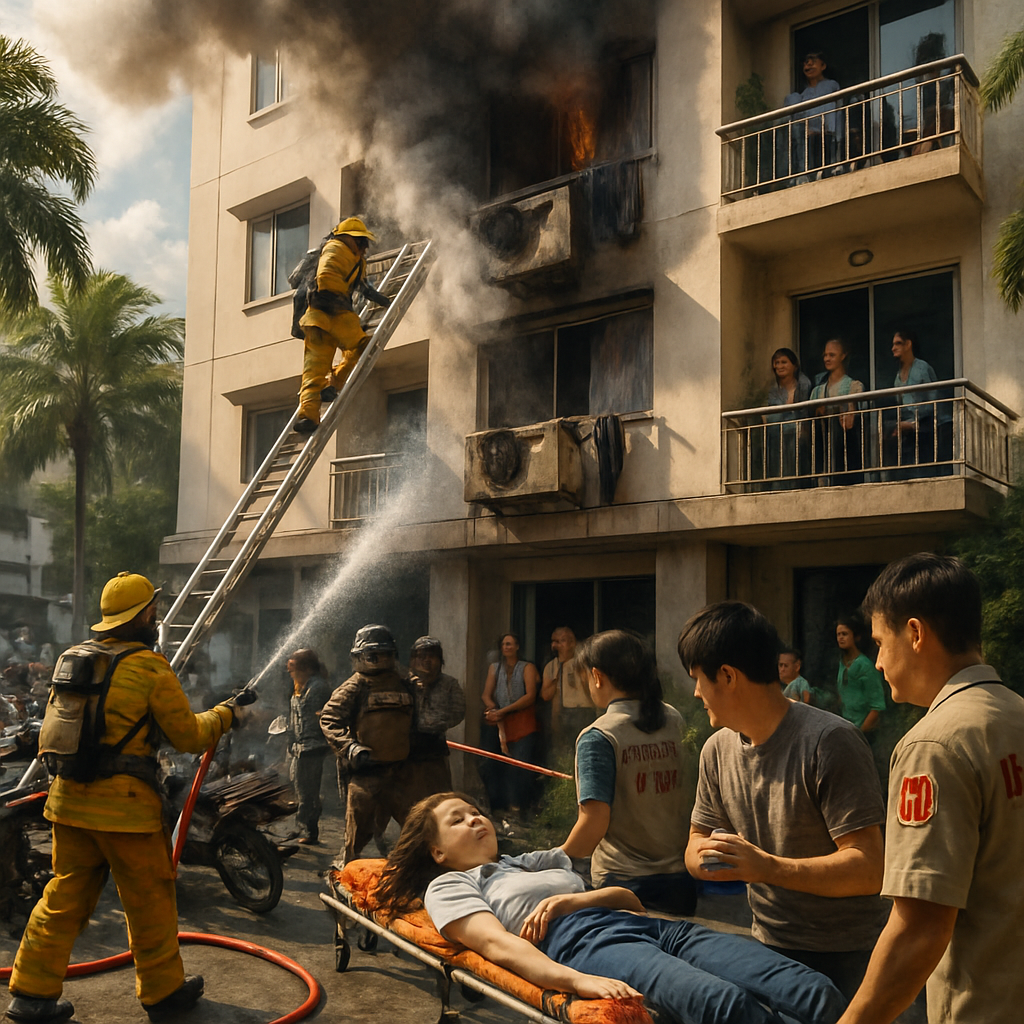
Just after lunchtime on Friday — well, 12:15pm on January 2, 2026, to be precise — a routine afternoon in Bangkok’s Ladprao neighborhood turned smoky and chaotic when a condominium unit erupted in flames. The scene: a six‑storey building on Ladprao Road in Khlong Chaokhun Sing, Wang Thonglang, where black smoke began pouring from a fourth‑floor apartment and sent neighbours and first‑responders scrambling.
The quick response that kept the blaze from spreading
Thanks to an immediate emergency call to Chokchai Police Station, a coordinated team was on its way in minutes. Officers linked up with firefighters from Huamark Fire Station and volunteers from the Ruam Katanyu Foundation, turning the residential building into a streamlined rescue operation. Responders worked methodically: they secured the area, evacuated residents, and pushed into the affected unit to locate anyone trapped inside.
It was a textbook case of efficient crisis management. Firefighters contained the blaze within minutes, preventing it from leaping to neighbouring apartments. The scorched area was small — authorities estimated roughly two square metres — but even a compact fire can fill stairwells and corridors with smoke fast enough to become deadly. That’s why the rapid arrival and coordinated effort mattered so much.
Two people hurt, one seriously
Rescue teams found two injured occupants inside the damaged unit. The most serious case involved a 21‑year‑old woman who had lost consciousness after inhaling smoke. Officers helped carry her out of the building, while medics provided initial treatment on the spot. She was rushed to Rajavithi Hospital, where she remained under observation and received further care.
The second casualty was a male resident who suffered a cut to his right finger after coming into contact with broken glass while trying to help. Volunteers from the Ruam Katanyu Foundation provided first aid at the scene before transferring him to Ladprao Hospital; his injury was described as minor.
How it started — and what investigators found
After the situation was stabilized, fire investigators conducted an initial inspection of the apartment. Their early conclusion: an electrical short circuit in the compressor of the air‑conditioning system likely sparked the flame. The malfunction appears to have ignited clothing that was nearby, allowing the fire to spread briefly within the room.
Authorities emphasized that while the immediate cause seems clear, a full investigation is ongoing to confirm the details and to rule out any other safety violations. It’s a sober reminder that even small electrical faults can quickly escalate in a densely populated building.
Residents return, but with a warning
Once firefighters cleared the smoke and completed safety checks, residents were allowed to return to their units. There were no other reported injuries, and the building’s structural damage was limited. Still, police and fire officials used the incident as an opportunity to urge condo residents to routinely inspect electrical appliances and wiring — especially air conditioners, compressors, and any device that runs for long hours during hot weather.
“Regular checks and a little vigilance can make the difference between an inconvenience and a tragedy,” one official paraphrase might read, if officials were handing out soundbites. In plain terms: unplug appliances showing sparks or burning smells, don’t overload sockets, and clear away flammable materials from near heat‑producing devices.
Practical tips to reduce the risk of apartment fires
- Have your air‑conditioning units serviced annually; compressors and wiring are common trouble spots.
- Avoid storing clothing or other flammable items near electrical appliances.
- Install smoke detectors on every floor and test them monthly.
- Know your building’s evacuation route and the location of fire extinguishers.
- If you spot sparks, frayed cords, or a burning smell, switch off the power at the breaker and report it immediately.
The Ladprao condo incident was unsettling, but because residents, police, firefighters, and volunteers acted quickly, what could have been a much worse disaster was contained. The 21‑year‑old woman is receiving care at Rajavithi Hospital, the man with a cut finger is recovering, and investigators continue to piece together the final report.
For the neighbours who watched smoke pour from the fourth floor, the episode reinforced a familiar truth about urban living: you can’t control every hazard, but you can control how prepared you are when one appears. In this case, preparedness, speed and teamwork kept the damage — and the casualties — to a minimum.
Source: Khaosod.

















This is wild — a tiny AC fault nearly turned into a disaster, and yet everyone acts surprised when buildings burn. If people stored clothes properly and management did inspections, this wouldn’t keep happening.
Blaming residents alone is lazy; building owners and regulators share the guilt when maintenance is neglected for profit. We need mandatory inspection certificates for every condo, not just polite reminders.
Exactly — regulations exist but enforcement is a joke. A simple annual sticker system with real penalties would save lives.
As a tenant I pay maintenance fees but never see actual checks; where does that money go?
I live in Ladprao and this scares me. My AC is old — should I stop using it at night?
Don’t panic, Suda — get it serviced and put no clothes near the unit. Simple fixes often stop these things.
Thanks — but tenants shouldn’t have to become electricians to stay safe, management must step up.
Technically, compressor short circuits are common failure modes if capacitors age or wiring insulation degrades. Regular servicing and thermal sensors could detect overheating before ignition.
Firefighters did their job quickly, but volunteers shouldn’t be thrust into dangerous roles without training. It could have been worse.
We coordinate with volunteers because manpower matters in Bangkok traffic, but I agree training should be standardized. We are pushing for better joint drills.
Appreciate the reply, officer, but will there be accountability when maintenance companies cut corners?
So glad everyone is ok; smoke inhalation is sneaky and terrifying. Hope the woman recovers soon.
Two square metres charred yet a near tragedy — this proves that small fires still kill when smoke spreads fast. Tenants must be informed about evacuation routes.
They should put smoke alarms in every apartment for sure. My school taught us to go low under smoke and stay together.
Good point, Nong, but many condos only have detectors in common areas. Private alarms are cheap and effective.
As a building manager, I can say budgets are tight and owners resist extra costs, but safety upgrades are non-negotiable now.
This incident should trigger policy change: mandatory AC compressor checks and clearer tenant education campaigns. Prevention is cheaper than emergency care.
Tom, you always complain about management — do you pay your fees or hide behind outrage?
I pay, but my point is maintenance transparency. Show receipts, inspections, and I won’t nag.
Also, why is the compressor near clothes? That is basic common sense to separate flammables from heat sources.
From an engineering perspective, placing combustible materials near heat sources violates basic safety codes. Retrofits with containment and automatic cutoffs are inexpensive compared to hospital bills.
We should require thermal cutout relays on older AC units; it’s a simple device that isolates power if temperature spikes.
I second that, and add that local governments could subsidize upgrades for low-income residents to avoid unequal risk.
I don’t buy the AC explanation — too convenient. Maybe someone was smoking or it was arson to claim insurance. Authorities always rush to the easiest story.
Why would someone do that? I think it’s just bad luck and old wires.
I am in 6th grade and scared reading this. Why are clothes near a machine that gets hot? My mom says never put shoe boxes near machines.
Kids notice common sense, ChildThink. Adults forget simple rules when they’re busy.
Kudos to Chokchai Police and Huamark Fire Station for fast response, but volunteers shouldn’t replace professional resources in city planning.
We value volunteers greatly; their quick action saved time. We’re training them more formally this year to avoid risk.
Glad to hear that, officer, but transparency about volunteer roles would calm skeptics.
Transparency is the recurring theme — for maintenance funds, inspections, and rescue roles. Without it, trust collapses and accidents proliferate.
Anya, you propose subsidies, but where does the taxpayer money end? I distrust sweeping financial fixes without audits.
Targeted subsidies with audits are doable and fair; this isn’t charity, it’s public safety. Prevention reduces hospital load and long-term costs.
Audits and stickers sound nice but how long before policy actually changes? I need quick advice for now.
Fine, practical advice: unplug units if you smell burning, keep fabrics away, and demand receipts for any maintenance.
Also document everything and take photos before and after maintenance — it builds a record if problems recur.
Manager Wong, will you commit to posting service logs in the lobby monthly? Tenants deserve to see who did what.
Tom, we can publish summaries and verification of certified technicians. Privacy laws prevent posting names, but we will improve transparency.
Summaries are a start; I’ll take that and keep pushing for detailed invoices on request.
Small actions matter: test your smoke alarm tonight and tell your neighbor to do the same. It might save a life.