Southern Floods Kill One as 14 Provinces Face Alerts
Heavy rains exceeding 150mm trigger deadly flash flooding in Surat Thani, prompting a 14-province southern landslide alert across Thailand.
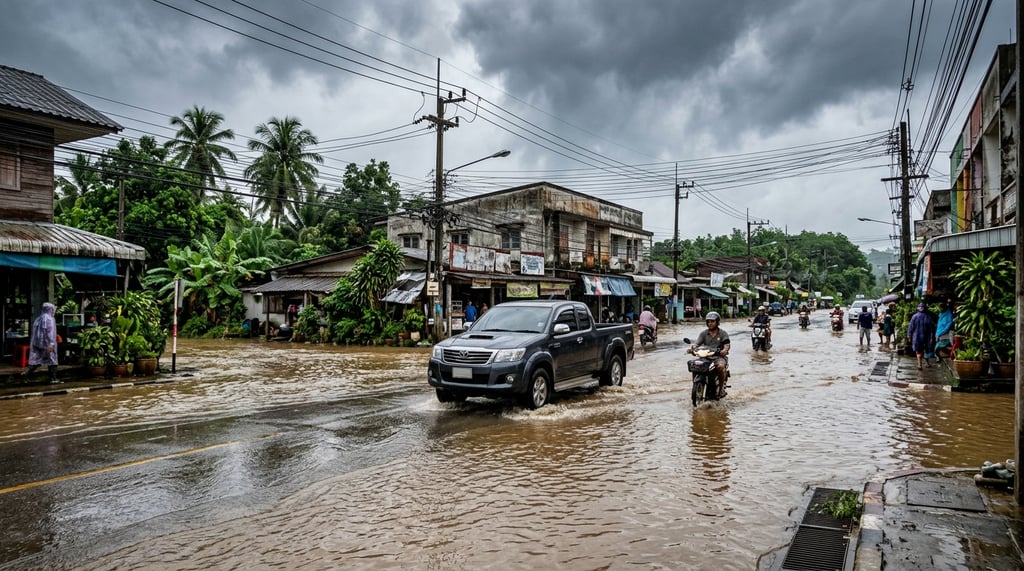
Torrential monsoon downpours exceeding 150 millimeters of accumulated rainfall within 24 hours have inundated urban districts across Surat Thani province, inundating critical transportation arteries, submerging major commercial junctions, and tragically claiming the life of a resident through electrocution. The fatal incident occurred as water rapidly submerged roadside infrastructure along Highway 401 between Mueang Surat Thani and Phunphin district, prompting provincial authorities to fast-track an official emergency disaster declaration to release emergency relief funding and expedite local rehabilitation efforts.
The localized inundation in Surat Thani formed the catalyst for a broader emergency response by the Ministry of Natural Resources and Environment. Directives issued to the Department of Mineral Resources and provincial disaster agencies placed all 14 southern provinces on heightened geo-hazard surveillance through the end of November. Intense precipitation has brought soil saturation levels in elevated mountainous terrain to critical thresholds, drastically magnifying the threat of sudden mudslides, hillside slope failures, and flash floods across 84 designated southern districts spanning the Gulf of Thailand and Andaman coasts.
Surat Thani Governor Jumphot Wannachatrasiri led a multi-agency field inspection alongside provincial police leadership and the Department of Disaster Prevention and Mitigation to survey inundated transit corridors, including the Ko Teng and Nissan intersections, as well as low-lying residential clusters in Wat Pradu. With runoff straining roadside drainage channels, local administrative organizations mobilized heavy-duty pumps to accelerate drainage into natural waterways, while warning local communities against wading through standing water near ground-level utility poles and distribution lines.
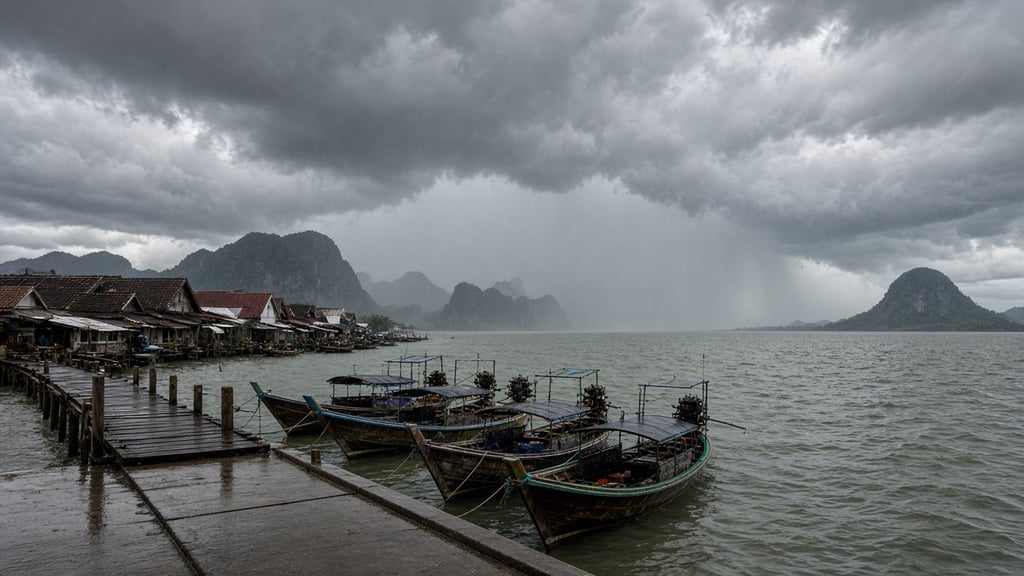
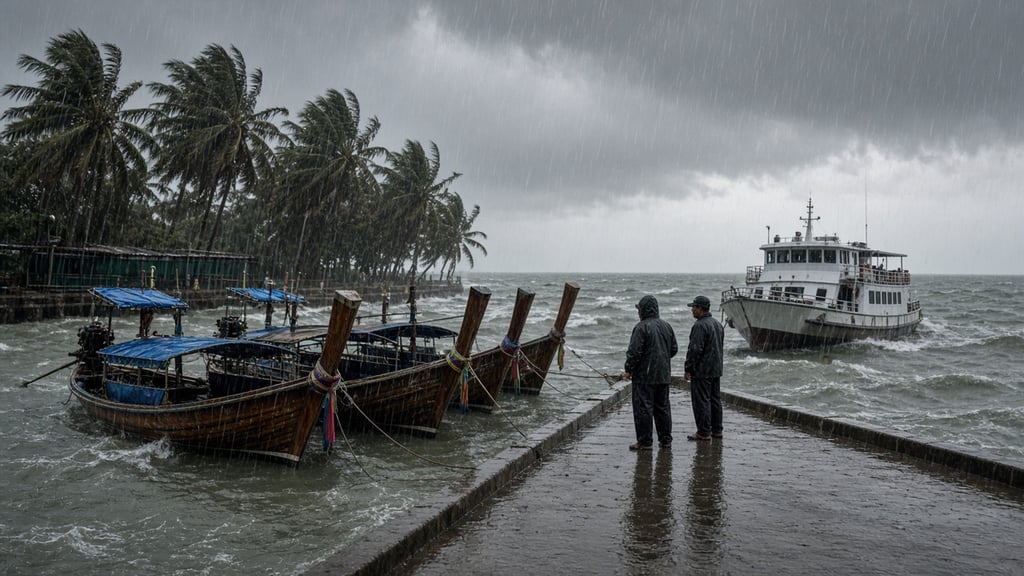
Regional weather mechanisms driving the extreme conditions stem from an intensified northeast monsoon surging across the lower Gulf of Thailand, compounded by an energetic easterly wind wave and an active low-pressure cell tracking across lower maritime provinces. The Thai Meteorological Department issued severe weather bulletin No. 11, cautioning maritime operators and coastal populations of hazardous open-sea swells reaching two to three meters, with localized waves exceeding three meters during convective storms. Small vessels across the Gulf of Thailand have been advised to suspend offshore operations until marine conditions stabilize.
The geo-hazard surveillance perimeter extends from Chumphon and Ranong in the upper south down through key tourism corridors including Phuket, Krabi, Phang Nga, and the island districts of Koh Samui and Koh Phangan, through to Songkhla, Pattani, Yala, and Narathiwat. Soil mechanics monitoring teams from the Department of Mineral Resources have established round-the-clock observation posts near active watershed hillsides, advising forest-edge villages and highway drivers to monitor river silt discoloration and roaring hillside sounds that typically precede destructive debris flows.
What This Means for Expats in Thailand
For international expatriates, digital nomads, and travelers residing in or moving through southern Thailand, the current severe weather alert demands practical safety adjustments and transit caution:
- Extreme Electrocution Hazards in Standing Water: Avoid walking or riding through flooded streets where water covers curbs or transformer bases. Downed power cables and submerged junction boxes represent the primary lethal danger in urban flash floods.
- Southern Road Transit and Flight Buffers: Major transit conduits like Highway 401 between Surat Thani Airport and central urban hubs face recurring ponding. Allow extra travel time of two to three hours when connecting to domestic flights, cross-gulf ferries, or regional bus terminals.
- Gulf Island Ferry Operations: Ferry routes connecting Don Sak pier to Koh Samui, Koh Phangan, and Koh Tao operate under restricted schedules or harbor holds during peak wave surges. Confirm ferry sailings with operators prior to departing overland hubs.
- Foothill and Mountain Travel Precautions: Travelers heading toward inland national parks, such as Khao Sok or scenic waterfall routes, should defer hillside road excursions until ground saturation drops and mineral resource teams clear slope stability.
- Emergency Contacts: Keep national disaster hotline numbers accessible, including DDPM emergency line 1784 and Tourist Police 1155, and monitor localized weather forecasts via the official Thai Meteorological Department portal.
Comment verification
Step 1 of 3
Verify your email once to publish your comment. Your email is never shown publicly.
Enter the 6-digit code sent to .
Choose the display name shown next to your comments.