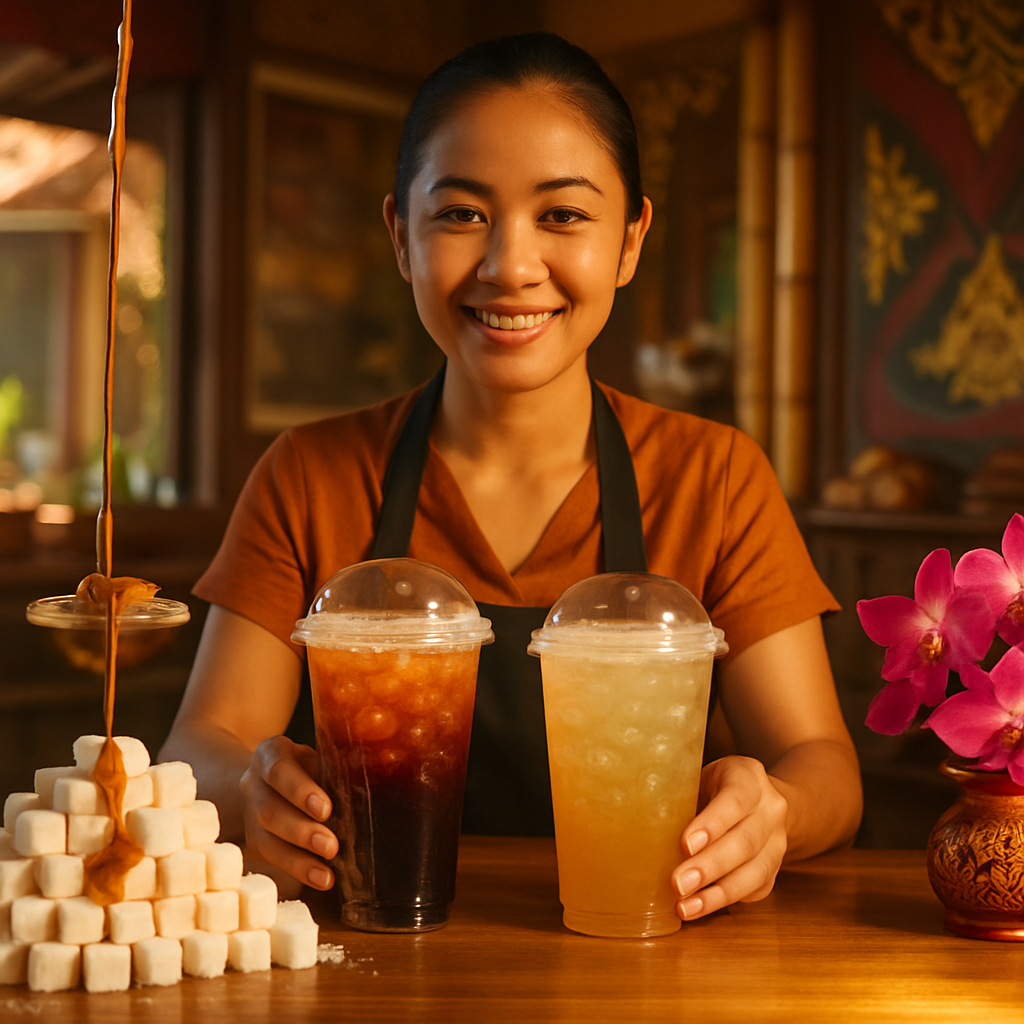
Thailand’s Department of Health is stirring the nation’s sweet-tooth conversation — and this time the cup of change comes with a scoop of compromise. Announced on January 23 after a policy meeting earlier in the month, a new national guideline will reset what “normal” means for made-to-order drinks: from now on, normal sweetness will be defined as 50% sugar. It’s not a sugar ban, nor a recipe rewrite — it’s a recalibration of expectations designed to nudge habits toward healthier choices while keeping beloved beverages enjoyable.
A sweet idea with sensible goals
Dr. Amphorn Benjaphonpitak, Director-General of the Department of Health (DoH), was careful to clarify the nuance: this guideline doesn’t force cafés to retool their entire drink formulas. Instead, it asks retailers and consumers to agree that when you order a drink “regular” or “normal,” you’re getting it at 50% sweetness. The move is part of a broader DoH campaign under the slogan “Normal Sweetness = 50%,” a phrase that’s short, memorable, and surprisingly bold.
The core aim is straightforward — reduce excessive sugar intake across the population — but the implementation strategy is intentionally gentle. Rather than stripping sweetness from menus or demonizing favorite drinks, the DoH wants to reset taste norms so sweet flavors become less extreme over time. That subtle shift could deliver big dividends for long-term public health without turning beverage lovers into rebellious sugar smugglers overnight.
Big names are already on board
Policy dreams gain traction when industry partners sign on, and several household names have already joined the campaign. Four major private-sector players — Bangchak Retail (Inthanin), PTT Oil’s Café Amazon, CP All (All Café and Bellinee’s), and Black Canyon Thailand — have agreed to adopt the 50% default sweetness at participating outlets. Their involvement gives the initiative a strong starting point in the marketplace and signals to other chains and independent cafés that change is possible without losing customers.
Public health agencies and industry organizations are supporting the effort too. The DoH has rallied the Thai Coffee Association, Intercof Corporation, the Food and Drug Administration (FDA), the Department of Disease Control, and various DoH units to collaborate on messaging, guidelines, and rollout logistics. This multi-stakeholder approach helps ensure the message is practical, science-backed, and consumer-friendly.
Not anti-sugar — pro-balance
Deputy Director-General Dr. Pakorn Tungkaserirak was explicit about the campaign’s tone: the goal isn’t to eradicate sweetness. It’s to adjust public taste preferences toward a more balanced profile that still satisfies cravings but reduces excessive sugar intake. Think of it as recalibrating the nation’s palate rather than waging war on desserts.
That distinction matters. People enjoy their beverages — the DoH isn’t trying to snatch that joy away. Instead, the initiative frames a healthier standard as compatible with delight: a little less sugar can still taste great and be better for long-term health outcomes.
Launch day and what comes next
The guideline is slated to officially launch on February 11, when the campaign will be introduced nationwide. Expect marketing materials, in-store signage, and friendly prompts that make the new “normal” hard to miss. If the initial partners hold steady and more outlets adopt the standard, it could establish a new benchmark in nutrition policy — one that other sectors or countries might study and emulate.
Thailand’s sugar story has another chapter unfolding simultaneously: a new sugar tax on fizzy drinks has recently kicked in, pushing manufacturers to either reduce sugar or pay higher taxes. Together, the tax and the DoH’s made-to-order guideline represent a broader nudge toward lowering sugar exposure from both packaged and freshly prepared drinks.
Why this matters
Excessive sugar intake is linked to obesity, diabetes, dental problems, and other chronic conditions. By influencing the default sweetness level at popular cafés and convenience outlets, the DoH is aiming at a high-impact leverage point: daily beverages. Small changes in routine choices can add up to meaningful improvements in public health metrics over time.
And because the approach is collaborative rather than punitive, it stands a better chance of public acceptance. Consumers still enjoy their drinks, businesses maintain customer satisfaction, and health officials get a practical path to reduce sugar consumption across the population.
A taste test for the future
“Normal Sweetness = 50%” is both a simple message and a social experiment. Will people accept a softer, less sugary default? Will cafés keep offering sweeter options on request — as many customers will want — while nudging the majority toward the new baseline? The answers will shape how Thailand balances personal choice, industry practices, and public health goals.
Whatever happens, the campaign has already sparked conversations — from boardrooms to breakfast tables — about how tiny adjustments can produce big results. If you’re a drink lover, expect to be asked whether you want your drink “normal” or “extra sweet” a little more often — and if you’re curious, try the 50% pour. You might be pleasantly surprised.
Stay tuned for the nationwide launch on February 11. Whether you’re a café regular or a casual sipper, this is one sugar story worth following.


















This feels like another overreach by the state into personal choices. I get public health, but adults should decide how sweet their own drink is. Defaults are slippery slopes toward more control.
As someone who farms sugar, I actually like this—less sugar in drinks could shift demand for sweeter packaged goods too. It might hurt bulk sugar sales but help public health so it’s worth trying.
I tried asking for 50% at a café and it was surprisingly good, not watered down. Taste adapts fast and my teeth feel better already.
Taste adaptation is well documented; a controlled shift in default options can change population-level consumption without heavy-handed bans. Still, we need baseline and follow-up metrics to judge long-term impact.
Professor Lee, I respect the research but my point is about agency. If I want an indulgence, decreeing a ‘normal’ sweetness feels paternalistic.
I like my milk tea super sweet lol, why fix what isn’t broken?
Because diabetes and dental problems are broken. A little less sugar across millions of drinks reduces health costs and suffering.
They should keep the sweet option but make 50% the default so kids and busy people get a healthier baseline.
From a public health perspective this is a smart nudge: modest, evidence-based, and scalable. It respects choice while shifting norms, and if combined with monitoring it could reduce sugar-related harms.
Agreed, but please ensure evaluation plans include consumption data and biomarkers, not just sales. Otherwise we won’t know if behavior truly changed.
As someone who works with cafés, gradual rollout and staff training are crucial. If staff pressure or confusion occurs, customers will just override defaults and nothing changes.
Good point, Araya; implementation fidelity matters. The DoH should fund a short training module and quick feedback channels for baristas.
I’m worried my favorite latte will taste off. Is 50% sweetness realistic for coffee-based drinks that rely on sugar for balance?
Barista here: many regulars already ask for half sugar and we can adjust microfoam and syrups to keep balance. It isn’t that hard once you practice the recipes.
Barista tips matter, but honestly some customers still ask for full sweetness and tips drop when beverages change taste.
As an older person I cheer this on, my grandchildren drink too many sweet things. Tiny nudges help families like mine.
This is government meddling in harmless pleasures. Teach people about sugar instead of changing defaults, education not decrees.
Education alone is slow and often misses low-income groups; defaults protect vulnerable folks without taking choices away.
Policywise, combining default changes with fiscal tools like the sugar tax creates complementary incentives. However, equity impacts must be monitored so the poor don’t disproportionately bear costs.
Exactly, poor communities often have limited options and may end up paying more if companies pass on reformulation costs. Subsidize healthier options instead.
I like the health angle but suspect big chains jumped on board for PR. Will they actually promote healthier choices or quietly keep most outlets unchanged?
Transparency and reporting will be key; the DoH should publish which outlets comply and the scale of adoption.
As a small drink vendor, a blanket 50% default isn’t one-size-fits-all. Fruit smoothies and coffee need different baselines.
Why not let businesses set category-specific defaults and require clear labeling? Pilot studies could determine best defaults per drink type.
Good move by DoH, small nudges beat heavy-handed bans any day.
My friends will freak if boba isn’t extra sweet; shops will lose youth customers if they push 50% too hard. It’s about culture, not just health.
Trends change though; remember when skinny jeans were everywhere. If taste shifts slowly, youth will adapt and new norms form.
Proud of Thailand for trying a pragmatic health policy that won’t ruin people’s treats. Other countries should watch and learn.
Big chains are doing this for optics and to avoid sugar taxes biting. I don’t trust corporate motives alone to ensure real health gains.
Even if it’s PR, the result—less sugar in drinks by default—still benefits public health. Outcomes matter more than intent.
I switched to 50% last month and ended up liking it more. I feel less sluggish afterward and I saved a bit of money too.
Personal anecdotes are persuasive, but policy shouldn’t strip choice. Make 50% default but allow easy opt-in for extra sweet, that balances freedom and public health.
This campaign is a great living lab for behavior change theory. I hope researchers get access to sales and health data to publish rigorous evaluations.
I find it annoying when staff ask me ‘normal or extra’ every time; it slows the line. But I guess defaults help lazy decisions.
As a barista I can say prompts take two seconds and most people accept the default. When defaults are set, service doesn’t slow and sugar requests drop.
Fair point, I just worry about the small inconvenience but I’ll try to be patient for the bigger health gain.