Thailand

Thailand Faces PM2.5 Air Quality Crisis: 64 Provinces Affected by Hazardous Dust Levels

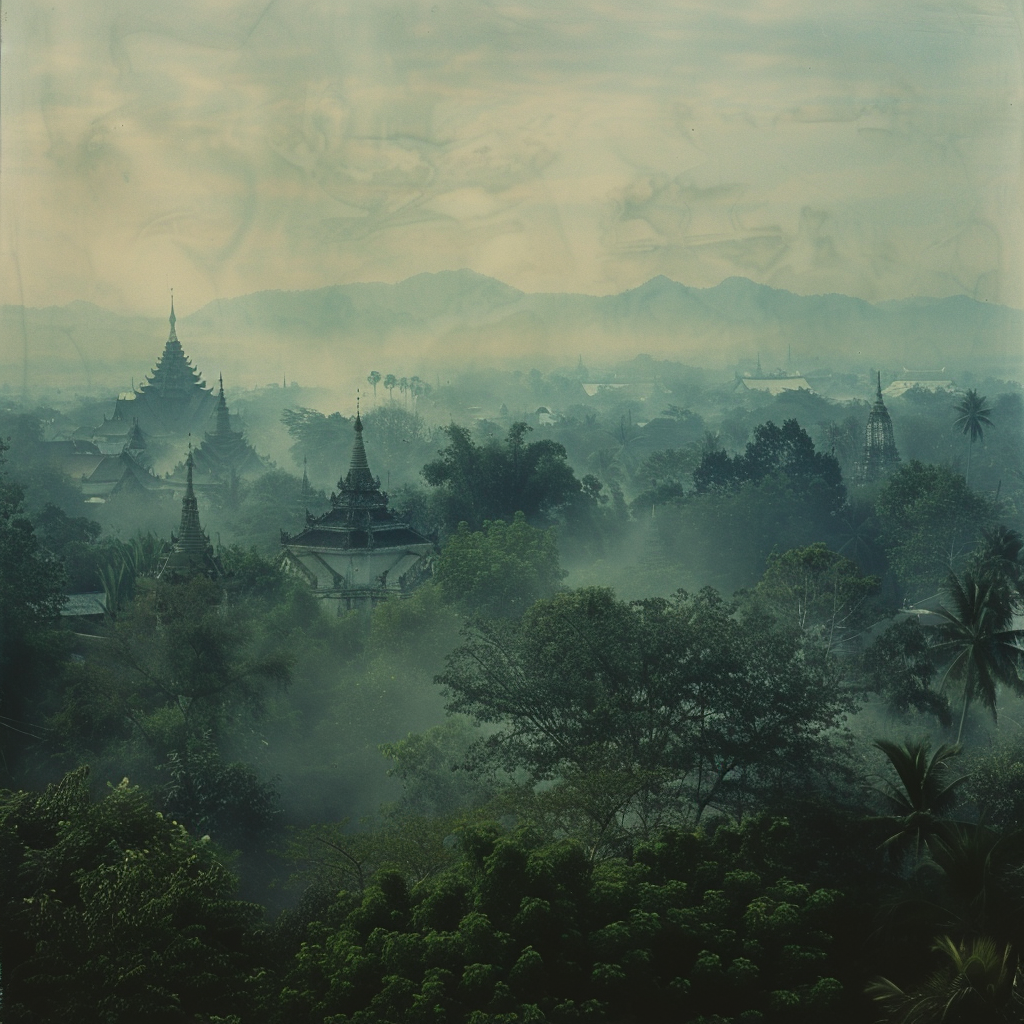
Amidst the idyllic landscapes and serene temples, Thailand found itself grappling with a not-so-hidden monster on Sunday morning. This invisible villain took the form of ultrafine dust pollution, which covered 64 out of…
Thailand Faces PM2.5 Air Quality Crisis: 64 Provinces Affected by Hazardous Dust Levels

Amidst the idyllic landscapes and serene temples, Thailand found itself grappling with a not-so-hidden monster on Sunday morning. This invisible villain took the form of ultrafine dust pollution, which covered 64 out of the nation’s 77 provinces with alarming intensity. The watchdogs from the Geo-Informatics and Space Technology Development Agency (Gistda) were on high alert as they sounded the alarm on the hazardous levels of particulate matter, particularly PM2.5, which refers to particles that are 2.5 micrometers or smaller in diameter.

Of the impacted provinces, a worrying seventeen bore the brunt of the pollution, recording 'red levels' indicating critically hazardous air quality. Sing Buri seemed to draw the short straw, reporting a suffocating PM2.5 concentration of 95.5 micrograms per cubic meter of air over the preceding 24 hours—enough to make anyone gasp for air.

Trailing Sing Buri, but not by much, was Si Sa Ket logging in 91.2µg/m³, followed by Yasothon at 85.3µg/m³, Ubon Ratchathani at 84.6µg/m³, and Trat closely trailing at 84.2µg/m³. It seemed the dust storm wasn't letting off its grip with Lop Buri (83.9µg/m³), Saraburi (82.1µg/m³), and Ang Thong (80.4µg/m³) following suit. Kalasin nearly saw red at 80.1µg/m³ along with Roi Et, teetering slightly below at 79.6µg/m³. With Surin (78.1µg/m³), Chai Nat (78µg/m³), and several others reporting similar discomforting numbers, it was clear that the nation was living in a haze.

The World Health Organization acknowledges a safe threshold for PM2.5 at 37.5µg/m³, and by that measure, most of these provinces had ventured far beyond acceptable limits.

Fortunately, it wasn't all gloom and doom. Thirteen provinces were blessed with air quality that remained within safe confines, while a sunny disposition of moderate air quality, marked by yellow levels of PM2.5, was lived by nine provinces including Phangnga, Nakhon Si Thammarat, and picturesque Chiang Rai.

Then there was Lampang, donning a sash for good air quality at 24µg/m³, and Mae Hong Son, hinting at breathable air at 18.4µg/m³. But, the crown jewels adorned Chiang Mai and Lamphun, where the air quality briefly waved a benevolent wand of very good air at 14.9µg/m³ and 13.7µg/m³ respectively, painting a rare picture of respite in the midst of murky oblivion.

Still, it was a concerning time for 47 other provinces wading in orange levels, where the fine dust hinted at adverse health effects. This included notable locations like Ayutthaya, the vibrant city of Bangkok, the emerald isle of Phuket, and more. As health advisories urged caution, Thailand awaited better atmospheric fortunes, clasping to the hope that the winds of change would soon blow through, lifting the oppressive veil over its stunning vistas.


38Comments
Sort by:
Ggrower134··1 pts · 4 replies
G
grower134
This is an environmental disaster in the making! How are people even supposed to breathe with such high levels of PM2.5?
1
JDJoe D··1 pts
JD
Joe D
Right? It's shocking that more isn't being done to address the root causes of this pollution.
1
EElaine·1 pts
E
Elaine
A lot of countries face similar issues. It's not just Thailand, unfortunately.
1
Ggrower134·1 pts
G
grower134
True, but awareness needs to spark action or what's the point?
1
AAnalyst123··1 pts
A
Analyst123
What about stricter regulations? The government needs to step up.
1
JJaney··1 pts · 4 replies
J
Janey
So sad to see such a beautiful country covered in dust! Makes you wonder what has led to this crisis.
1
DDannyBoy··1 pts
D
DannyBoy
Probably industrialization and lack of environmental planning.
1
SSarah·1 pts
S
Sarah
And let's not forget vehicle emissions. Combine those with wind patterns and it's a recipe for disaster.
1
JJaney·1 pts
J
Janey
Exactly! Yet, there's little push for clean energy here.
1
EEcoWarrior··1 pts
E
EcoWarrior
Education is key. People need to understand the impact and what they can do.
1
Aacademic4··1 pts · 3 replies
A
academic4
PM2.5 levels being so high show an urgent need for policy intervention and international support. Regional collaboration could initiate significant change.
1
JJustTom··1 pts
J
JustTom
International support sounds great, but are countries actually willing to invest in others’ problems?
1
Aacademic4·1 pts
A
academic4
They should if climate change is a global issue! It's not just a regional problem.
1
SSkepticalSam·1 pts
S
SkepticalSam
Exactly. Global problems require global solutions.
1
LDLarry Davis··1 pts · 2 replies
LD
Larry Davis
People say wear masks, but shouldn't we focus on eliminating the source rather than adapting to the problem?
1
EElla··1 pts
E
Ella
Masks are more of a short-term fix. It's just buying us time.
1
LDLarry Davis··1 pts
LD
Larry Davis
Agree, so what's the long-term plan? That's what we should be discussing.
1
SSundayMorning··1 pts · 2 replies
S
SundayMorning
It's good to know some places like Chiang Mai have managed to keep air quality at good levels. There is hope!
1
SSnake··1 pts
S
Snake
Yes, but why can't that be the case across the nation?
1
SSundayMorning··1 pts
S
SundayMorning
Chiang Mai's success could serve as a model for other provinces.
1
TTina··1 pts
T
Tina
What if we incentivize companies to go green? It could reduce PM2.5 levels considerably.
1
CcityLife··1 pts
C
cityLife
How are the children and elderly coping with this? They are the most vulnerable.
1
MMMichael M.··1 pts · 2 replies
MM
Michael M.
Talk about a health crisis waiting to happen. This could increase respiratory diseases if not handled swiftly.
1
EEcoSara··1 pts
E
EcoSara
That's why community health campaigns need to be stronger.
1
MMMichael M.··1 pts
MM
Michael M.
Absolutely. Information can empower change at the grassroot level.
1
MMaria··1 pts · 2 replies
M
Maria
With the WHO's safe threshold at 37.5ug/m3, most of these provinces are way off the charts. Why is there no international outcry?
1
LDLarry D··1 pts
LD
Larry D
Sadly, it takes a crisis in a first-world country before it garners global attention.
1
MMaria··1 pts
M
Maria
It's frustrating how true that is.
1
BBob··1 pts · 2 replies
B
Bob
Could this be linked to current climate patterns or just poor government action?
1
JJane··1 pts
J
Jane
Probably a bit of both. Nature's just exacerbating our own foolishness.
1
BBob··1 pts
B
Bob
Yeah, seems like a perfect storm of natural and human-induced factors.
1
LLisa··1 pts
L
Lisa
How long do they think we can ignore this before it becomes irreversible? We need solutions now.
1
GGeekyGreg··1 pts · 2 replies
G
GeekyGreg
What's next? Mars colonies for escape? We really ought to fix our problems right here.
1
JJoe··1 pts
J
Joe
Mars is just a fantasy. We have to prioritize Earth first.
1
GGeekyGreg··1 pts
G
GeekyGreg
Exactly, yet people often see space as an easy way out.
1
ALAnna Lise··1 pts · 2 replies
AL
Anna Lise
I'd love to visit Thailand, but honestly, this scares me. Why even risk it?
1
TTravelBuddy··1 pts
T
TravelBuddy
There are still safe areas, but you have to be extra cautious.
1
EElla··1 pts
E
Ella
Tourism might be affected if this isn't resolved soon.
1
