Thailand Orders Sweeping Audit of Inactive Foundations
Thailand's Interior Ministry sets a mid-December deadline to audit foundations nationwide, dissolve dormant charities, and require quarterly filings.

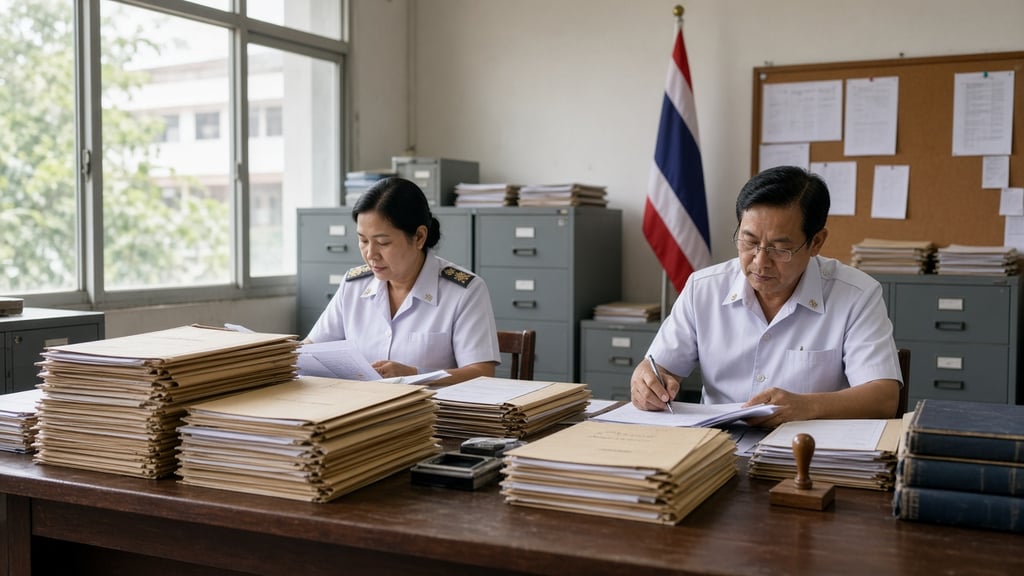
Thailand's Ministry of Interior has ordered provincial and district registrars nationwide to complete a sweeping audit of registered foundations, associations, and public shrines by mid-December 2026, setting the stage for court-ordered dissolutions of dormant entities that have shown no verified activity for two to three years. The directive, backed by Prime Minister and Interior Minister Anutin Charnvirakul and enforced by Deputy Interior Minister Phonphee Suwanchawee through the Department of Provincial Administration (DOPA), aims to clean up outdated registries containing roughly 15,000 to 17,500 organizations and close legal gaps exposed by major 2026 charity scandals.
Why Regulators Are Moving Now
Thailand's charitable sector handles an estimated 150 billion baht in public donations each year, yet much of the legal machinery governing non-profit registration and public solicitation dates back nearly a century. According to reporting by Thai PBS and The Standard, Interior Ministry officials discovered major discrepancies across provincial databases, with thousands of registered foundations failing to submit updated operational reports or maintaining paper-only existences long after their original boards ceased work.
Public pressure to overhaul the sector intensified throughout late 2026 following high-profile financial investigations. In one widely publicized case involving the Do Good Foundation (Ongkorn Thamdee), authorities alleged that hundreds of millions of baht in public donations were diverted for personal luxury expenses, leading to arrests and asset seizures by the Anti-Money Laundering Office (AMLO), as reported by Thai PBS World. Separately, the Department of Special Investigation (DSI) opened an inquiry into roughly 300 million baht in financial turnover at the Gun Jompalang Chuay Su Foundation, summoning around 30 board members, operators, and prominent donors as witnesses while clarifying that the figure represents cumulative cash flow rather than confirmed criminal loss.
Officials worry that dormant or loosely supervised foundations create easy vehicles for unauthorized fundraising, nominee structures, and illicit financial transfers. Deputy Interior Minister Phonphee Suwanchawee warned registrars that the nationwide headcount must be reconciled by mid-December, signaling that officials who fail to clear local backlogs could be reassigned.
How Thailand Dissolves Dormant Foundations Under Civil Law
Unlike commercial companies that can be struck off administratively with minimal court involvement, Thai foundations are juristic persons protected by specific safeguards in the Civil and Commercial Code. DOPA registrars cannot unilaterally revoke a foundation's legal status with a single stroke of a pen. Instead, as The Nation Thailand detailed following DOPA's legal briefing on October 30, 2026, authorities rely on two primary statutory mechanisms.
Under Section 129 of the Civil and Commercial Code, a registrar, public prosecutor, or interested party may petition a court to remove individual committee members or an entire foundation board if mismanagement, legal violations, or conduct detrimental to the organization's objectives is established. Under Section 131 and Section 133, the same authorities may petition a court to order the complete dissolution of a foundation if its operations contravene law or public morals, if its objectives can no longer be fulfilled, or if it has ceased operating for two consecutive years or more.
Once a court grants a dissolution order, remaining assets are transferred according to the foundation's bylaws or assigned to another juristic person with comparable charitable aims, preventing former board members from pocketing residual funds.
Quarterly Filings, Digital Registry, and Criminal Penalties
To prevent future blind spots, Deputy Interior Minister Phonphee met Deputy Prime Minister Pakorn Nilprapunt on November 17, 2026 to finalize amendments to Ministerial Regulations governing foundation oversight. As reported by Khaosod and Prachachat, the revised regulations will tighten initial registration standards, establish a centralized monitoring hub with registrar oversight, and shift mandatory financial and operational disclosures from once a year to every three months.
In parallel, the Government Public Relations Department (PRD) confirmed on November 11, 2026 that DOPA is enforcing mandatory operational reporting through both district offices and its electronic i-Service platform. Foundations based in Bangkok must register for digital filing at DOPA's Public Service Center in Wang Chaiya or submit paperwork at their local district office, while provincial charities file with their district administrative offices.
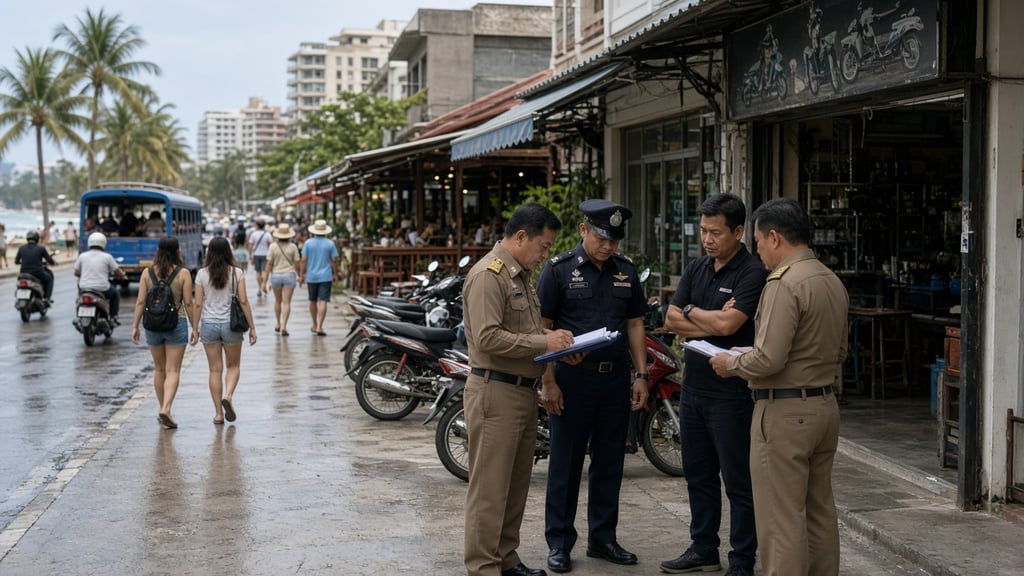
Because DOPA registrars do not hold direct banking-subpoena powers, the agency is formalizing referral channels with the Royal Thai Police, AMLO, and the DSI whenever financial statements reveal suspicious cash flows, particularly for high-volume organizations handling over 300 million baht. Deputy Government Spokesperson Ploytalay Laksameesangchan also reminded organizers in a November 7 briefing covered by The Nation Thailand that public donation drives falling under the Fundraising Control Act B.E. 2487 (1944) require advance permission. Diverting charitable funds can trigger public fraud charges carrying up to five years per count, with combined prison terms reaching up to 20 years under Thai criminal law alongside money laundering prosecutions.
What This Means for Compliant Charities and Boards
For legitimate Thai non-profits, animal rescues, educational trusts, and community clinics, the immediate priority is administrative hygiene. Boards that have fallen behind on annual meeting minutes, audited balance sheets, or updated committee rosters risk being swept into DOPA's inactive-entity lists during the December verification drive. Organizations should verify that their registered office address matches their active operating premises, register an authorized representative on DOPA's i-Service portal, and maintain clean separation between corporate foundation bank accounts and personal accounts of founders or staff.
Charities planning public fundraising campaigns online or in shopping centers should also confirm whether their specific solicitation requires a prior permit from their local district office under the Fundraising Control Act, rather than relying on informal social media appeals.
What This Means for Expats and Travelers in Thailand
The nationwide audit carries direct practical consequences for foreign residents, NGO staff, long-stay volunteers, and expat donors across Thailand.
- Volunteer and NGO visa sponsorship risks: Under official Thai government stay-extension guidelines archived in the Thai Visa Centre (TVC) Legal Library, foreign nationals working or volunteering for a registered public charitable organization, foreign private organization, or foundation require a Non-Immigrant O stay extension (initially granted for up to 90 days, or up to one year with formal confirmation letters from relevant government agencies) alongside a valid work permit. If a sponsoring foundation is flagged as non-compliant, fails to file quarterly reports, or enters court dissolution proceedings, foreign volunteers face immediate rejection at their next immigration extension.
- Scrutiny of pay-to-stay volunteer agencies: Immigration officers have already tightened checks on paper-only foundations that charge foreigners steep fees for volunteer visa paperwork without genuine charitable activity. As DOPA purges dormant entities, visa-mill foundations operating on dormant registrations are prime targets for closure.
- How donors can vet Thai charities: Both expats and visitors should verify that any donation bank account is registered strictly under the foundation's official legal name (beginning with the Thai word for foundation) rather than an individual's personal account. Checking whether a charity appears on the Revenue Department's roster of approved tax-deductible public charitable organizations and reviewing published annual financial statements remain the fastest safeguards before giving.

Comment verification
Step 1 of 3
Verify your email once to publish your comment. Your email is never shown publicly.
Enter the 6-digit code sent to .
Choose the display name shown next to your comments.