Thailand Shifts 2027 Fiscal Plan to Investment Growth
Bangkok's Finance Ministry is winding down short-term cash stimulus for 2027, betting instead on capital formation, BOI local-content rules, and tighter deficit control.
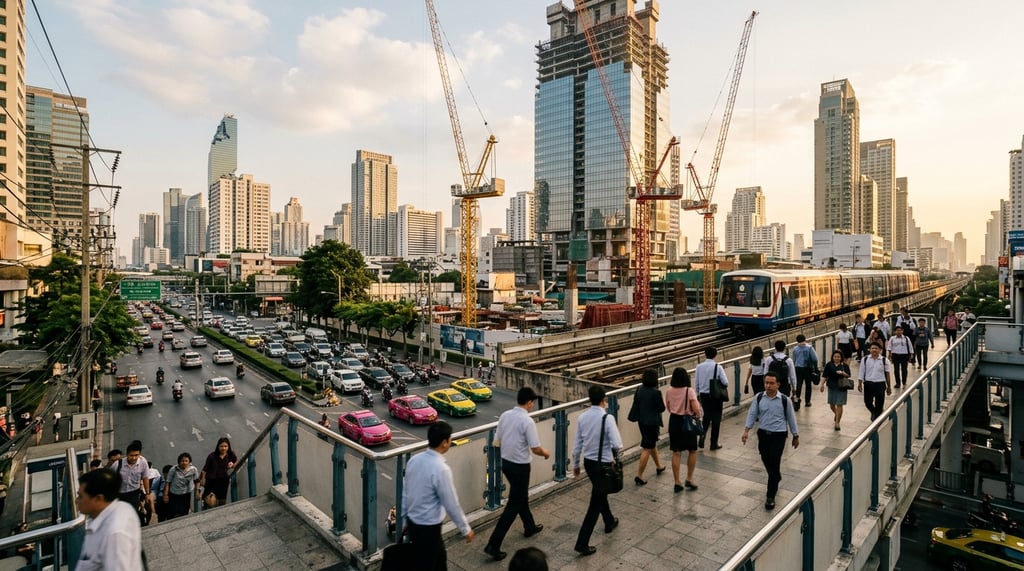
Thailand's Ministry of Finance is closing the chapter on broad consumer cash stimulus as it prepares economic policy for 2027, shifting its fiscal weight toward public-private capital formation, industrial upgrading, and multi-year deficit reduction. Deputy Prime Minister and Finance Minister Ekniti Nitithanprapas signaled in late November 2026 that the incoming calendar year will prioritize durable investment over temporary spending injections, marking a clear departure from the emergency relief playbook that defined Thailand's post-pandemic recovery.
The pivot arrives as the Thai Chuay Thai Plus package, which cushioned households against energy spikes, inflation, and sluggish purchasing power throughout 2026, reaches the end of its cycle. Rather than rolling out another round of one-off consumption subsidies that burn through treasury reserves in a single quarter, fiscal planners want private capital, state-enterprise projects, and targeted structural reforms to carry growth past Thailand's persistent 2% to 2.5% ceiling.
Tight Budget Space Forces a Fiscal Reset
The shift away from short-term stimulus is driven as much by budget arithmetic as by economic philosophy. When the government presented the 3.79 trillion baht fiscal 2027 budget bill to parliament in mid-2026, both coalition lawmakers and opposition critics flagged how little room remained for discretionary capital spending. Civil service salaries, welfare commitments, and debt-servicing obligations now claim over 73% of annual outlays, leaving public investment squeezed at a time when regional rivals are pouring capital into logistics, grid capacity, and digital networks.
Public debt has climbed into the 66% to 67% range of GDP, sitting uncomfortably close to Thailand's 70% legal ceiling. Ekniti has repeatedly ruled out raising that statutory cap, warning that loosening fiscal guardrails would risk sovereign credit rating downgrades and higher borrowing costs across Thai corporate bond markets. Instead, the Finance Ministry has committed to trimming the annual budget deficit from 3.4% of GDP in fiscal 2026 down to 3.0% or less by 2029, while modernizing tax collection and reviewing personal and corporate deductions to widen the revenue base without choking business activity.
Because direct treasury funds are constrained, Bangkok is leaning heavily on off-budget financing vehicles. Public-private partnerships, state-enterprise capital budgets, and infrastructure funds are expected to shoulder a larger share of rail, port, water management, and clean-energy upgrades in 2027. Business groups, including the Federation of Thai Industries, have backed the investment-first direction while pressing the cabinet to cut overlapping bureaucratic agencies so permanent recurrent spending stops crowding out productive projects.
The STI Framework and Energy Cost Relief
To anchor the transition, the Finance Ministry has organized its policy agenda around a three-pillar STI model: Stabilize Today, Transition Now, and Invest for Tomorrow. Under the stabilization track, officials are pairing tighter fiscal rules with targeted liquidity support for small and medium-sized enterprises rather than blanket household payouts. Working alongside the Bank of Thailand, policymakers are expanding alternative-data credit scoring so smaller vendors can qualify for formal bank loans using digital sales and payment histories instead of heavy land collateral.
Under the transition pillar, the ministry is targeting structural cost pressures that weigh on both factories and households. Plans include dismantling regulatory bottlenecks on residential rooftop solar installations and adjusting excise structures on cleaner biofuels such as E20 and B20. Lowering domestic energy bills is designed to relieve living costs permanently while linking Thai agricultural producers directly into domestic clean-fuel supply chains, reducing Thailand's exposure to imported oil and liquefied natural gas price swings.
Execution Risks and the K-Shaped Recovery Gap
The third pillar aims to lift total national investment toward 30% of GDP and push sustainable annual growth above 3%. Research from the Thailand Development Research Institute shows that Thailand averaged only 2.3% annual GDP growth between 2022 and 2024, weighed down by an aging workforce, lagging productivity, and high household debt. Although Q3 2026 GDP accelerated to 2.9% year-on-year on the back of private equipment spending and electronics exports, economists warn that headline gains remain uneven across a K-shaped economy where large tech exporters outpace provincial retailers.
BOI Local-Content Rules and US Tariff Headwinds
External trade friction adds urgency to Thailand's 2027 investment overhaul. Facing an 18% US tariff regime under Section 301 trade pressures and scrutiny from the Office of the United States Trade Representative over Chinese industrial transshipment, Bangkok is recalibrating how it courts foreign manufacturers. Finance officials have argued that an 18% tariff rate does not place Thai exporters at a fatal disadvantage against ASEAN neighbors, provided domestic supply chains move up the value ladder and position Thailand as a neutral production hub.
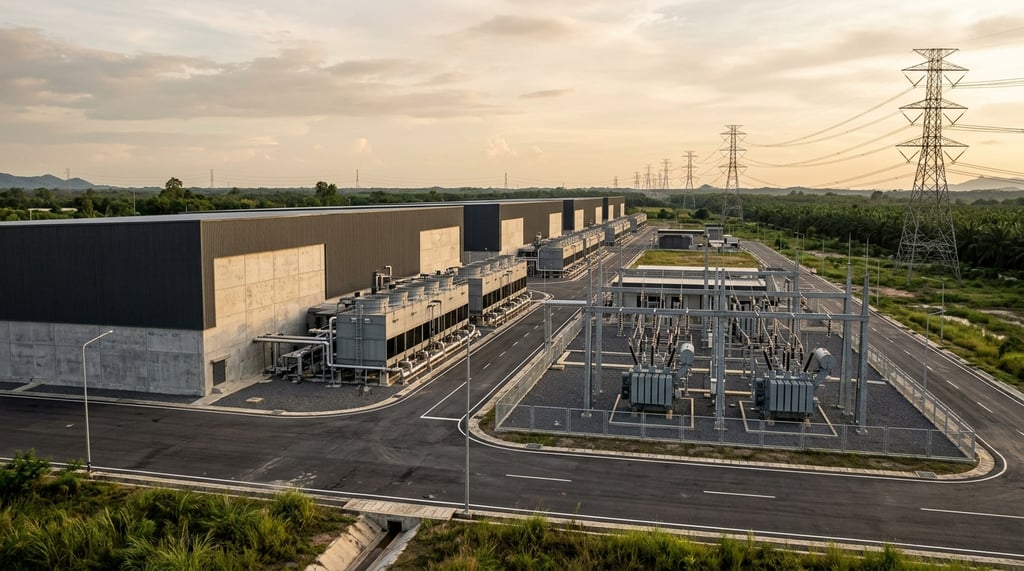
In late November 2026, the Board of Investment unveiled Phase 1 of its 2027 promotion criteria, directly tying corporate tax holidays to verifiable local content, Thai workforce hiring, and linkages with domestic SMEs. The overhaul answers foreign criticism that earlier incentives rewarded low-margin assembly and re-export volume without deepening local industrial capacity. To accelerate project execution, the government is also rolling out Fast Pass permitting to cut approval times for industrial water, power grid connections, and factory licenses in target sectors including electric vehicles, semiconductors, data centers, and artificial intelligence infrastructure.
What This Means for Expats and Travelers in Thailand
For foreign residents, retirees, and business owners living in Thailand, the end of broad consumer stimulus means fewer temporary domestic spending promotions in 2027, alongside closer scrutiny of tax administration as the Revenue Department looks to shore up collections. However, the commitment to hold the 70% public debt ceiling and narrow the fiscal deficit toward 3% of GDP is generally supportive for macroeconomic stability and reduces the risk of abrupt sovereign-credit shocks that can rattle the Thai baht.
Expat entrepreneurs and foreign investors operating Thai-registered firms should pay close attention to the BOI's 2027 local-content and Thai-hiring benchmarks, which will shape eligibility for tax privileges and Fast Pass utility approvals. Meanwhile, long-term residents who own or lease homes may benefit from the government's push to streamline rooftop solar permits and keep E20 and B20 transport fuel prices more competitive, easing day-to-day electricity and commuting costs. For short-term travelers, hotel, rail, and airport infrastructure upgrades funded through PPP channels should gradually improve connectivity, even as domestic retail prices remain sensitive to energy and wage adjustments.
Comment verification
Step 1 of 3
Verify your email once to publish your comment. Your email is never shown publicly.
Enter the 6-digit code sent to .
Choose the display name shown next to your comments.