Wanwalee in Bangkok ICU After 28-Day Hunger Strike
Detained activist Wanwalee Thammasattaya has been moved to the Corrections Hospital ICU in Bangkok after 28 days without food and seven days without water, prompting lawyer Krisadang Nutcharas to prepare a renewed bail petition.
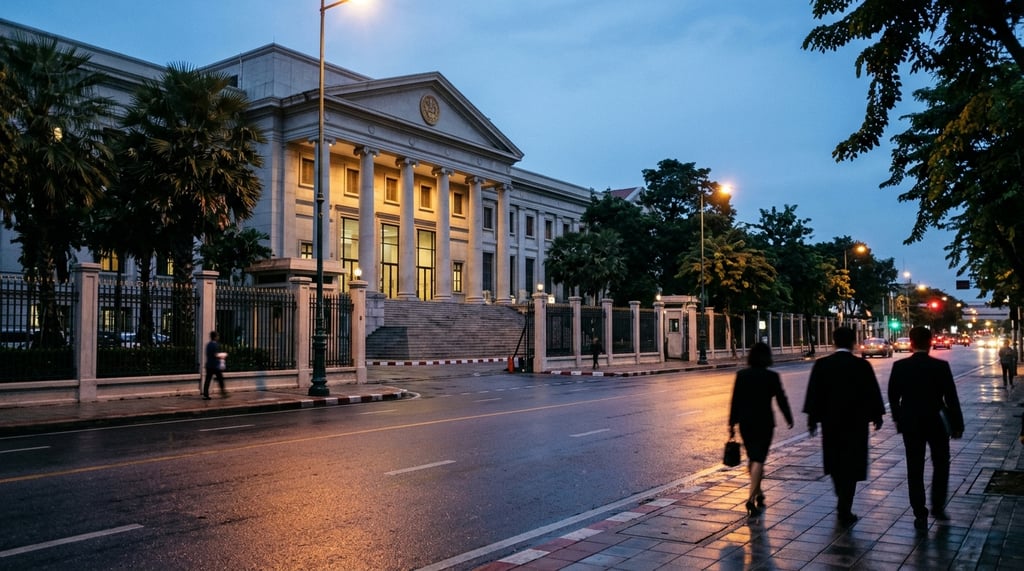
Thai political activist Wanwalee Thammasattaya, widely known as Tee Phayao, is receiving intensive care at the Medical Correctional Institution in Bangkok after reaching 28 days without food and seven days without water while protesting the denial of bail pending appeal in a Section 112 royal defamation case. As medical warnings over her condition intensified on November 30, 2026, veteran human rights lawyer Krisadang Nutcharas announced plans to file a fresh bail petition at the Criminal Court on Ratchadaphisek Road, renewing public scrutiny of how Thai courts evaluate temporary release after a first-instance conviction.
Reports compiled by the United Front of Thammasat and Demonstration and Thai Lawyers for Human Rights (TLHR) confirm that the 26-year-old activist was transferred from the Central Women's Correctional Institution to the intensive care unit at the Corrections Department Hospital on November 26. Legal visitors who met her prior to and following the transfer documented severe weight loss, marked weakness, and blood glucose levels dropping to between 56 and 61 milligrams per deciliter, raising acute clinical risks of hypoglycemic shock, kidney impairment, and refeeding complications.
Medical Deterioration Inside the Corrections Hospital
Wanwalee initiated her food refusal on the evening of November 2, 2026, three days after being taken into custody following her sentencing. According to Prachatai English and The MATTER, she escalated the protest on November 23 by refusing drinking water and intravenous fluids after repeated bail petitions failed to secure her release.
Corrections officials moved her to the hospital intensive care ward on November 26 when clinicians warned that declining blood sugar and sustained dehydration could lead to sudden loss of consciousness. Medical staff have reportedly urged her to resume intake and accept stabilization, while her legal team has raised concerns over her fragile condition and the narrow margin for emergency intervention if organ function declines further. Under Department of Corrections regulations, prison physicians are responsible for continuous monitoring and may transfer detainees to external public hospitals if tertiary care is deemed medically necessary.
From the 2020 SCB Rally to the Supreme Court Rejection
The underlying criminal case stems from speeches delivered during a large anti-government demonstration outside the Siam Commercial Bank (SCB) headquarters in Bangkok on November 25, 2020. On October 30, 2026, the Criminal Court convicted Wanwalee and four other activists under Article 112 of the Criminal Code, sentencing Wanwalee and activist-turned-reporter Phongsathon Tanchareon to two years and eight months in prison without suspension.
Defense counsel emphasized that throughout the police investigation and the multi-year trial before the Criminal Court, Wanwalee remained free on bail and appeared for every scheduled hearing without incident. Following the October 30 verdict, however, the Criminal Court referred bail review upward, and the Court of Appeal declined temporary release pending appeal. Defense lawyers filed an appeal against that refusal on November 25.
On November 28, 2026, the Supreme Court issued an order rejecting bail for both Wanwalee and Phongsathon, according to Prachatai and the Bangkok Post. In its reasoning, the court weighed the seriousness of the offense, the circumstances of the case, and the prison sentence imposed by the lower court, concluding there was sufficient ground to believe the defendants might abscond if released. Addressing submissions regarding Wanwalee's deteriorating health, the Supreme Court noted that detainees already have a right to receive medical care under existing Department of Corrections rules.
Renewed Bail Petition and Constitutional Bail Debate
Despite the Supreme Court order, lawyer Krisadang Nutcharas confirmed on November 30, as reported by MGR Online, that he intends to submit another bail petition at the Criminal Court on Ratchadaphisek Road. Krisadang stated that while he holds modest expectations of a different outcome, submitting the application remains an obligation of defense counsel, adding that he does not want to see a defendant die before a final judgment is delivered.
Krisadang also questioned the consistency of temporary release standards across Thailand's criminal courts, comparing defendants in political speech prosecutions with those in other serious criminal cases who are periodically granted bail during appeals. Earlier, on November 19, 2026, he had published an open letter to the President of the Supreme Court asking the judiciary to examine how discretion is exercised in Section 112 pending-appeal bail decisions.
At the heart of the legal debate is the tension between two provisions of Thai law. Article 29 of the 2017 Constitution guarantees that a suspect or defendant in a criminal case is presumed innocent until a final court verdict is rendered, and that custody should not be applied beyond necessity. At the same time, Section 108/1 of the Criminal Procedure Code authorizes judges to refuse bail when specific statutory risks are found, including likelihood of flight, evidence tampering, potential danger, or obstruction of judicial proceedings. Once a court of first instance hands down a prison term, appellate panels frequently treat the conviction itself as a heightened flight-risk factor.
Family Caregiving Pressures and Parliamentary Calls
Beyond the broader dispute over bail principles, Wanwalee's defense team and family have stressed acute personal circumstances. Originally from Phayao and residing with relatives in Ratchaburi province, Wanwalee has told lawyers that she serves as a primary caregiver and breadwinner for her household, which includes an elderly grandmother and an aunt undergoing cancer treatment. Her legal team argued in earlier filings that these family obligations anchored her in Thailand and reduced any practical incentive to flee.
In Parliament, lawmakers from the opposition People's Party have stepped up calls for systemic review. On November 25, 2026, MPs Seksit Yaemsanguansak, Panida Mongkolsawat, Sasinan Thammanitinun, and Chontarn Sappaiboonlert held a briefing urging authorities to restore temporary release for political detainees, as covered by THE STANDARD and Bangkok Post. The lawmakers noted that at least 36 Section 112 detainees remained in custody and pressed the government's committee on building a peaceful society to act swiftly. Sasinan, who previously represented Wanwalee as a lawyer, had earlier urged the Department of Corrections to provide close medical oversight, according to Thairath English, while rights groups warned against a recurrence of the May 2024 death in custody of activist Netiporn Sanesangkhom during a prolonged hunger strike.
What This Means for Expats and Travelers in Thailand
For foreign residents, business travelers, and tourists in Thailand, Wanwalee's hospitalization is primarily a domestic judicial and human rights story rather than an event disrupting transport, immigration services, or daily commerce in Bangkok. Routine operations around the Ratchadaphisek courthouse district and across the capital remain normal, though small peaceful vigils or legal-rights briefings occasionally gather outside courts, Parliament, or correctional facilities.
At the same time, the case underscores two practical realities for international residents and visitors. First, Thailand's royal defamation law under Section 112 applies strictly to all individuals within the kingdom, including foreign nationals, and carries severe penalties of three to 15 years per count, with online posts and public commentary subject to criminal prosecution. Second, anyone following Thai legal proceedings should note that bail pending appeal is never automatic once a Criminal Court conviction is entered, even where a defendant complied with every pre-trial condition. Foreign nationals facing any criminal inquiry in Thailand should seek qualified local counsel and consular notification immediately rather than assuming pre-trial release will extend automatically through appeals.

Comment verification
Step 1 of 3
Verify your email once to publish your comment. Your email is never shown publicly.
Enter the 6-digit code sent to .
Choose the display name shown next to your comments.