Thailand’s Battle Against PM 2.5: Urgent Measures to Combat Illegal Burning and Dust Pollution - March 2025 Update
In a fervent call to action, the Department of Disaster Prevention and Mitigation (DDPM) is on a mission to fortify defenses against the pervasive PM 2.5 dust issues in Thailand. The director-general, Phasakorn…
In a fervent call to action, the Department of Disaster Prevention and Mitigation (DDPM) is on a mission to fortify defenses against the pervasive PM 2.5 dust issues in Thailand. The director-general, Phasakorn Boonyalak, alongside the National Disaster Prevention and Mitigation Command, has zeroed in on enforcing stricter laws against illegal burning—an endeavor that's becoming increasingly critical as parts of the north and northeast tip into health-threatening orange levels.
As of March 3, while regions like Bangkok, along with the central, eastern, and southern domains, bask in their relatively safe air quality, Northern provinces are blowing into a haze of concern. Ubon Ratchathani, in particular, is sounding the alarm with red-level dust pollution, necessitating vigilant air quality checks ahead of the welcome showers expected to wash the skies clean between March 6 and 7.
The challenge is substantial. A staggering 760 hot spots were spotted on March 2, with natural forest reserves and farmlands taking the brunt of the blaze. Hotbeds like Tak, Lampang, Chaiyaphum, Kalasin, and Sa Kaeo wreak havoc, marking them for intensified action against these smoke producers. Of course, the issue isn't confined to local borders. Close neighbors, Myanmar and Laos, add their own smoky footprints, exacerbating the northern and northeastern air woes.
Faithful efforts by provincial authorities are aimed at keeping the burning under control, tackling offenders with an iron fist. A recent Forest Department report highlighted a hike in illegal burning—even an increase in prosecution suggests it’s no small feat to deter the blaze. In response, the DDPM is resolute, noting hefty steps via operations and strategies aimed at extinguishing fires and embers before they swell into clouds of disruptive dust.
The Ministry of Industry shares a sliver of good news: a dip in sugarcane burning for the inauguration of sugar production season, a welcome measure that slashes 4.51 million rai off the burned list. Conversely, Maha Sarakham's proactive plans include fire patrols and safety zones—all part of the province's robust response to reducing its agricultural flash points, and sparking public awareness initiatives that champion a cleaner agriculture, further nipping smoke and dust issues at the bud.
With prosecutors keen to brandish the lawbook against smoke culprits, Maha Sarakham's move to outlaw open burning led to 27 cases and 37 suspects facing the song—justice served to a noteworthy tune. Meanwhile, the gallant Saharad Wongsakulwiwat, DDPM's Deputy Director-General, commended the concerted efforts across agencies—a gratifying acknowledgment that seems to underscore the need for relentless vigilance.
As the northern and northeastern landscapes beckon for urgent attention with rising PM 2.5 and accompanying hot spots, provincial agencies are implored to bear down on these fiery troublemakers with steely resolve. The mission to mitigate cross-border pollution persists, as new strategies roll out to engage the public in these pressing environmental skirmishes.
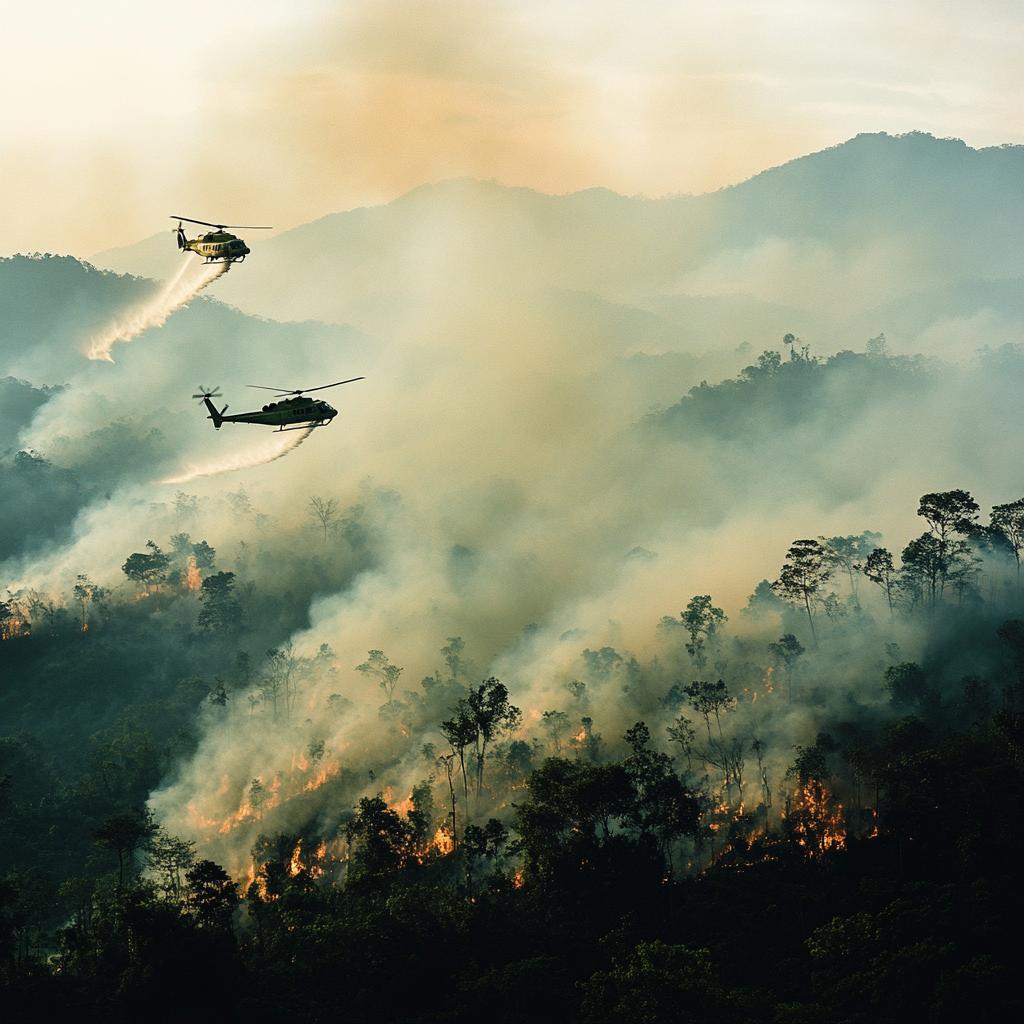
In concert with the armed forces, vigorous efforts are taking flight across Thailand's seventeen northern provinces, dispatching helicopters to tame wild blazes in the likes of Omkoi Wildlife Sanctuary, Chiang Mai—aerial water strikes that douse the inferno with tenacity. The resolute department continues to track and relay public air quality updates, an ever-vigilant pulse on PM 2.5 levels echoing through platforms like Facebook and X @DDPMNews. An emergency? Well, the hotline 1784 and Line @1784DDPM remains open 24/7, ready to field the public’s concerns.



Comment verification
Step 1 of 3
Verify your email once to publish your comment. Your email is never shown publicly.
Enter the 6-digit code sent to .
Choose the display name shown next to your comments.