Thaksin Shinawatra's Strategic Return: Reigniting Pheu Thai's Influence in Surin and Beyond
Former prime minister Thaksin Shinawatra arrived in Surin on July 14 to preside over a mass ordination ceremony at Wat Suwan Wichit in Prasat district, where 334 novice monks were ordained to celebrate the sixth cycle…
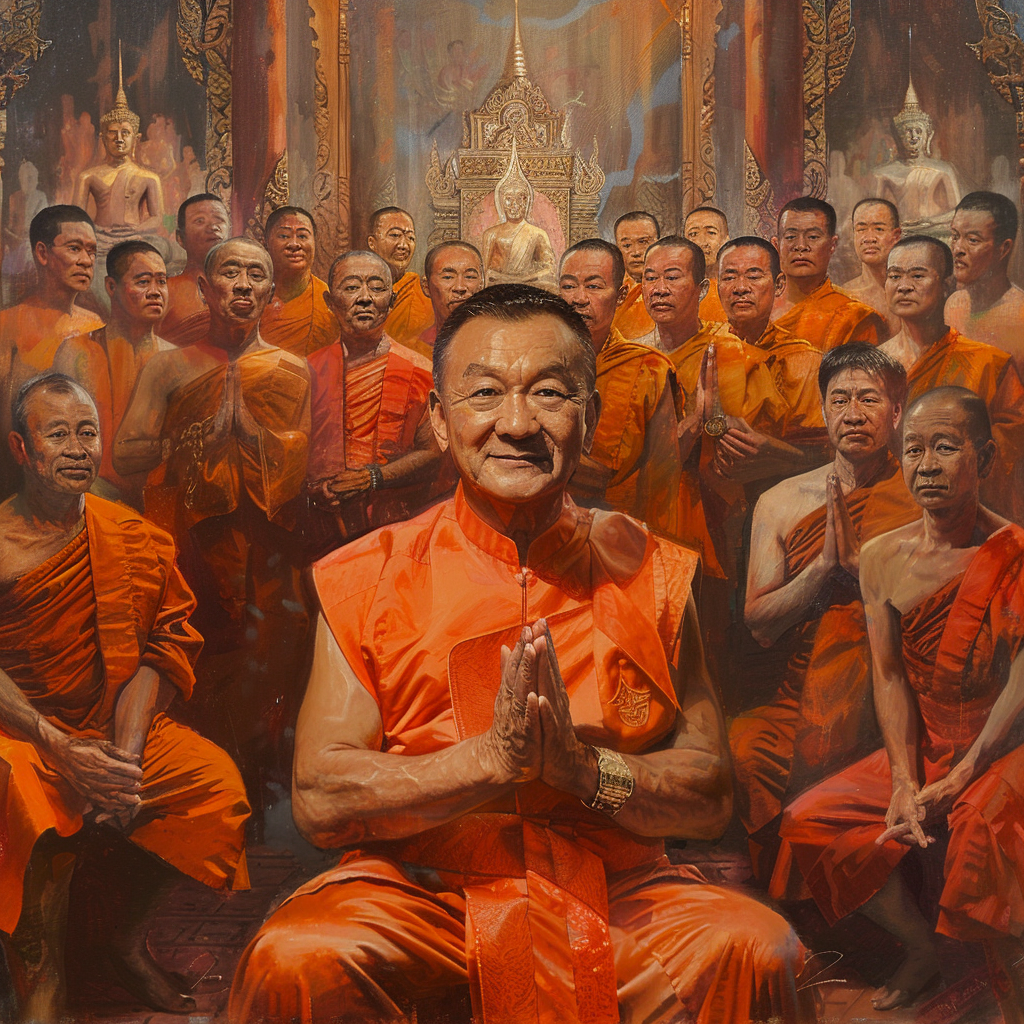
Former prime minister Thaksin Shinawatra arrived in Surin on July 14 to preside over a mass ordination ceremony at Wat Suwan Wichit in Prasat district, where 334 novice monks were ordained to celebrate the sixth cycle birthday anniversary of His Majesty the King. While the event had deep religious significance, it also stirred a significant political buzz as Thaksin's presence drew attention to this northeastern province.
Surin's political landscape has undergone noteworthy shifts since the last general elections. In 2019, the Pheu Thai Party, under the shadow of Thaksin, dominated the province, capturing five out of seven seats. However, the party's influence waned in the recent elections, with Bhumjaithai making impressive gains, securing five out of eight seats and reducing Pheu Thai to three.
Since being released on parole six months ago, Thaksin has been on a political tour across various provinces, including his hometown Chiang Mai, where the party suffered a loss to the Move Forward Party (MFP). Political pundits see his visit to Surin as a calculated move to rejuvenate Pheu Thai's waning influence in a region that was once a stronghold.
Olarn Thinbangtieo, a political science lecturer at Burapha University, suggests that Thaksin is on a mission to reconnect with influential political families to reclaim Pheu Thai's former glory. He noted that Thaksin's reputation has taken a hit since his return, largely seen as the mastermind behind the scenes pulling the strings of the Pheu Thai-led government. This perceived puppet mastery has somewhat tarnished his image as a visionary leader, affectionately known as "Tony."
Prime Minister Srettha Thavisin's declining popularity, along with that of Thaksin's daughter, Paetongtarn Shinawatra, has added to Pheu Thai’s political woes. Key figures within the party, like Phumtham Wechayachai, Dr. Prommin Lertsuridej, and Dr. Cholnan Srikaew, are seen as politically exhausted, prompting Thaksin to reassert his presence and rebuild alliances.
However, Mr. Olarn warns that forging political alliances is no easy feat. He emphasizes that Thaksin’s managerial style, treating allies as mere employees rather than equal partners, is a stark contrast to Bhumjaithai's inclusive approach. This distinction could hinder Thaksin's efforts unless he adjusts his strategy.
Prathueng Muang-on, a political scientist at Ubon Ratchathani University, highlights a notable shift in the lower northeast's political dynamics. Bhumjaithai’s growing influence and the rising popularity of the MFP pose significant challenges for Pheu Thai. He points out that in the 2019 elections, Pheu Thai secured 70% of the region's seats, a dominance that has been eroding.
Mr. Prathueng believes Bhumjaithai's comprehensive grassroots network of local officials and health volunteers gives them a competitive edge in the constituency system. This, combined with Pheu Thai’s dwindling resources and lack of a substantial ruling presence, has led to a gradual decline in the party's prominence.
Adding to the discourse, Krumanit Sangphum, a Pheu Thai MP for Surin, asserts that Thaksin's active involvement can galvanize local support and boost the confidence of party candidates. He remains optimistic that effective policies and dedicated candidates can help Pheu Thai reclaim lost ground, though he acknowledges the stronghold status of Bhumjaithai in Buri Ram as a considerable obstacle.
Meanwhile, Bhumjaithai MP Sanong Thep-aksonnarong remains unperturbed by Thaksin’s political maneuvers, suggesting that Thaksin should perhaps focus on reconnecting with his base in Chiang Mai. Mr. Sanong believes that Bhumjaithai’s active community engagement insulates it from any significant impact due to Thaksin’s efforts.
During his visit to Surin, Thaksin hinted at assuming more public roles to deliver tangible results post his parole period. While the specifics remain unclear, it is speculated that he might serve as an adviser to the prime minister or hold a special representative role in temporary capacities, according to Wissanu Krea-ngam, the prime minister's legal adviser.
The political scene in Surin and the broader northeastern regions remains dynamic. Thaksin’s attempts to rejuvenate Pheu Thai’s presence amidst rising competitors like Bhumjaithai and MFP demonstrate an ongoing battle for political relevance and dominance in Thailand's evolving landscape.



Comment verification
Step 1 of 3
Verify your email once to publish your comment. Your email is never shown publicly.
Enter the 6-digit code sent to .
Choose the display name shown next to your comments.