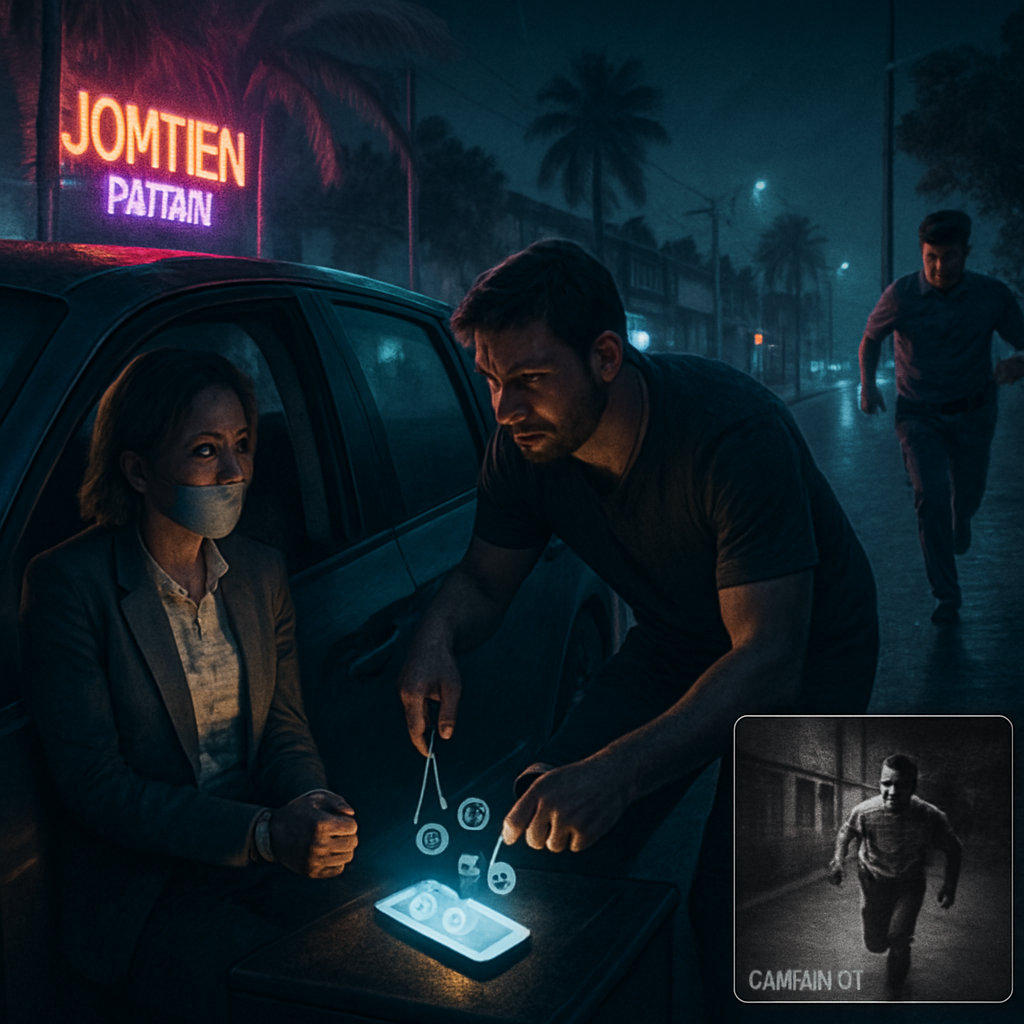
When the sun sets over Pattaya’s shores, most tourists drift toward beachfront bars and neon-lit promenades. But this January, a darker story unfolded in the quieter reaches near Jomtien Beach — one that has left a local real estate agent shaken and a city on high alert.
On the night of Monday, January 12, 35-year-old Chinese real estate agent Yang Wang agreed to meet what she believed was a prospective buyer interested in a house in Pattaya. The meeting began innocuously enough: a property tour followed by a generous offer from Wang to drive the man home. Instead of a thanks, she received a violent betrayal. According to her complaint to Nong Prue Police Station, the man — identified as 30-year-old Chinese national Gong Gaopeng — pulled out scissors, forced her to drive to a secluded spot behind a village, bound her with tape and demanded the password to her WeChat account.
Once he had control of her phone and WeChat, Gong allegedly siphoned funds into his own account, grabbed cash from Wang, and stole her mobile device before disappearing into the night. A nearby security guard reached the scene and attempted to intervene, but by the time help arrived, the suspect had already fled.
The story might have ended there, filed in police records and whispered among expats — except social media had other plans. On January 15, CCTV screenshots began circulating online showing a man who appears to be Gong casually buying food and drinks at a convenience store in the Jomtien Beach area. What has caught public attention — and not a little outrage — is how unbothered the suspect appears: moving freely in a busy tourist district, not trying to hide his face, as if the earlier attack never happened.
Police quickly opened a manhunt after the CCTV footage went public, focusing on accommodations between Soi Jomtien 1 and Soi Jomtien 7. Officers have urged anyone who spots the suspect or has useful information to contact Nong Prue Police immediately. Word spread fast online that a 5,000 baht reward would be offered for information leading to Gong’s arrest, though officials have not formally confirmed or verified that reward amount.
The continued freedom of the man captured on CCTV has stirred sharp criticism across social channels. Many netizens questioned the pace and effectiveness of the investigation, especially given the apparent clarity of the footage and the suspect’s brazen movements in popular areas. Comments ranged from frustration with law enforcement timelines to concern for public safety: if a suspect can slip through Pattaya while staying within sight of cameras, what does that say about resident and visitor security?
For Wang, the incident is more than a viral story; it’s a personal violation with financial and emotional consequences. She reported losing more than 50,000 baht in cash and transfers — losses that go beyond numbers, touching on trust, invasion of privacy and the fear that comes with being targeted in what should have been a routine business interaction.
What makes this case particularly unsettling is the way technology was exploited. The suspect’s reported demand for Wang’s WeChat password shows how digital access can become a weapon — not just a convenience. It’s a cautionary tale for anyone conducting business through social platforms: protect login credentials, avoid sharing passwords, and arrange viewings in public or at least notify someone of your plans when meeting strangers.
As Pattaya police continue to canvas the Jomtien area and review leads, the community has mobilized online, sharing the CCTV images and offering tips. Tourists and locals alike are being reminded to stay vigilant: if you see someone matching the description, do not approach them. Contact local authorities, provide any available CCTV or smartphone footage, and note the person’s last known direction of travel.
The incident raises broader questions about safety in tourist hubs and how quickly law enforcement can act when digital evidence appears to give them a head start. For now, the important points are clear: a suspect is still at large, a victim is recovering from a frightening ordeal, and anyone with information should step forward to help put an end to this worrying chapter in Pattaya’s recent headlines.
If you’re living in or visiting Pattaya, take a moment to double-check your device security: enable two-factor authentication, never share passwords, and arrange property viewings with a colleague or someone you trust. In the age of apps and digital wallets, a little precaution can prevent a lot of heartache.
Authorities continue the search and encourage anyone with tips to reach out to Nong Prue Police Station. The community’s eyes — and cameras — are on Jomtien. Let’s hope they lead to answers soon.


















This is heartbreaking and infuriating at the same time. She did everything a professional should do and was betrayed for a password and cash. Authorities must do more than post a notice — we need arrests and protection for agents.
Totally agree, Linda. Tour viewing protocols need to be stricter and the police response faster.
Thanks, Peter — and agencies should require at least one other person present for showings or use public meeting points.
Or maybe it’s staged marketing? These stories always get clicks and worry tourists.
Staged or not, someone got hurt and lost money. Mocking the victim is low.
Why is he walking free after CCTV showed him? This is basic evidence and it feels like police are asleep. If tourists can’t be safe, why come here?
We understand the frustration and are following leads between Soi Jomtien 1 and 7. Footage helps but identifying a person and finding current location still takes time and careful coordination.
Time is exactly what victims don’t have, officer. Speed matters more than PR statements.
Legally this raises interesting points about digital coercion and cross-border fraud. If the suspect is a foreign national this can complicate extradition and prosecution. Authorities should preserve digital logs and WeChat transaction records immediately.
Exactly, Raj. Prosecutors will need account metadata, timestamps, and IP logs to tie the transfers to the suspect beyond the eyewitness and CCTV. International cooperation with Chinese authorities may speed up confirmation of identity.
And civil remedies could pursue the thief’s assets if found, but criminal charges must come first to deter copycat crimes.
I keep saying it: social media amplifies panic and sometimes hides facts. People jump to conclusions as soon as a screenshot drops.
Jumping to conclusions doesn’t change the CCTV though, it still shows a guy buying drinks after the robbery.
Conspiracy talk aside, the footage is a lead and should be used, not dismissed. Anyone with sense would be alarmed if a suspect strolls around.
Fair, I just want verification first.
This case is a textbook example of why two-factor authentication and session management matter. Sharing passwords is never ok and account takeovers can be instant. Agents should use burner devices for viewings or disable wallet access ahead of time.
As a property manager, we’ll be updating policies after this. Public meetings and secure payment methods only from now on.
Good. Also enable notifications so any unauthorized logins are flagged immediately.
People keep saying ‘don’t share passwords’ like it’s a cure-all. Predators exploit trust and power imbalances, not laziness. We need systemic safety measures, not just personal precautions.
Cultural factors matter here too. Visiting buyers from different countries trust different signals, and agents should get training on screening and safety in multicultural contexts.
Exactly, Chen. Training, buddy systems, and verified platforms for meetings would help more than scolding victims.
Cameras everywhere and still walking free. Makes you wonder who these cameras are really for. Tourists already pay for safety; results would be nice.
As someone who lives here, cameras deter petty crime but don’t replace active policing. We need foot patrols at night in Jomtien.
Patrols cost money and prioritize big hotels. Locals get left with the gaps.
I’m heading to Pattaya next month and this scares me. Are there recommended safe practices for tourists besides avoiding dark spots?
Tell someone your plans, keep devices locked, use official taxis, and report suspicious behavior immediately. We’ll respond but we also need community cooperation.
If CCTV can’t catch this guy quickly then cameras are a joke. Waste of money.
Tom, cameras are helpful for later identification and evidence. They aren’t always enough to locate a moving suspect in real time. Human detection still matters.
Sure, but real-time alerts with active response would change the game. Right now it’s retro-evidence only.
From a cross-border law perspective, the suspect’s nationality may streamline identity verification through consular channels. But operational arrest requires physical location. Digital traces are powerful but need careful chain-of-custody handling.
If Chinese authorities cooperate, confirmation of identity via phone account registration could be quick, but political and bureaucratic hurdles exist.
Local businesses worry about reputational fallout. Viral stories like this can deter bookings and damage livelihoods even before justice is served. We need balanced reporting and swift police action.
Victim protection should be prioritized. Is there any non-profit or community watch helping victims of tourist-area crimes here? They need emotional and legal support right away.
There are neighborhood groups sharing CCTV clips and tips, but official coordination would be more effective. People are vigilant but sometimes overwhelmed at night.
I appreciate the neighborhood groups calling out suspicious people, but please verify before sharing photos widely to protect innocent people from misidentification.
How did he get the WeChat password so fast? Did she type it in while being threatened? There’s more to the story than the article says.
Whether she typed it or was forced, the trauma is real. Let’s stop asking why she didn’t do more and focus on catching him.
People always default to ‘blame the system’ but personal responsibility matters too. Be careful when meeting strangers for business.
Simple question: why did the suspect want the WeChat password instead of just stealing the phone? Digital wallets and instant transfers are terrifyingly easy to abuse.
This will be a case study for urban security classes. Mixing tech exploitation with in-person violence is a growing trend. Preventive tech and community practices must evolve together.
Why hasn’t the reward been officially confirmed? Unverified rewards create false hopes and messy tip lines. Authorities should be transparent.
As someone who uses WeChat daily, this terrifies me. Two-factor is a must but many users don’t enable it because of friction.
People here often assume ‘it won’t happen to me’ until it does. Training and standard protocols for showings could be implemented by agencies easily.
I think there needs to be accountability higher up in the tourist zone management. Cameras are useless without enforcement and follow-through.
Social media helped identify him but also risked vigilantism. Please don’t try to chase people; log sightings and coordinates for police instead.
Haha, that’s the usual ‘don’t do anything’ line. People want safety now, not in some future report.
Instant action is fine if it’s safe; my point is avoid making wrongful accusations or endangering others.
Media and public pressure can help speed investigations, but they can also contaminate witness memory and the evidence trail. Careful coordination between press, police, and community is essential for fair outcomes.
This is why I never meet strangers alone for viewings anymore. Too risky and not worth the commission.
If the suspect was seen buying food, local shop owners might have helped without realizing. Encourage businesses to share footage proactively and stay in touch with police.